

Planetochelys was a North American turtle from the Paleocene and Eocene. Its Eocene fossils preserve a transverse joint in the lower shell. That joint allowed parts of the plastron to move and probably helped cover the shell openings.
Quick facts
| Group | Turtles, family Planetochelyidae |
|---|---|
| Age | Paleocene and Eocene |
| Region | North America: Virginia and Wyoming, United States |
| Type species | Planetochelys savoiei |
| Holotype | USNM 412107, rear half of the carapace |
| Scientific name | Planetochelys |
| Diet | No direct evidence |
What can the fossils tell us?
The Aquia Formation specimen preserves the rear rim and adjacent carapace bones. Its plastron is missing.
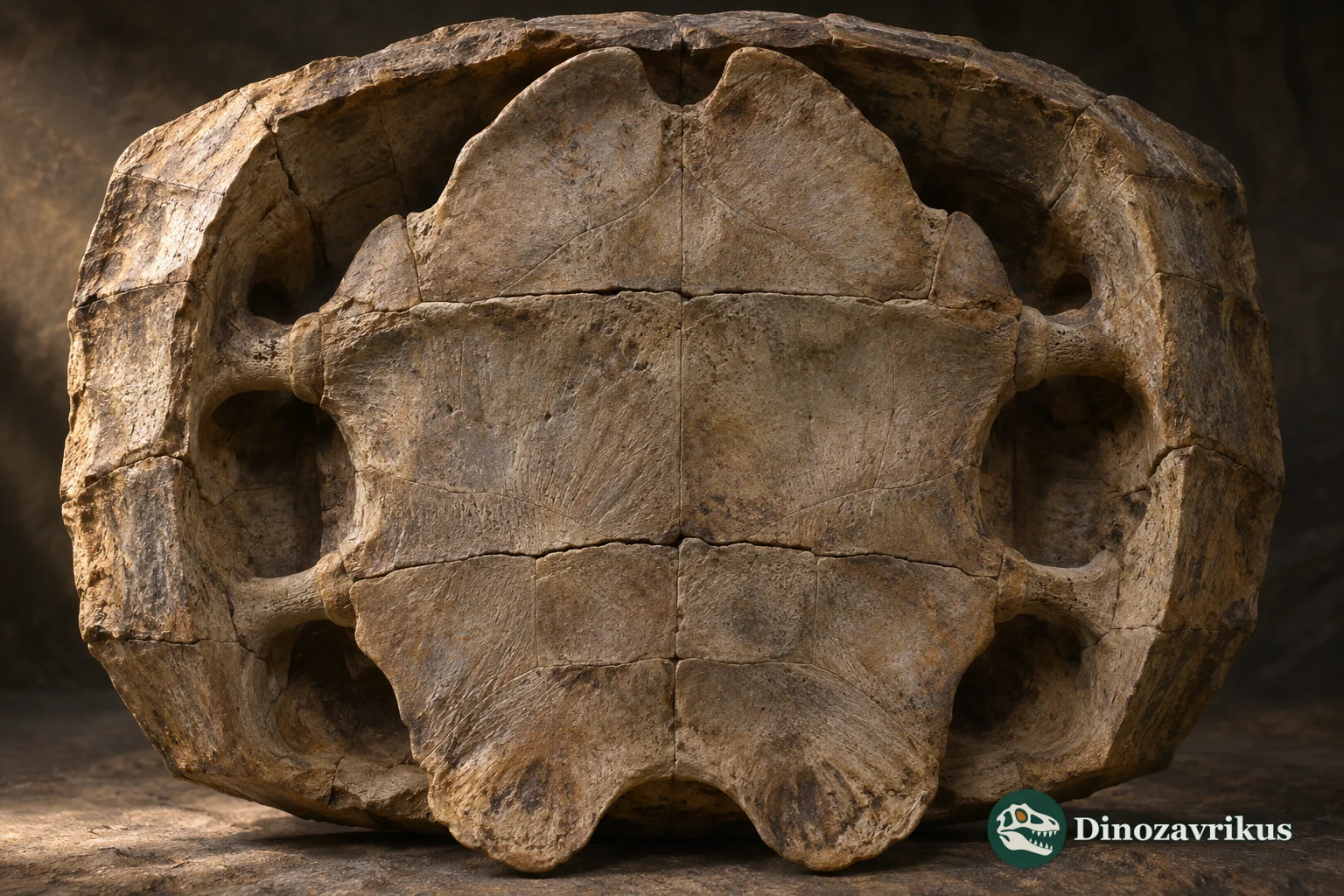
A flexible joint separated the hyo- and hypoplastra in P. dithyros. The fossil records the position of the hinge. The degree of closure depends on reconstructions of the complete shell.
Comparable joints occur in unrelated turtles. Other anatomical characters are needed when testing a proposed relationship.
The find at Aquia Creek
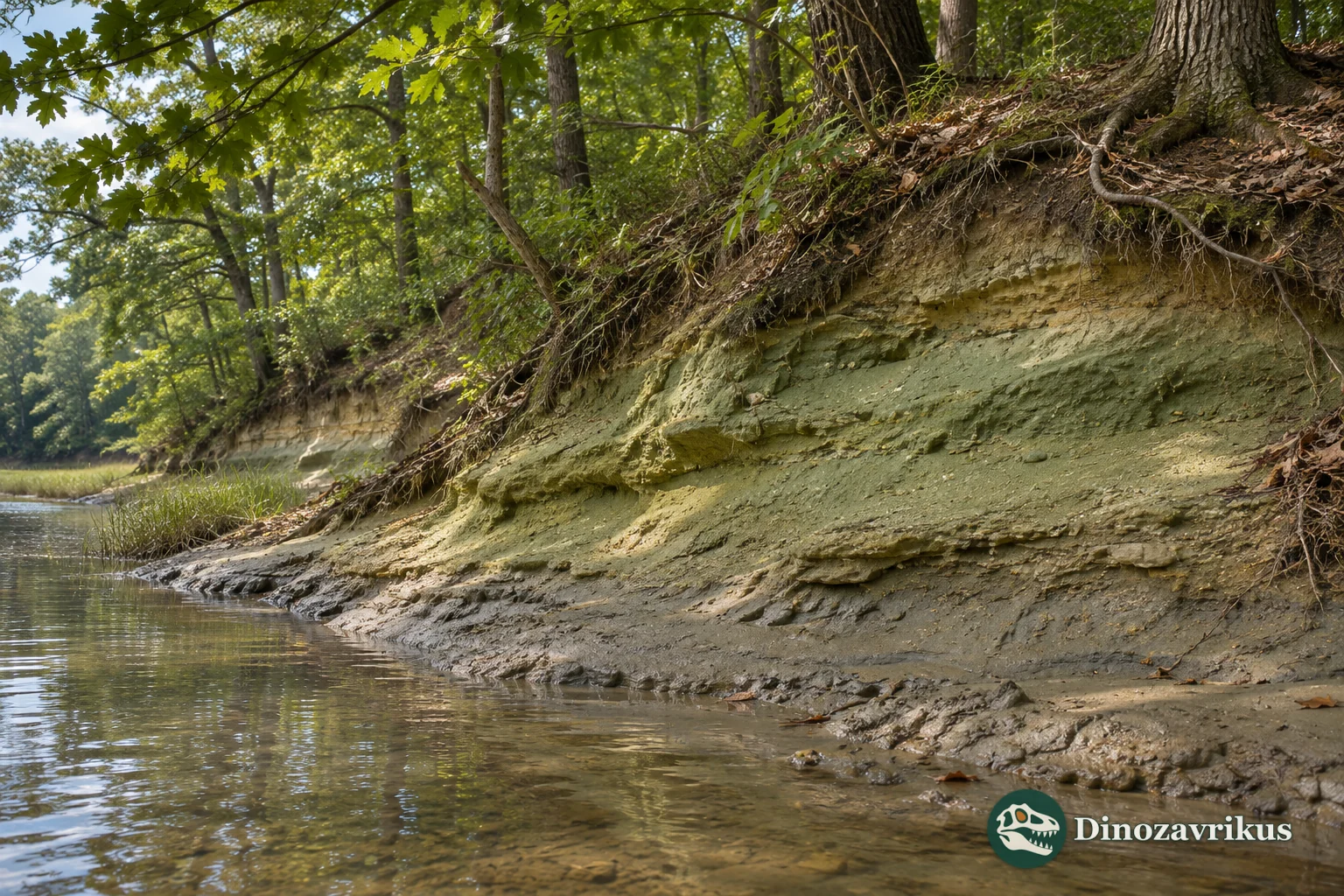
Kurt Savoie collected the type specimen at Aquia Creek in Virginia in 1974. Robert Weems named it Planetochelys savoiei in 1988. The Smithsonian holds the specimen under USNM 412107. Its rear carapace came from the lower Piscataway Member of the Aquia Formation, dated to the early Thanetian within the late Paleocene.
Weems initially placed the fossil among sinemydids. Comparisons with more complete material and a revised interpretation of the bones near the rear edge weakened that assignment.
How the plastral hinge worked
J. Howard Hutchison described P. dithyros from the early Eocene of Wyoming. That material includes the front of the carapace and parts of the lower shell. A joint lies between the hyoplastra and hypoplastra. Some Willwood Formation fragments have smooth contact surfaces with a shallow groove, where a rigid suture would have interlocking edges.
The joint probably allowed the front and rear lobes to swing up and cover the withdrawn head and tail. The surviving bones provide fewer clues to how tightly the shell could close. Researchers studying Paleotestudo used the relationship between bone sutures and scute borders to assess movement in its plastron.
What the shell reveals about its habits
The domed carapace and mobile plastron support an at least partly terrestrial way of life. Hutchison placed the genus in the family Planetochelyidae. Its wider relationships remain uncertain, since a hinge evolved independently in several turtle groups.
Frequently asked questions
Where was the type specimen found?
It came from late Paleocene beds of the Aquia Formation at Aquia Creek, Virginia.
Which fossils preserve the hinged plastron?
Researchers study it in the Eocene species P. dithyros from Wyoming and in other shell remains assigned to the genus.
Where was the hinge?
It lay across the plastron between the hyo- and hypoplastra, allowing the front and rear portions to move.
What did Planetochelys eat?
Most of the evidence consists of shell bones. Direct evidence of diet is unavailable.