

Anilioides was a North American fossil snake. The type species comes from the early Miocene Thomas Farm deposits in Florida. Its trunk vertebra has a ridge on the projection at the front of the neural arch. Older vertebrae assigned to the same genus lack that feature.
Quick facts
| Group | Snakes (Serpentes), family disputed |
|---|---|
| Age | Early Miocene for the type species |
| Region | North America, United States, Florida |
| Type species | Anilioides minuatus |
| Scientific name | Anilioides |
| Diet | No direct evidence |
What can the fossils tell us?
Vertebra UF 6151 is held by the Florida Museum of Natural History. The deposits are about 18 million years old.
The ridge distinguishes the type from some similar vertebrae. This feature alone does not settle its family assignment.
The Great Plains vertebrae lack the distinctive ridge. Their assignment to the genus is disputed.
How the type species was named
Walter Auffenberg named Anilioides minuatus in 1963. The holotype, UF 6151, came from Thomas Farm in Gilchrist County. Vertebrate remains there occur in alternating beds of clay and calcareous sand. The mammal assemblage places the locality in the early Miocene, around 18 million years ago.
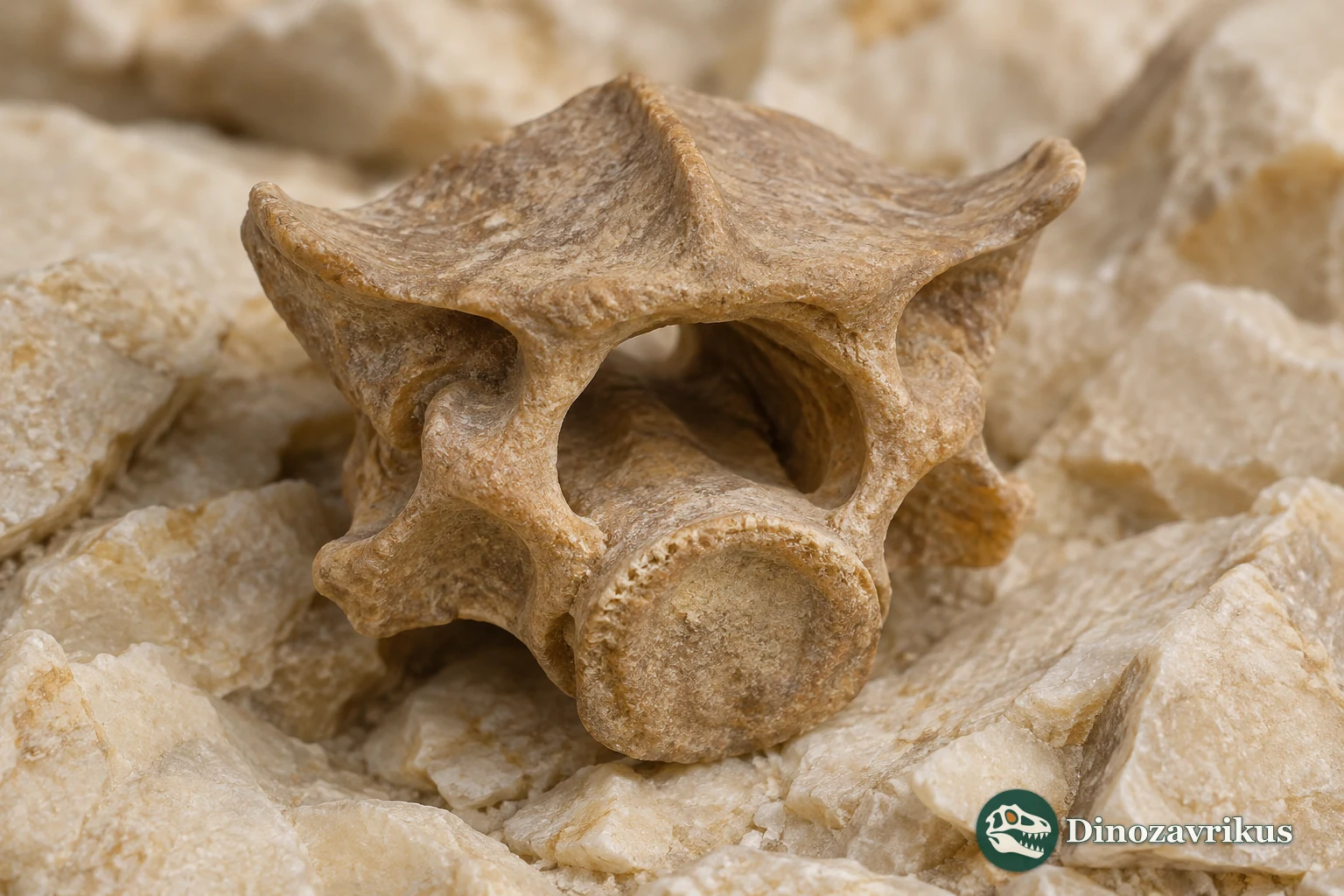
A feature at the front of the vertebra
The zygosphene is a small projection above the spinal canal. It fits into a recess on the neighbouring vertebra. In the type species, a ridge runs along its upper surface and its lateral edges turn upwards. In another North American snake, Pterygoboa, the distinctive processes sit near the rear joints.
Why the Nebraska specimens are treated separately
In 1976, J. Alan Holman named Anilioides nebraskensis from twelve trunk vertebrae at two late Oligocene localities on the Great Plains. They lack the ridge on the zygosphene. Holman later questioned their assignment to Anilioides. The original comparison of the genus with pipe snakes also leaves its exact family placement open.
Frequently asked questions
Where was the type specimen found?
It comes from the Thomas Farm sinkhole deposits in Gilchrist County, Florida.
How old is the Florida fossil?
Thomas Farm dates to the early Miocene, around 18 million years ago.
What distinguishes the vertebra of the type species?
Its front articular projection bears an upper ridge and has upturned lateral edges.
Can its total length be estimated?
The isolated vertebrae support anatomical comparisons but provide no reliable total body length.