

Pterygoboa was a small North American snake. Its trunk vertebrae combine a low neural arch with projections beside the rear joints. Those features identify material from several sites, from the late Oligocene of Florida to the middle Miocene of Nebraska.
Quick facts
| Group | Snakes (Serpentes), boids |
|---|---|
| Age | Late Oligocene and Miocene |
| Region | North America, United States |
| Type species | Pterygoboa miocenica |
| Scientific name | Pterygoboa |
| Diet | No direct evidence |
What can the fossils tell us?
White Springs yielded 17 fragmentary trunk vertebrae catalogued as UF 125435. They were assigned to the genus without a species identification.
The combination of lateral projections and a low arch helps identify the genus. The shape of the projections varied along the spine.
The isolated bones provide no reliable body length or specific prey record.
From South Dakota to Florida
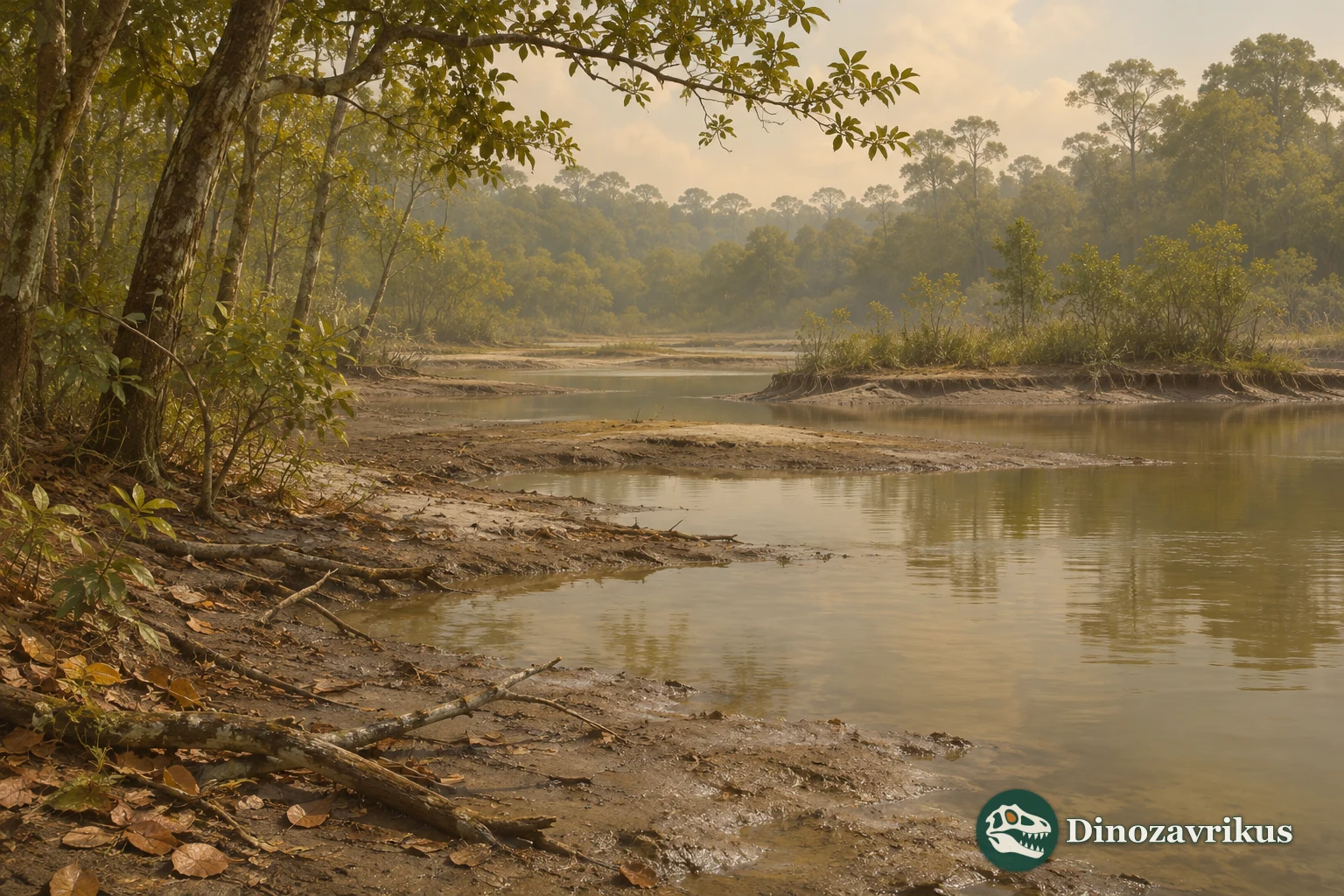
J. Alan Holman named Pterygoboa miocenica in 1976 from early Miocene fossils at Black Bear Quarry II in South Dakota. A younger series came from Myers Farm in Nebraska. Jim Mead and Blaine Schubert identified vertebrae from two early Miocene sites in Florida. They also assigned fragments from the White Springs beds, around 25–24 million years old, to the genus.
Projections beside the joints
Rear articular processes link one vertebra to the next. In Pterygoboa, additional flanges extend beside those surfaces. How far they project varies across the Nebraska vertebrae. Holman attributed much of that variation to position along the spine. Identifying vertebrae from different parts of the body is also an issue in the study of Dakotaophis.
A species based on one vertebra
The early Miocene sands of the Calvert Formation in Delaware yielded the type specimen of Pterygoboa delawarensis. USNM 483393 is an isolated trunk vertebra with an especially low arch and relatively short flanges that taper at both ends. Holman distinguished the Delaware fossil from the type species using that combination.
Frequently asked questions
What do the wing-like processes look like?
They are small bony flanges beside the rear articulation surfaces of the trunk vertebrae.
Where were the oldest fossils found?
They come from the late Oligocene White Springs site in Florida, around 25–24 million years ago.
Has a skull been identified?
The fossils used to identify the genus and distinguish its species are vertebrae.
Was Pterygoboa aquatic?
The White Springs beds preserve a mixture of land and nearshore animals. The deposits alone cannot establish where this snake spent most of its time.