

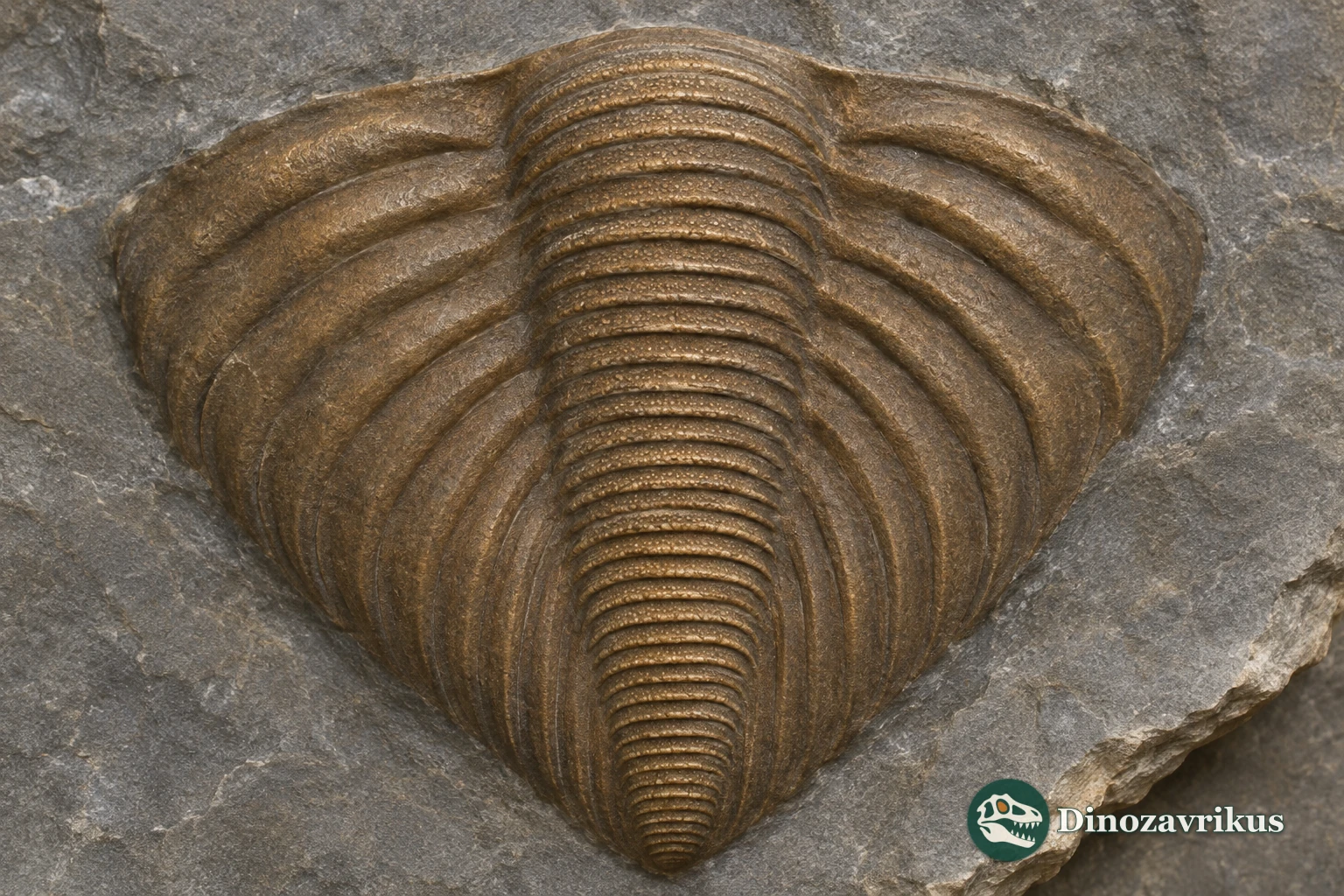
Anisopyge was a Permian marine trilobite. The narrow axis of its tail shield is crossed by many fine rings, while fewer and broader ribs curve back on either side. That contrast is recognizable in isolated tails from several North American collections.
Quick facts
| Group | Trilobita, phillipsiids |
|---|---|
| Age | Permian |
| Type species | Anisopyge perannulata |
| Genus established | George H. Girty, 1908 |
| Fossil localities | United States and northern Mexico |
| Known material | Head shields, tail shields and dorsal exoskeletons |
What can the fossils tell us?
The rings divide the axis within a fused tail shield. They give no count of the freely articulated thoracic segments.
The texture is useful alongside outline, which changes as the animal grows.
The associated fossils help distinguish beds. Such a sample does not establish how any two animals interacted.
The name and the head shield
Benjamin Shumard originally described the type species as Phillipsia perannulata in 1858. George H. Girty established Anisopyge in his 1908 monograph on the Guadalupian fauna. The type species can be recognized from the arrangement of its densely ringed tail axis and broader lateral ribs.
The Mexican material includes an incomplete cranidium. The description records a pear-shaped glabella and large kidney-shaped eyes. Several tail pieces from the same collection give a larger sample of the relief that helps identify the species.
When outline is misleading
Two pygidia described from Las Delicias have 27 and 28 very narrow axial rings. Fine granules lie on their crests. Eight broad pleural ribs become more strongly curved towards the back of the shield, where they lie almost parallel to its long axis.
Outline changes with growth. The Mexican study noted that larger specimens can resemble Ameura, while smaller ones can resemble Sevillia. The grain on the axial rings helped the authors support the identification of A. perannulata in the Mexican material.
The beds in Texas and Coahuila
David Brezinski documented A. perannulata and A. cooperi in the upper of two Permian trilobite assemblages he recognized in West Texas. Delaria occurs in that upper fauna too. The composition of each assemblage distinguishes it from the other across the local sequence.
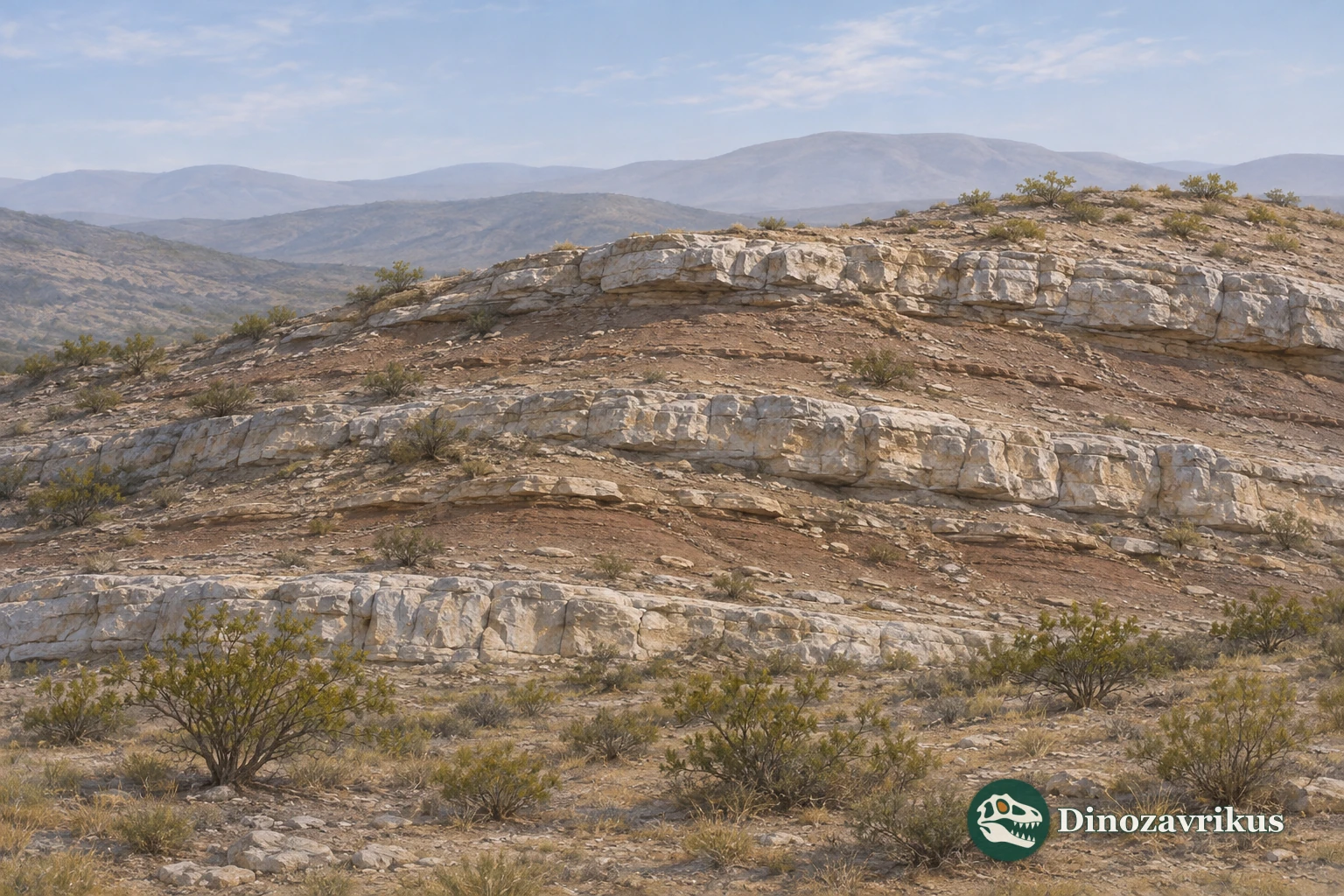
The Coahuila specimens come from the Middle Permian Las Delicias Formation. The Las Difuntas section exposes limestone beds assigned to the Wordian and Capitanian. Head and tail pieces allow comparison between the Mexican and Texan collections, although they say little about locomotion.
Frequently asked questions
What was the type species first called?
Shumard named it Phillipsia perannulata. Girty later assigned it to Anisopyge.
How many rings are visible on the tail?
Two Mexican specimens were described with 27 and 28 rings on the tail axis.
Why does growth matter for identification?
Changes of outline can make larger and smaller specimens resemble different genera.
Where were the Mexican specimens found?
They come from Middle Permian limestone of the Las Delicias Formation in Coahuila, northern Mexico.