

Ankonetta larriestrai was a Miocene member of the duck family from southern Patagonia. The species is based on two pieces of one right tarsometatarsus, the bone above the toes. Its joint surfaces and tendon ridges preserve a useful mixture of features, even though most of the bird remains unknown.
Quick facts
| Type species | Ankonetta larriestrai |
|---|---|
| Family | Anatidae |
| Age | Early to Middle Miocene |
| Locality | Río Bandurrias, Santa Cruz Province, Argentina |
| Holotype | GHUNLPam 14935.8 and 14933.4, one incomplete right tarsometatarsus |
What can the fossils tell us?
The proximal and distal pieces belong to a single right tarsometatarsus. Part of the shaft and the joint surfaces for toes three and four are missing.
Its outer rim bulges dorsally. At the other end four bony ridges mark the hypotarsus, where the toe tendons passed.
The proportions of the proximal end and the position of the hypotarsus resemble those of Dendrocygna. Other features differ, so the resemblance does not establish close kinship.
A specimen from Río Bandurrias
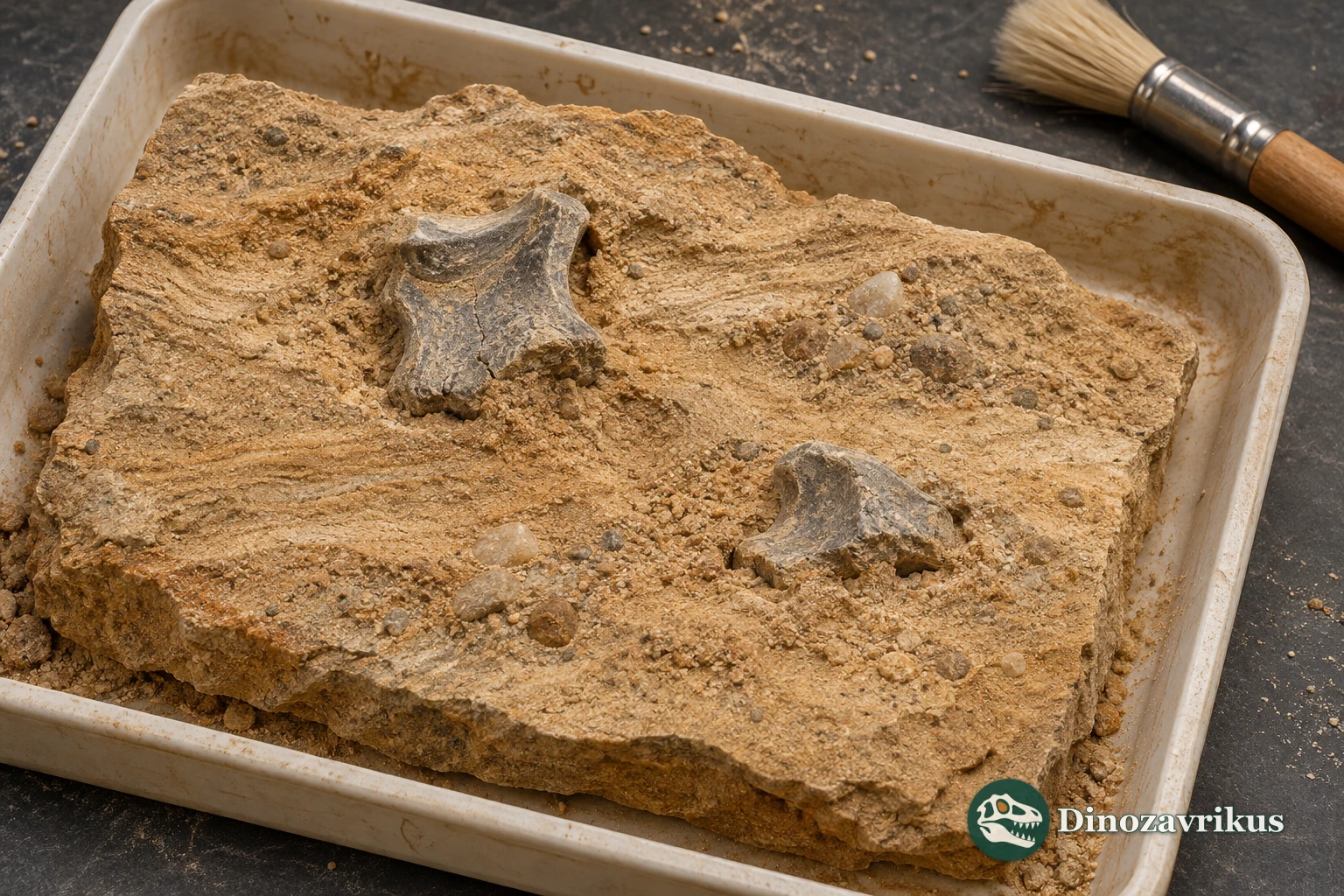
Marcos Cenizo and Federico Agnolín described the species in 2010. The fossil comes from the Santa Cruz Formation, about 12 km south of El Calafate. The specimens are held in the palaeontological collection of the Universidad Nacional de La Pampa. Their two catalogue numbers mark the preserved ends of the same foot bone.
The genus name combines the Aónikenk word anko, meaning father, with the Greek netta, meaning duck. The species name honours Claudio Larriestra, whose sedimentological work focused on Patagonian deposits.
How the bone was identified
The upper end of the tarsometatarsus is 12.72 mm wide and 11.03 mm deep. A prominent bony projection rises between its joint sockets. The ridges for tendons at the upper end and the shape of the second toe joint helped the describers identify a member of the duck family.
The missing shaft makes the full bone length uncertain. Although the upper end resembles that of some whistling ducks, the fossil does not establish flight ability, diet or a particular way of swimming. The older Patagonian duck Cayaoa, which is known from several different leg elements, offers a better supported example of specialised diving.
Frequently asked questions
Where was Ankonetta found?
The specimen comes from the Río Bandurrias locality south of El Calafate in southern Patagonia.
Are the fragments from two birds?
The two catalogue entries identify different parts of one right tarsometatarsus.
Why was it compared with whistling ducks?
They share some proportions and a similar placement of the ridges that guide the toe tendons.
Was Ankonetta a diving duck?
The known bone does not establish swimming style. No additional parts of the skeleton have been assigned to the type species with confidence.