

Cayaoa was an Early Miocene Patagonian duck with short wings and strong legs. The anatomy supports a bird that had lost the ability to fly and propelled itself underwater with its feet. Cross-sections through its femora revealed unusually compact bone, and a separate specimen bears marks interpreted as traces of teeth.
Quick facts
| Family | Anatidae |
|---|---|
| Age | Early Miocene |
| Locality | Gaiman Formation, Chubut, Argentina |
| Holotype | Right tarsometatarsus MLP 77-XII-22-1 |
| Locomotion | Foot-propelled diving |
| Named by | Eduardo Tonni, 1979 |
What can the fossils tell us?
The stout tarsometatarsus and its articulations resemble those of diving ducks. The soft parts of the feet are not preserved.
The humerus and carpometacarpus are small compared with the hindlimbs. This disproportion supports loss of aerial flight.
In two cross-sections, bone occupies about 98.5 and 99.9 per cent of the measured area. The figures apply to those sections rather than the whole body.
From a single foot bone to a larger sample
Eduardo Tonni named Cayaoa bruneti in 1979. The holotype, MLP 77-XII-22-1, is a right tarsometatarsus with part of the fourth toe joint missing. It came from the south bank of the Chubut River between Gaiman and Trelew and is held at the Museo de La Plata. The genus name means duck in Puelche. The species honours Rodolfo Brunet for his work finding fossil vertebrates.
More bones were recovered from marine deposits of the Gaiman Formation. In a 2019 revision Ricardo de Mendoza and Claudia Tambussi compared their shape and size variation with other ducks. Their referred material included five humeri, two carpometacarpi and twelve femora. These are isolated elements, not a count of articulated skeletons.
Underwater strokes and loss of flight
The stout shaft and articular features of the tarsometatarsus fit a foot-propelled diver. The forelimbs are very small relative to the legs, which supports the inference of flightlessness. De Mendoza’s doctoral study estimated body mass at about 3.8 kilograms from bone measurements. The result depends on how those measurements scale to body mass in comparative species.
Foot-propelled diving appeared in unrelated birds, including the much older Antarctic Vegavis. Similar ways of producing thrust can give hindlimbs a similar shape without establishing close ancestry.
Two unusually compact femora
De Mendoza and Tambussi compared cross-sections through two Cayaoa femora in 2015. Bone occupied about 98.5 and 99.9 per cent of the area in those sections. A gentoo penguin in the comparative sample measured about 86 per cent. These figures are fractions of the area filled by bone, rather than measurements of mineral concentration.
This kind of increased compactness is called osteosclerosis. Heavier bones could have reduced buoyancy and helped the bird submerge. The penguin comparison concerns bone structure. Penguins use their flippers for thrust, while Cayaoa shows the hindlimb anatomy of a foot-propelled diver.
Marks from another animal
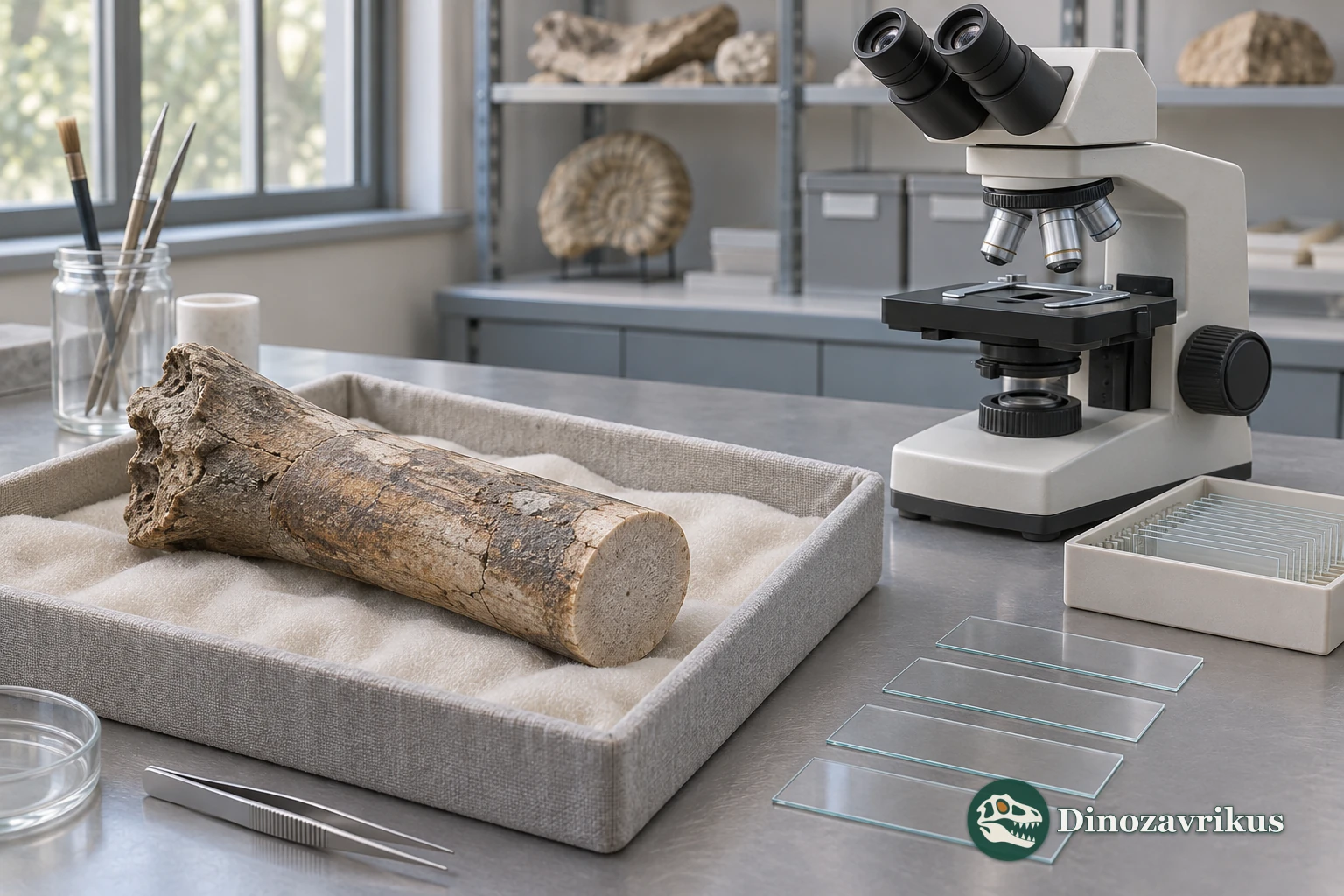
In 2018 de Mendoza and Nadia Haidr described the left tarsometatarsus MPEF PV-10888 from Cerro Castillo, collected by Mónica Buono. Microscopy showed small groups of grooves and curved traces. The researchers interpreted them as marks made by teeth during feeding.
They proposed a small carnivorous mammal among the sparassodonts as a possible source. Both an attack and scavenging shortly after death could explain the marks. The cause of death is unresolved.
A coastal duck and its relatives
The evolutionary analysis published in 2019 returned different arrangements depending on how modern ducks were treated. With a molecular framework for living lineages imposed, Cayaoa emerged near the base of the stiff-tailed duck group. The analysis also shows how limb adaptations to diving can affect the results of comparisons between ducks.
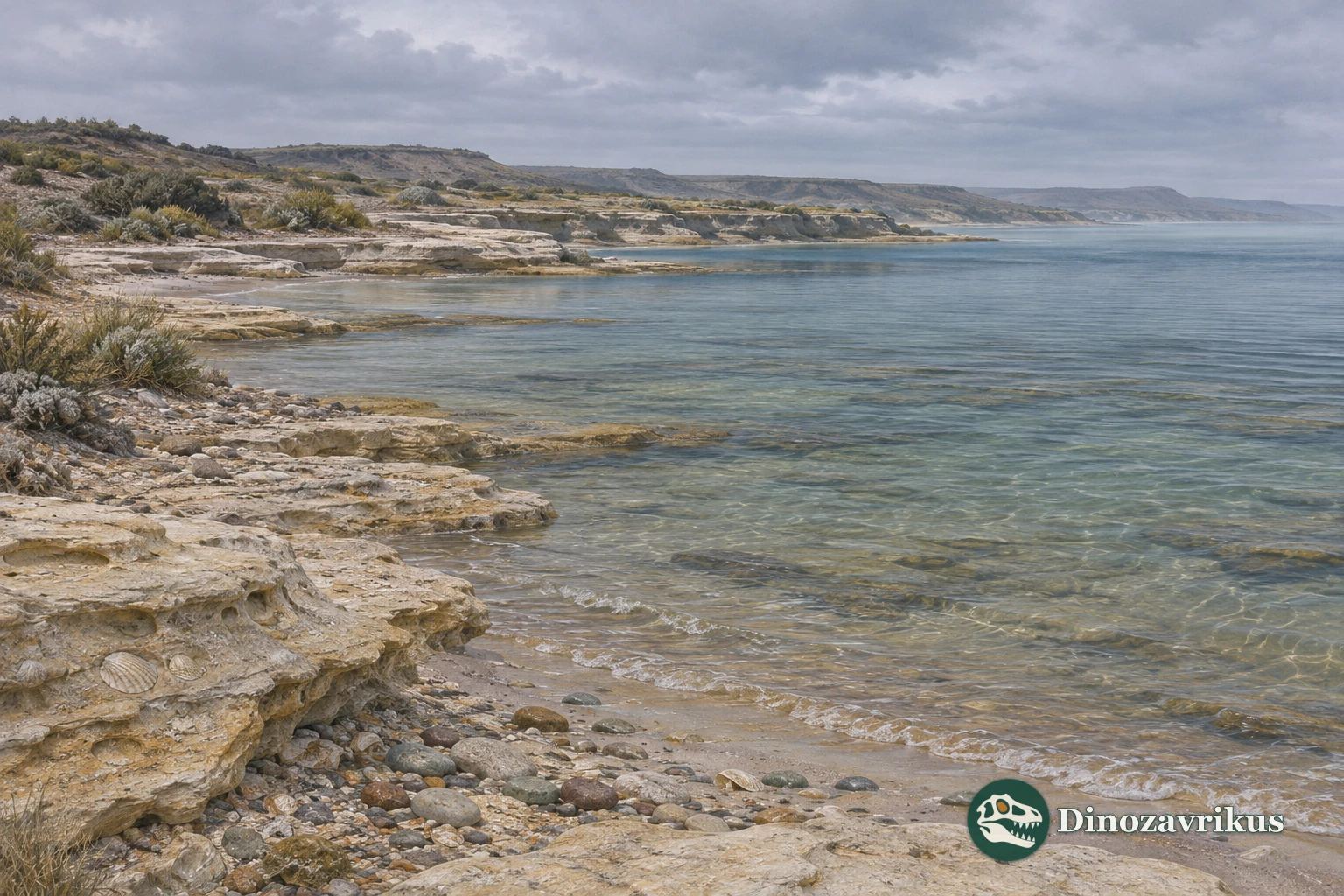
The Gaiman Formation preserves a coastal marine community. That setting agrees with an aquatic life near the shore. The bones do not establish which food Cayaoa took there.
Frequently asked questions
Could Cayaoa fly?
Its strongly reduced wings relative to the hindlimbs support the loss of aerial flight. The legs show features associated with diving propulsion.
Why were its bones compared with penguin bones?
Cross-sections through the femur were almost solid. Other divers, including some penguins, also have very compact bones.
Do the marks show that a predator killed it?
They were interpreted as tooth traces. Either predation or scavenging could have produced them, so they do not determine how the bird died.
Where was the holotype found?
It came from the south bank of the Chubut River in Argentina. The Museo de La Plata holds the type foot bone.