

Ankylodon was a small extinct mammal known from western North America through teeth and fragments of jaws. It has not been found as a complete skeleton. Much of its scientific history concerns how researchers classify a mammal from such limited material.
The genus is included in the ancient mammal catalogue. Its fossils belong to the micro-mammal record recovered from small teeth and bone fragments, often through careful collecting and sediment processing. The unrelated genus Sinclairella illustrates how much identification work can depend on isolated teeth, though its anatomy and history are distinct.
Quick facts
| Scientific name | Ankylodon Patterson & McGrew, 1937 |
|---|---|
| Type species | Ankylodon annectens Patterson & McGrew, 1937 |
| Group | Extinct insectivorous placentals; Sespedectidae |
| Age | Named species from Orellan early Oligocene deposits |
| Region | Western North America; type records from Colorado |
| Known material | Isolated teeth and fragments of upper and lower jaws |
| Body size | No reliable whole-body estimate is available |
What can the fossils tell us?
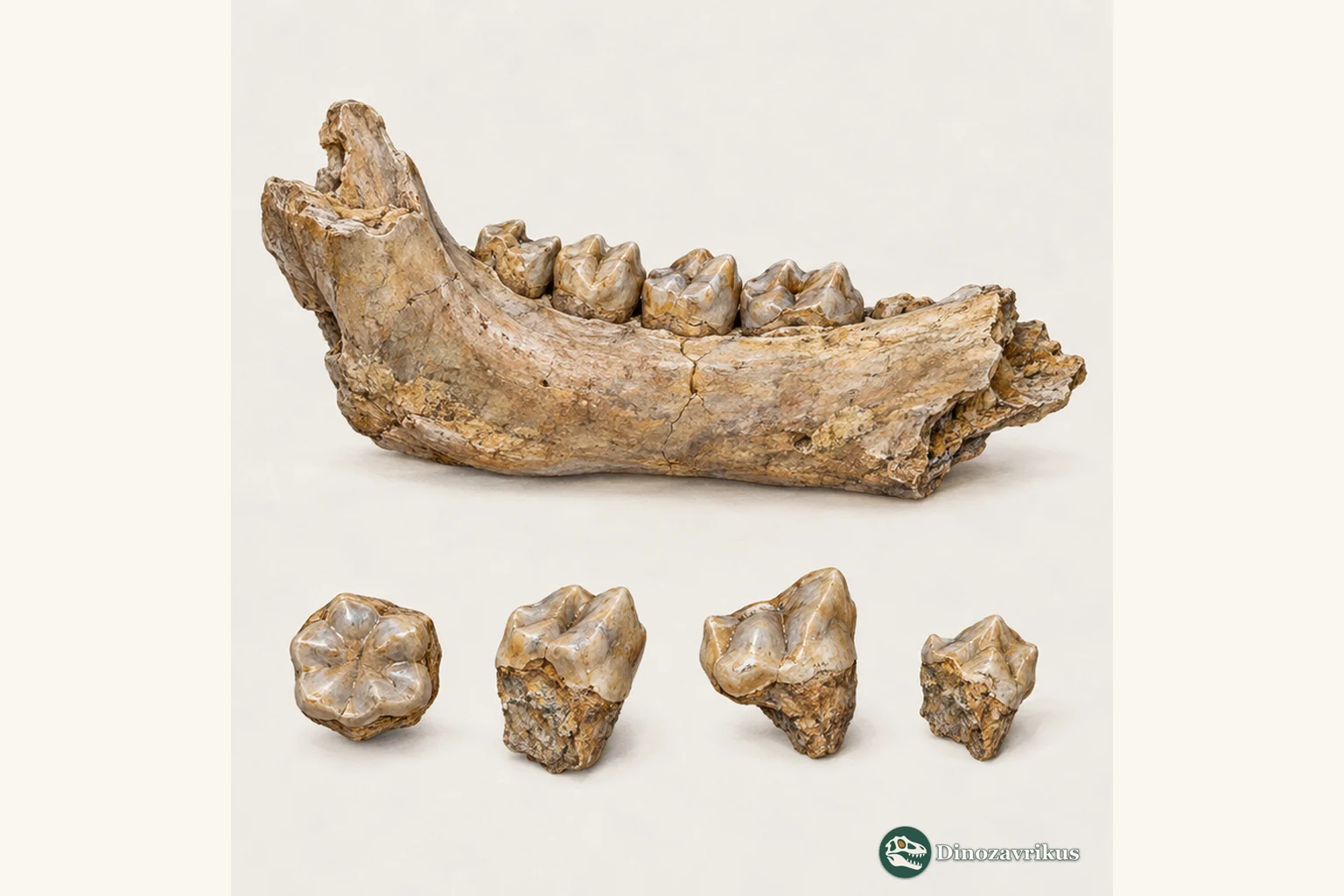
Most characters of Ankylodon are described from small cheek teeth and jaw fragments. Their cusps and proportions help compare specimens, but they cannot reveal a complete skeleton or an exact menu.
Ankylodon annectens is based on material from Weld County, Colorado; A. progressus was named from a posterior lower jaw with molars from Logan County. Sparse overlap limits direct comparisons.
Early classifications emphasised molars and linked Ankylodon with adapisoricids and erinaceomorphs. Richard Fox described the snout and front of the upper dentition in 1983 and argued for soricomorph affinities; modern catalogues place it in Sespedectidae.
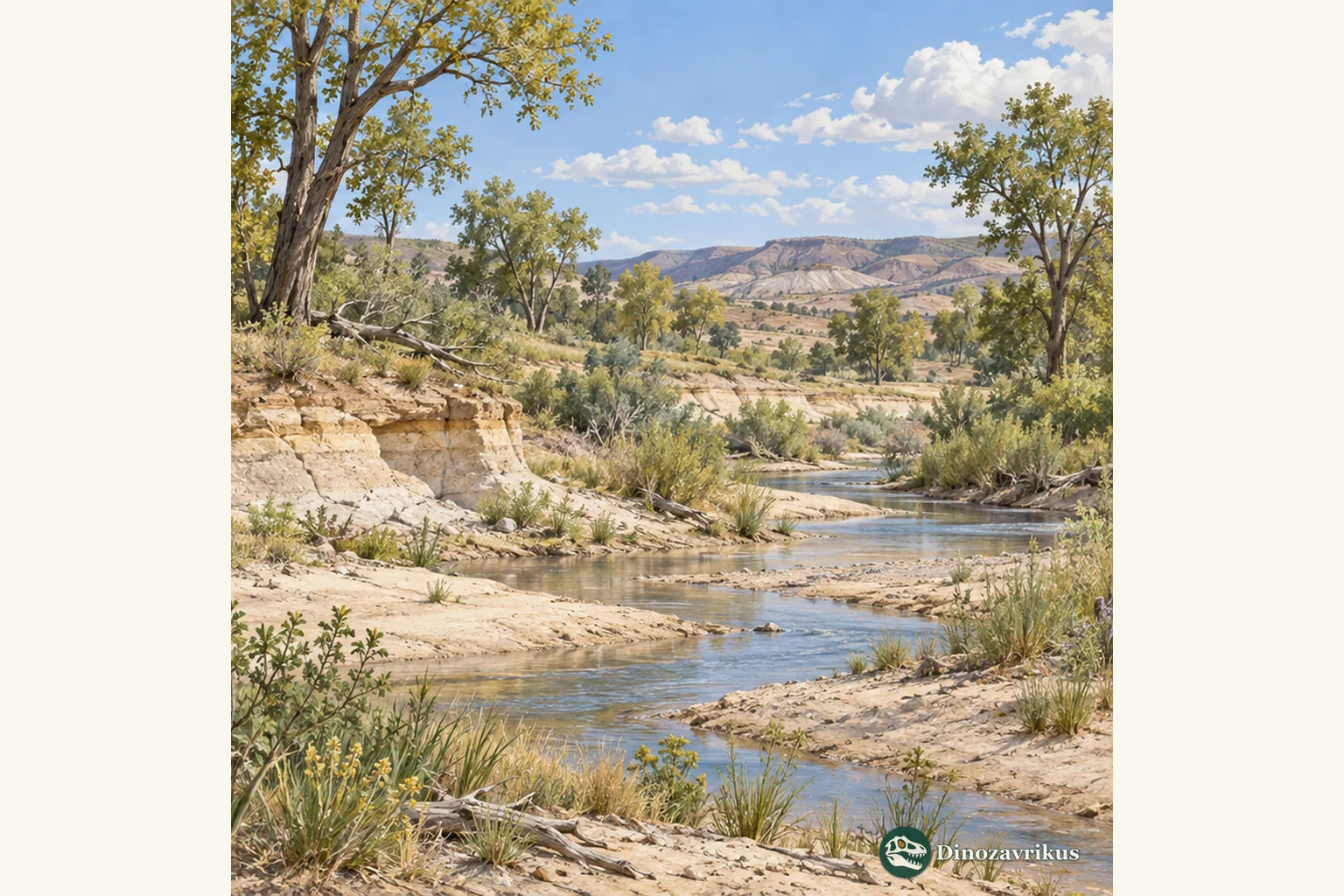
The types of A. annectens and A. progressus come from Orellan White River Formation deposits in Colorado. Later material is sometimes identified only as Ankylodon sp. and should not be treated as equally secure.
Name and type species
Bryan Patterson and Paul McGrew established Ankylodon in 1937 with A. annectens as the type species. The holotype was catalogued as P15326 and came from Weld County, Colorado, in deposits later correlated with the lower Cedar Creek Member of the White River Formation. The original account used the collection name Chicago Natural History Museum; that historical designation is retained when citing the type.
The specimen is not a complete skull. The original diagnosis relied chiefly on fragmentary dental material, so early hypotheses about relationships were especially sensitive to how researchers interpreted the molar cusps.
Two named species and their localities
Edwin Galbreath named a second species, A. progressus, in 1953 from the posterior part of a right lower jaw bearing M1–M3. Its holotype is KU 8153, from the lower Cedar Creek Member in Logan County, Colorado. Galbreath distinguished it from A. annectens partly by cusp arrangement and the shape of the molar heel.
Both type localities are Orellan in the North American Land Mammal Age scheme, within the early Oligocene. Later specimens have sometimes been identified only as Ankylodon sp. The limited overlap among tooth positions makes direct comparison difficult. Some authors have raised the possibility that the named species could be synonyms, but the available fossils have not resolved the question.
The skull and changing relationships
In 1983 Richard Fox described previously underrepresented parts of the snout, face, palate and front of the upper dentition. These characters did not support the earlier emphasis on similarities to adapisoricids and hedgehog relatives based mainly on molars. Fox argued that the additional anatomy instead suggested affinities with soricomorph insectivorans.
That was a research interpretation, not a timeless classification. “Insectivora” is no longer treated as one natural group, and the relationships of small Paleogene placentals have been revised repeatedly. Modern catalogues place Ankylodon in Sespedectidae, but its fragmentary record cautions against treating a single dental feature as proof of its family tree.
Size, feeding and limits of inference
The small teeth indicate a small-bodied mammal, but no reliable body mass or total length has been established for Ankylodon. Dental crowns and cusps allow comparisons of food processing, yet without associated skeletons they do not establish body proportions, limb length or a particular gait.
The traditional insectivore interpretation is consistent with the dental record, but it does not identify a precise menu, seasonality or prey group. No stomach contents, coprolites or direct prey remains have been reported for the genus.
What remains unknown
Direct evidence for Ankylodon consists of teeth and pieces of jaws. Species assignments depend on comparisons of dental characters; relationship hypotheses use a broader set of facial features but remain constrained by the small sample. Exact body mass, coat, colour, reproduction, social behaviour and specific prey are not known.
The fossils are small, but the record is scientifically useful: adding a few previously overlooked parts of the skull changed the debate over the genus’s affinities. Sparse evidence has narrowed some questions without settling all of them.
Frequently asked questions
When did Ankylodon live?
The two named species come from Orellan deposits of early Oligocene age in Colorado. Other records identified only to genus need to be evaluated separately.
Which species are included in Ankylodon?
The literature names A. annectens and A. progressus. They are distinguished by dental features, although sparse material leaves their status open to revision.
Is a complete Ankylodon skeleton known?
No. The type material consists of teeth and fragments of upper or lower jaws, not a complete skeleton.
What did Ankylodon eat?
It is traditionally interpreted as a small insectivore, but teeth alone cannot establish a precise diet. No stomach contents or prey remains are known.