

Sinclairella is a rare extinct mammal genus in the family Apatemyidae. Its type species, S. dakotensis, was described from a crushed skull and jaws in South Dakota; later records are mostly isolated teeth from across western North America. A second named species, S. simplicidens, comes from late Oligocene Florida. The teeth show a specialised mammalian lineage, but the familiar idea that apatemyids extracted insects from wood is not directly demonstrated by Sinclairella limb bones. The genus belongs in the ancient mammal catalogue.
Quick facts
| Scientific name | Sinclairella Jepsen, 1934 |
|---|---|
| Type species | S. dakotensis |
| Second named species | S. simplicidens, described from Florida teeth |
| Group | Apatotheria, family Apatemyidae |
| Age | Late Eocene to late Oligocene across different species |
| Range | Western North America and Florida |
| Type specimen | PU 13585, a crushed skull and jaws from South Dakota |
| Main limitation | No complete postcranial skeleton of Sinclairella is known |
What do the Sinclairella fossils show?
The holotype of Sinclairella dakotensis, PU 13585, came from the upper Chadron Formation at Big Corral Draw, South Dakota. It preserves cranial and dental evidence, but crushing limits reconstruction of the original shape.
Most additional records are molars or short jaw fragments from Nebraska, Colorado and other localities. They help test dental variation and distribution, but do not establish limb proportions or body mass.
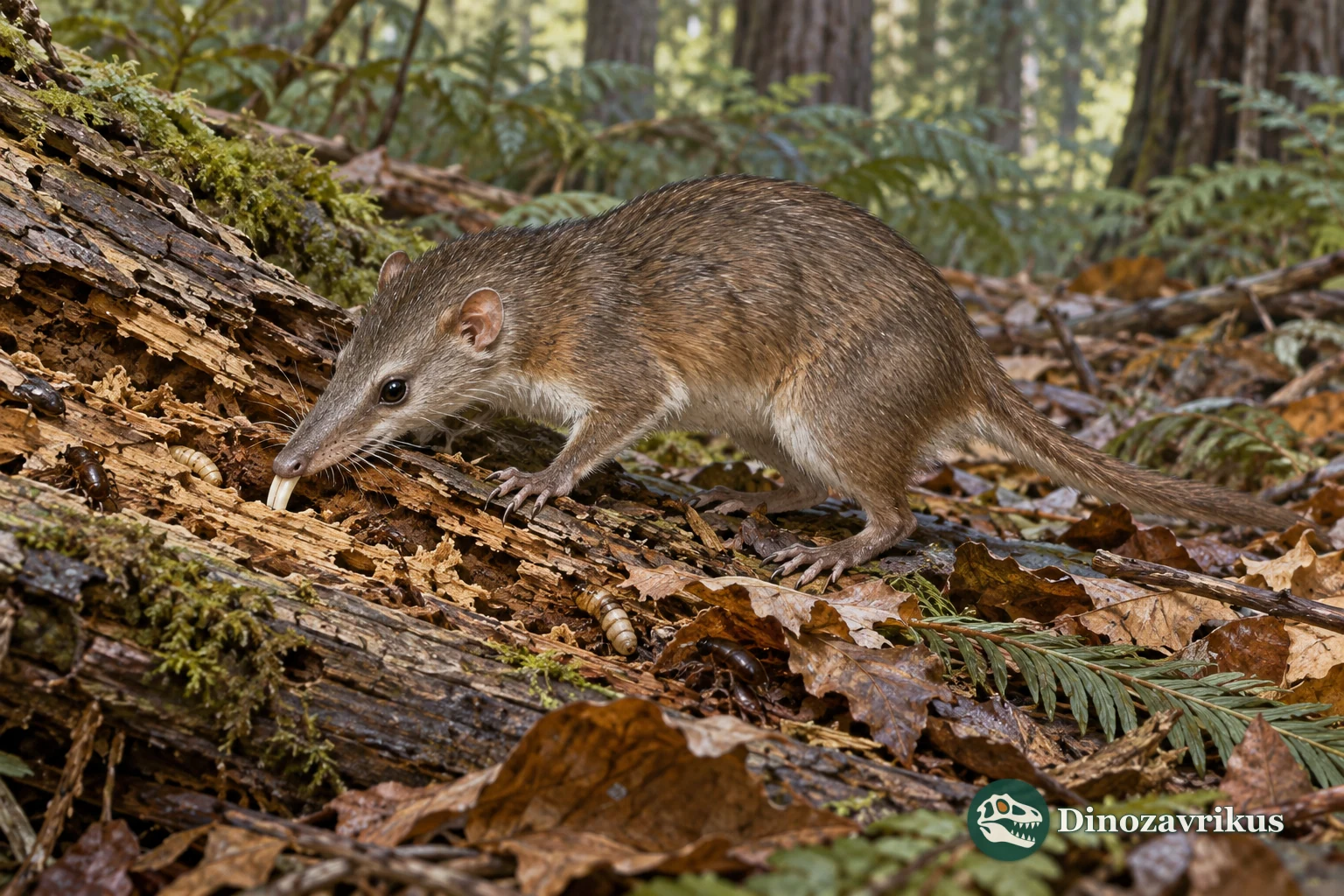
Long fingers in some apatemyids support hypotheses about searching for wood-boring insects. No such hand bones are known for Sinclairella, so that behaviour remains an analogy rather than a direct fossil observation.
The Chadron Formation skull
Glenn Jepsen named Sinclairella dakotensis in 1934 during a revision of North American apatemyids. Its holotype, PU 13585, came from the upper Chadron Formation at Big Corral Draw in southwestern South Dakota. The specimen preserves a crushed skull and jaws rather than a complete skeleton. It established a distinctive combination of cranial and dental characters, although deformation limits reconstruction of the skull's original shape.
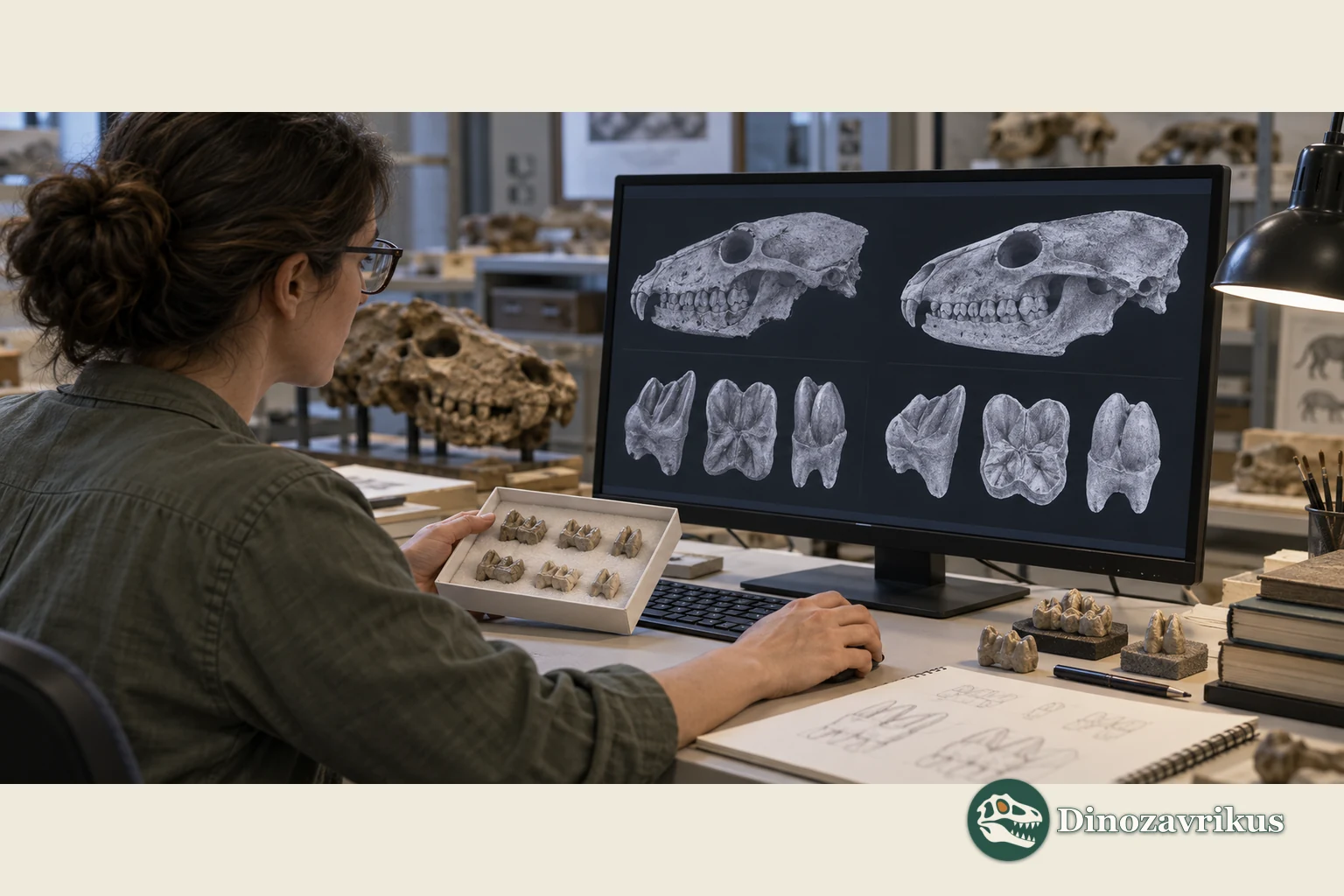
William Clemens compared the type with teeth from other localities in 1964. The material included seven isolated teeth from Sioux County, Nebraska, a maxillary fragment with a premolar and two molars from Logan County, Colorado, and a separate upper molar from Weld County. Similarity in size and crown structure supported some referrals, but Clemens noted that variation within apatemyids was poorly documented. Assignments based on isolated teeth therefore remained provisional.
Dental evidence and the Florida species
The teeth of S. dakotensis are relatively large for apatemyids and have a distinctive pattern of cusps and crests. Descriptions report enlarged front incisors and characteristic molar proportions. The lower first molar of the type specimen is about 3.5 mm long. That figure measures a tooth crown, not the length of the living animal.
Comparisons among Nebraska, Colorado and other western localities help test the species' distribution. They do not mean that all finds are equally secure or contemporary. Fossils collected from ant mounds in Sioux County can combine material of different ages because younger sediment may be redeposited. One abraded Sinclairella tooth led researchers to consider whether it had been reworked from younger deposits.
In 2015, Walter Czaplewski and Gary Morgan described four unassociated upper teeth from the Buda locality in Florida as S. simplicidens. The holotype, UF 97383, is a right M2; three other upper molars were referred to the species. The authors distinguished it from S. dakotensis by size and a combination of crown features. Because the sample consists only of upper teeth, it cannot establish the full anatomy of the new species.
Age and geographic range
Early North American records of the genus are associated with the late middle Eocene of Saskatchewan. S. dakotensis is known from late Eocene and Oligocene sites across the Great Plains and western North America, including early Oligocene localities in Oregon. The Florida species S. simplicidens comes from the late Oligocene. It extends the known apatemyid record farther east and several million years later than earlier reports.
This span combines different species and local faunas. It does not imply that populations from South Dakota, Oregon and Florida lived at the same time. Regional land-mammal ages such as Chadronian, Orellan and Arikareean must be tied to their individual stratigraphic settings.
Behaviour: family analogy and direct evidence
Some apatemyids had enlarged incisors and unusually elongated fingers. In better-preserved members of the family, hand anatomy supports the hypothesis that they searched for insects in wood. This has prompted comparisons with living mammals that open decaying timber or extract larvae from cavities.
Sinclairella is known chiefly from skull and dental material, and no hand or finger bones have been described for the genus. It is therefore not possible to state directly that it climbed trees, stripped bark or extracted larvae with long fingers. Its dental traits are compatible with family-level specialisation, but the precise diet and behaviour remain hypotheses. The better-preserved apatothere Heterohyus provides a useful contrast in the kind of evidence available for discussing fingers; it does not prove that every apatemyid behaved alike.
Body size and reconstruction limits
Individual teeth can be measured more precisely than the body that carried them. The type skull is deformed, while the limb and trunk bones needed for a whole-body estimate are missing. The Florida species is represented by four unassociated upper molars. Neither species supports a dependable body length or mass, and the available record cannot establish whether their overall proportions were alike.
The cover and feeding scene are illustrations. The first depicts cautious museum work on fragmentary fossils; the second visualises an ecological hypothesis. Neither image is a photograph of the holotype or a record of observed behaviour.
Frequently asked questions
What is the Sinclairella type specimen?
The type of S. dakotensis is PU 13585, a crushed skull and jaws from the upper Chadron Formation at Big Corral Draw in South Dakota.
How many species are named?
Two species are described: S. dakotensis, known from cranial material and teeth across several regions, and S. simplicidens, based on four unassociated upper molars from late Oligocene Florida.
Did Sinclairella definitely feed on wood-boring insects?
That behaviour is inferred for apatemyids from evidence in some family members. Sinclairella has no known hand bones, so the feeding reconstruction remains an analogy rather than direct evidence.
Can its body length or mass be estimated?
No dependable whole-body estimate is established. Tooth measurements are available, but they cannot replace the missing associated limb and trunk bones.