

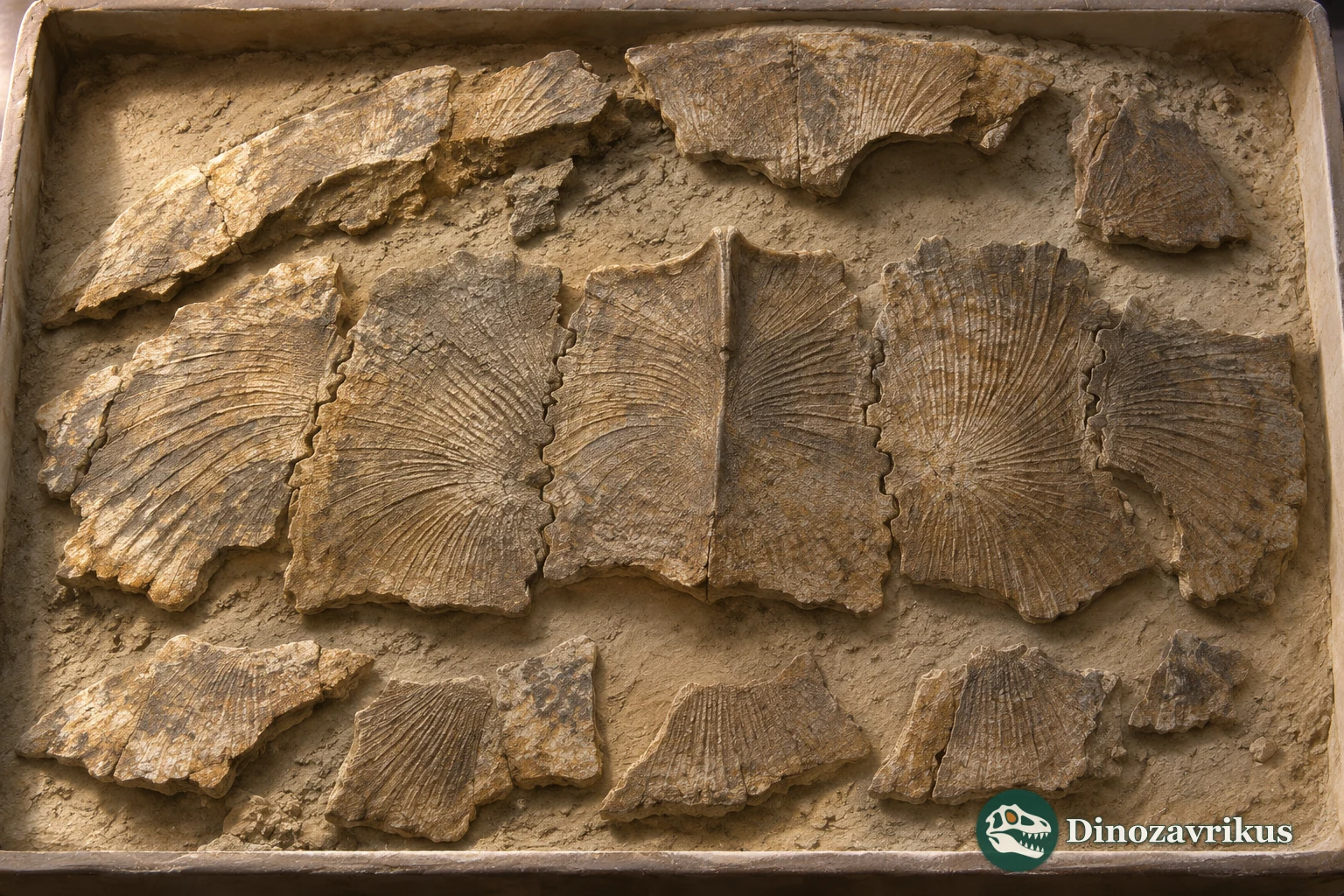
Anosteira was an Eocene freshwater turtle on the lineage leading to the living pig-nosed turtle. Grooves in the bones of its upper shell mark the edges of horny scutes. The plastron, or lower shell, has no such grooves. This combination records a stage in the loss of shell scutes within the pig-nosed turtle lineage.
Quick facts
| Group | Turtles, pig-nosed turtle lineage |
|---|---|
| Age | Eocene |
| Region | North America and Asia |
| Type species | Anosteira ornata |
| Scientific name | Anosteira |
| Diet | No direct dietary evidence |
What can the fossils tell us?
Grooves in the upper shell record scute boundaries. The lower shell preserves no comparable grooves.
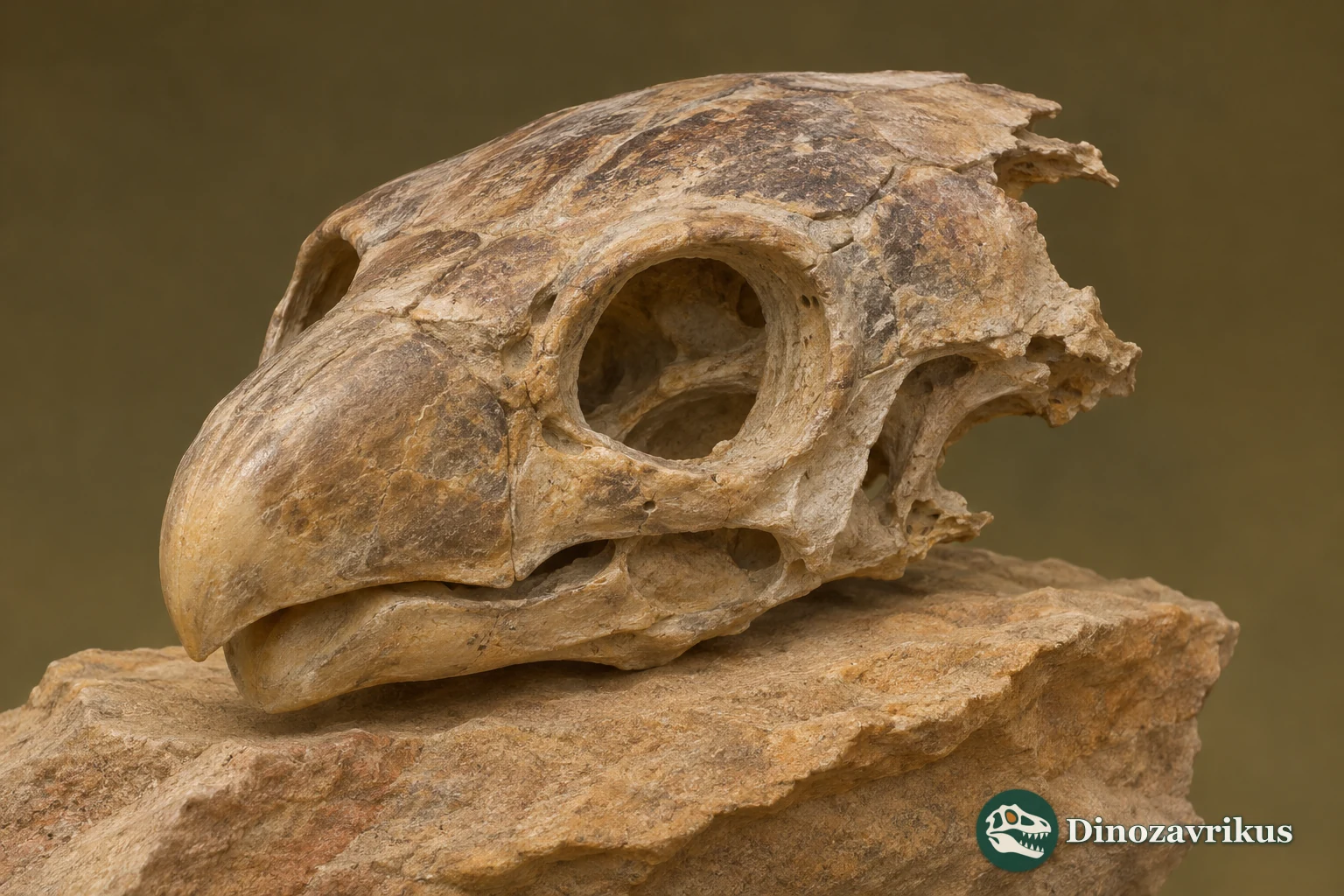
Computed tomography traced the internal carotid canal and a separate passage for a branch of the facial nerve.
Diagnostic shells occur in North America and China. The skulls allow comparison of the American and Chinese species.
From Leidy’s fragments to a type shell
Joseph Leidy named Anosteira ornata from shell fragments found at Church Buttes and Grizzly Buttes in Wyoming. The initial description was brief. He later illustrated better material from the Bridger Formation. ANSP 9846, one of those illustrated shells, was selected as the neotype, the specimen that now anchors the species name. A near-complete shell from the Uinta Formation in Utah, CM 11808, is the type of the second species. John Clark named it Pseudanosteira pulchra in 1932. Later comparisons have generally placed it in Anosteira.
Reading the upper and lower shell
North American Anosteira had an oval carapace, a shallow notch at the front and a ridge down the middle. Ten pairs of bones formed the perimeter. The shapes of the midline bones and the course of the scute grooves distinguish A. ornata from A. pulchra. Additional A. pulchra shells from different levels of the Uinta Formation reveal variation among individuals. The formation also yielded Bridgeremys, an Eocene turtle with a different set of shell characters.
The skull from Wyoming
FMNH PR966 is an incomplete skull from the Washakie Formation. Its anatomy and age support attribution to A. pulchra. CT scans traced the internal carotid canal and a smaller passage interpreted as carrying a branch of the facial nerve. The opening of the carotid canal lies at the boundary of two bones on the base of the skull. In living pig-nosed turtles it usually lies farther back.
Fossils in East Asia and the southern United States
Chinese fossils of Anosteira maomingensis from Guangdong include shell bones, a cranium and a lower jaw, extending anatomical comparisons beyond North America. The American record also reaches beyond the well-known Utah and Wyoming sites. In Arkansas, three isolated shell bones document A. crowcreekensis, with a particularly high section of the midline ridge. Those bones reveal the shape of individual shell elements, while the turtle’s full length and the shape of its head remain unknown.
Frequently asked questions
When did Anosteira live?
The best-dated remains are Eocene. In the western United States, documented specimens come from the Bridger, Uinta and Washakie formations.
Where have Anosteira fossils been found?
North American records include Wyoming, Utah and Arkansas. Well-studied Asian remains include fossils from Guangdong, China.
Did Anosteira have shell scutes?
Grooves show that scutes covered the upper shell. Comparable grooves are absent from the lower shell.
What did Anosteira eat?
Its diet is uncertain. The known fossils provide no direct evidence such as preserved gut contents.