

Bridgeremys was a small Eocene geoemydid turtle. Oliver Hay named it from an incomplete Wyoming shell. Later fossils from Utah extended its local record and let researchers compare it with other turtles from the same basin.
Quick facts
| Group | Turtles, geoemydids (Geoemydidae) |
|---|---|
| Age | Eocene |
| Region | North America, Wyoming and Utah, United States |
| Type species | Bridgeremys pusilla |
| Scientific name | Bridgeremys |
| Diet | No direct dietary evidence |
What can the fossils tell us?
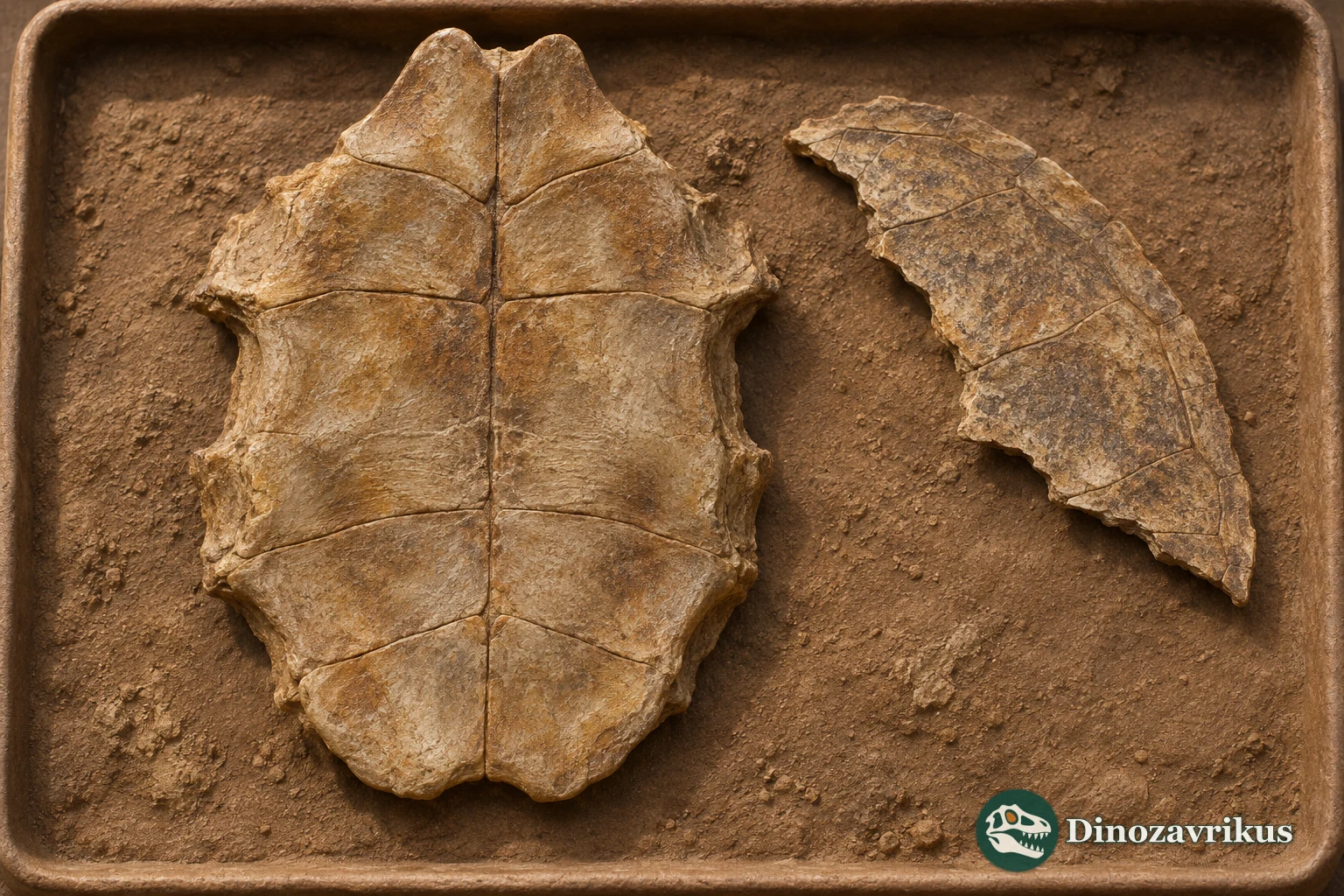
The American Museum of Natural History holds this partial shell from Grizzly Buttes, Wyoming. It anchors the species named in 1908.
Researchers compared the shapes of the front plastral bones using mapped landmarks. The Bridgeremys bones differ from those of two Echmatemys species from the same deposits.
Shell anatomy suggests a possible movable joint between the two main pairs of plastral bones. Those bones give little indication of the range of motion.
How it acquired its own genus
Oliver Hay named the species Echmatemys pusilla in 1908. The type, AMNH 5992, comes from the Bridger Formation at Grizzly Buttes. In 2006, Howard Hutchison placed it in the new genus Bridgeremys after comparing shells and reassessing the material called Clemmys morrisiae.
Small size and shell characters
The reported maximum plastron length is about 16 cm, a shell measurement rather than the length of the entire turtle. The plastron has a shallow notch at its rear edge. Along the midline of the carapace, the second or third neural is octagonal. These characters can be used together when comparing incomplete shells.
From Wyoming to younger rocks in Utah
Bridgeremys is known from several units of the Bridger Formation. In the Uinta Formation of Utah it co-occurs with two species of Echmatemys, E. callopyge and E. wyomingensis. The newer fossils extend the local record of the turtle to the base of the Duchesne River Formation.
What shape analyses revealed
A study of the Uinta turtles used geometric morphometrics to compare their epiplastra, the frontmost paired bones of the lower shell. A second analysis compared the connections between the plates. The authors proposed that turtles sharing the basin may have used their surroundings in different ways. The shell comparisons cannot determine what each one ate.
Frequently asked questions
Where was Bridgeremys found?
Its fossils come from Eocene sites in the western United States. The original specimen is from Wyoming, and younger finds occur in Utah.
How long was its lower shell?
The largest reported plastron is about 16 cm long.
Why was the genus name changed?
Comparisons revealed a combination of shell characters distinguishing this small species from Echmatemys.
Could it close its shell?
The edges of the fossil bones suggest a possible hinge. How far it moved and whether the shell could close are uncertain.