

Anotodus retroflexus is a fossil shark form known chiefly from teeth. Some researchers have placed retroflexus in Isurus, while a recent tooth-shape analysis favours a relationship with thresher sharks. The cover shows that latter possibility; no fossil tail of this animal has been found.
Quick facts
| Name | Anotodus Le Hon, 1871 |
|---|---|
| Discussed species | retroflexus; also called Isurus retroflexus |
| Group | Lamniform shark; family debated |
| Main material | Isolated teeth from several jaw positions |
| Calvert sample | 17 teeth examined in a Smithsonian study |
| Calvert age | Early Miocene |
| Body and tail | Not documented by a complete skeleton |
What can the fossils tell us?
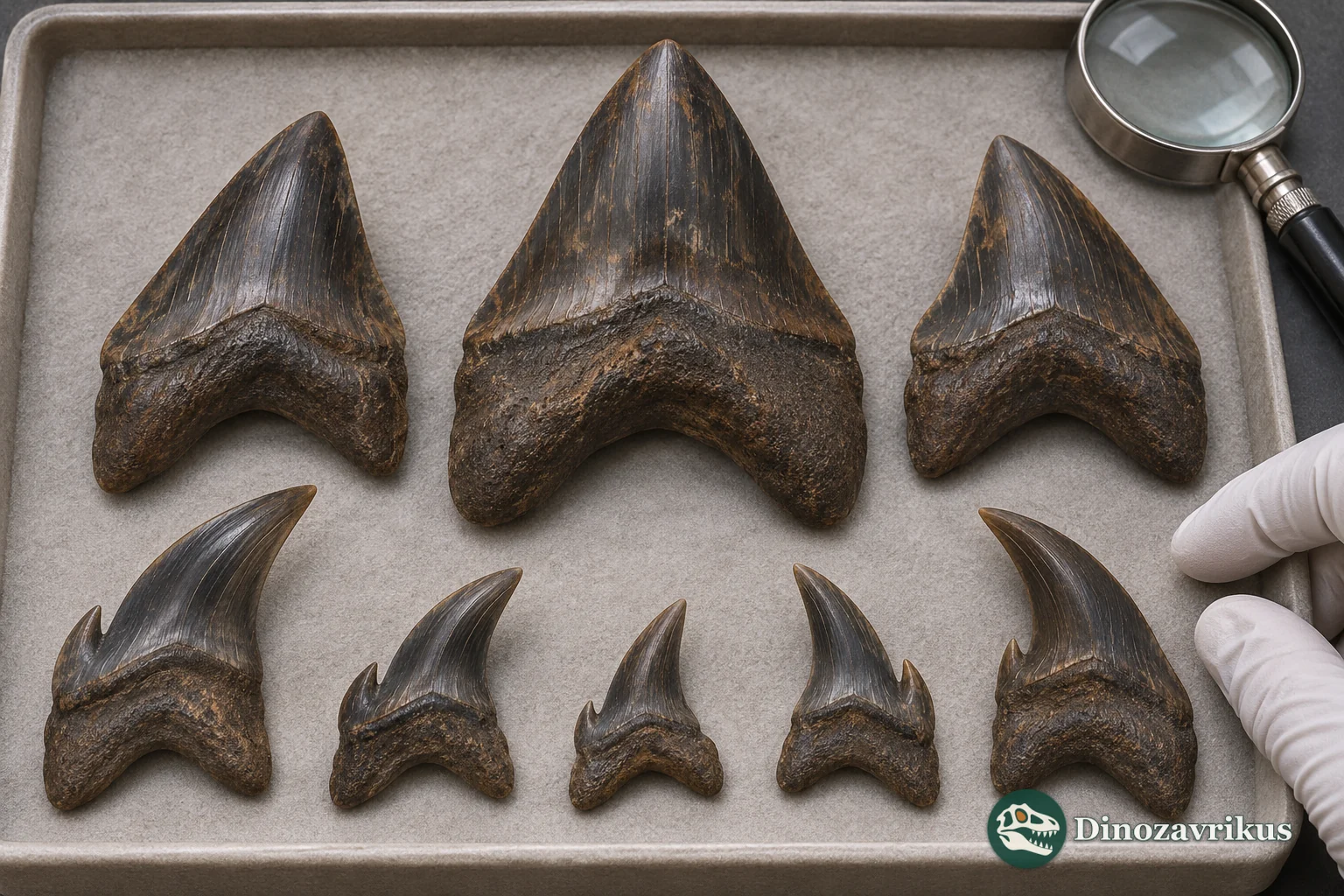
Anterior teeth of retroflexus were described with broad crowns, root features and no serrations. Jaw position changes tooth outline.
The Smithsonian study reviewed 17 teeth from the Calvert Cliffs in Maryland. The count refers to specimens, not individual sharks.
The Smithsonian treatment used Isurus retroflexus. A 2026 morphometric study found stronger support for an alopiid, or thresher-shark, affinity.
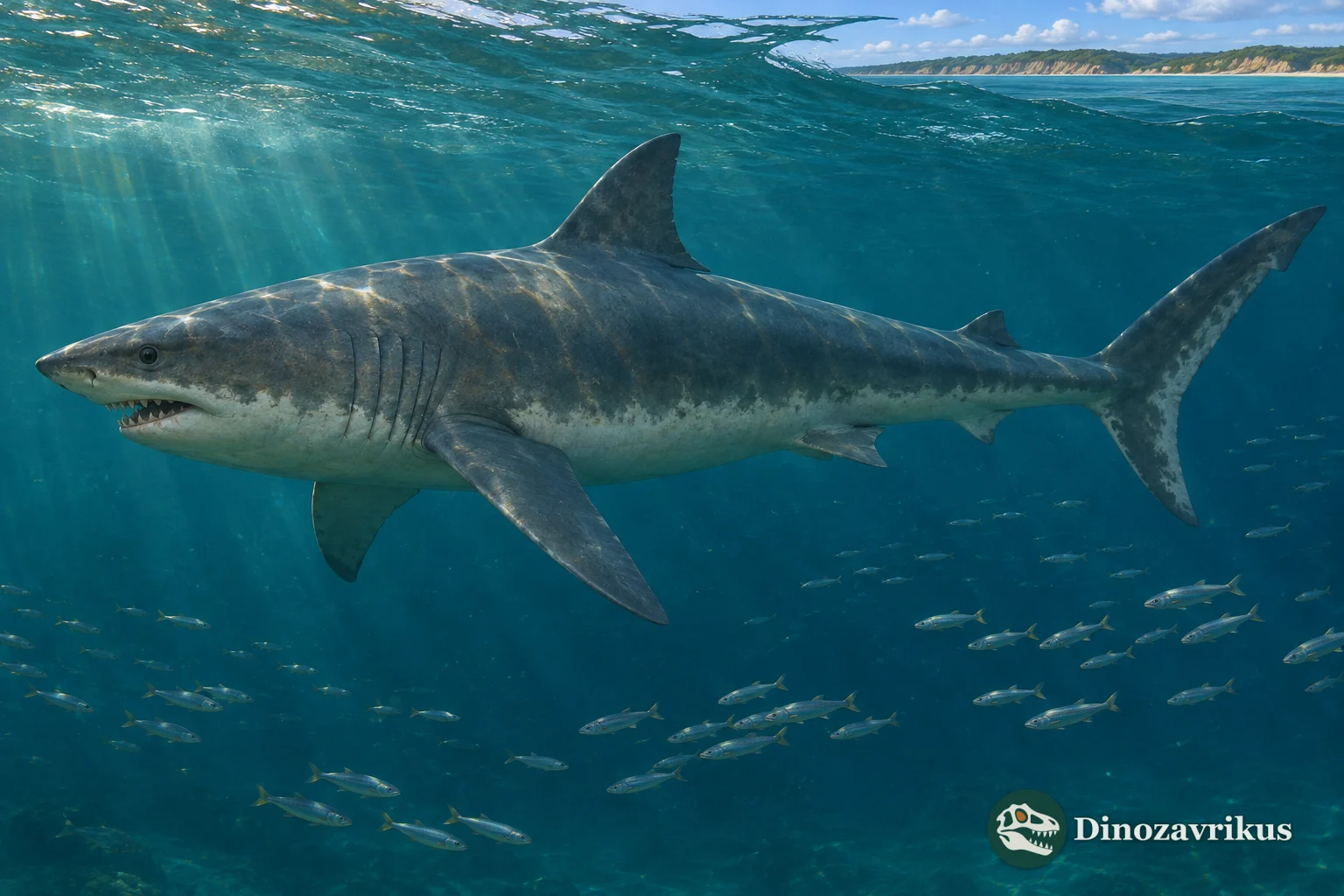
A long upper tail lobe would be plausible if the thresher affinity holds, but it has not been found with Anotodus teeth.
Two names in a taxonomic debate
The combination Isurus retroflexus appears in the Smithsonian account of Calvert fossils. Other work uses Anotodus retroflexus. The alternatives are interpretations of placement for the same discussed form, not evidence for two differently shaped sharks.
Broad comparisons with Parotodus show why a fossil shark's genus can be revised as more tooth positions become available. Names record decisions about evidence, rather than a visible change in the fossil itself.
Seventeen teeth from Calvert Cliffs
The Smithsonian study examined 17 teeth from the early Miocene Calvert Cliffs of Maryland. Some specimens were recovered directly from particular beds. The set includes positional variation: an anterior tooth need not have the same outline as a lateral one.
The description notes broad unserrated crowns and features of the root. These characters can be compared with other lamniform sharks, including Jaekelotodus. The sample does not include a tail, skin impression or full body.
What recent comparisons suggest
A 2026 morphometric study compared tooth shapes and supported an affinity with Alopiidae, the family of living thresher sharks. The Smithsonian authors had favoured placement with Isurus. A tooth-based analysis can change a classification without directly revealing the animal's soft tissues.
The long upper tail lobe in the cover therefore shows a testable comparative hypothesis. It is not a measurement from an excavated Anotodus individual.
Life in Neogene seas
Neogene marine deposits record where teeth entered the sediment, but they do not establish a particular prey species or a hunting sequence. Tooth form can prompt feeding hypotheses. Exact swimming speed, colour and tail use remain unmeasured for this fossil form.
Frequently asked questions
Are Anotodus and Isurus retroflexus different species?
In this debate they are alternative genus placements for retroflexus, rather than two separately documented animals.
How many Calvert teeth were studied?
The Smithsonian study reviewed 17 teeth. That is a specimen count, not a count of sharks.
Is the long tail proven?
No. It illustrates a proposed thresher-shark relationship; no Anotodus tail was found with the teeth.
Why is its family disputed?
Researchers weigh tooth similarities differently. A 2026 morphometric study supports Alopiidae, while the Smithsonian treatment used Isurus.