

Antepithecus was a small notoungulate from middle Eocene Patagonia. Its record is dominated by teeth and jaw fragments rather than a complete skeleton. A revision of museum material recognized one valid species, Antepithecus brachystephanus, from a genus that earlier authors had divided among several names.
The genus belongs in the ancient mammal catalogue. Its history can be compared with that of Notopithecus, another Patagonian notoungulate included in the notopithecid grouping by a phylogenetic revision.
Quick facts
| Scientific name | Antepithecus Ameghino, 1901 |
|---|---|
| Recognized species | A. brachystephanus in the 2014 revision |
| Group | Notoungulata; Notopithecidae in a phylogenetic revision |
| Age | Middle Eocene, chiefly the Barrancan subage |
| Range | Patagonia, especially Chubut and northeastern Santa Cruz |
| Material | Teeth, jaw fragments and museum specimens |
| Mass estimate | About 1.68 kg in a model-based estimate |
| Key limitation | No complete skeleton of the genus is known |
What can Antepithecus fossils show?
The revised type series includes a figured upper molar that is now lost and two syntypes, MACN-A 10841a and MACN-A 10841b. These specimens anchor the name but do not preserve a complete animal.
A 2014 systematic revision examined more than 100 specimens from several collections and recognized A. brachystephanus as the only valid species in the genus. Other historical names were synonymized or transferred elsewhere.
Comparisons of milk and permanent teeth support a posterior-to-anterior replacement sequence: P4/p4, then P3/p3, then P2/p2. This is a dental-development observation, not a direct measure of lifespan or growth rate.
Published estimates use dental measurements and comparative regression equations. The value is not a direct weighing, and results depend on the model and reference sample.
Name, type material and collections
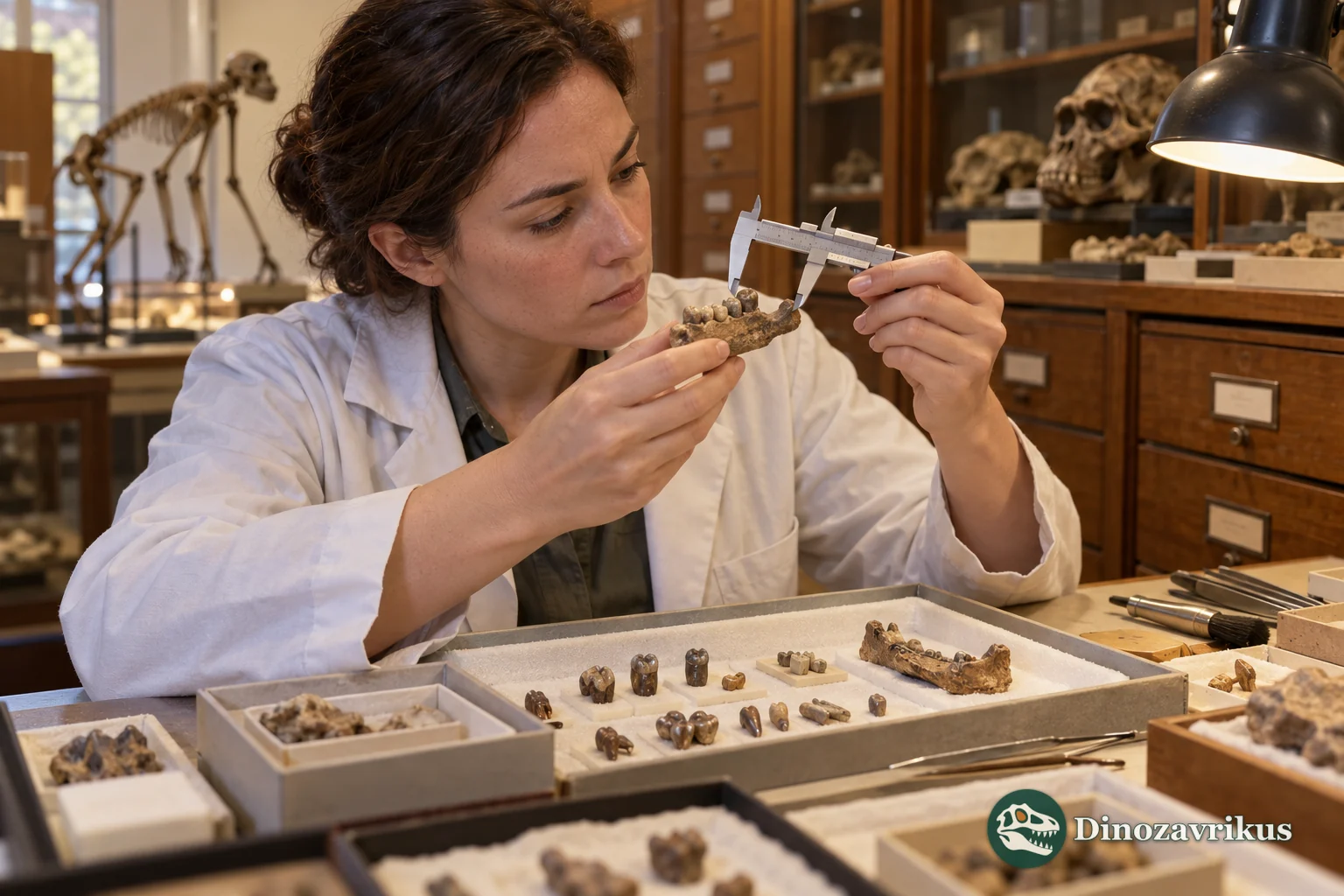
Florentino Ameghino established Antepithecus in 1901. Early descriptions and later museum catalogues applied several names to small Eocene teeth whose differences were difficult to assess from isolated crowns. The 2014 revision by Bárbara Vera compared more than 100 specimens, including previously unpublished or incorrectly identified material from the American Museum of Natural History, the Museo Argentino de Ciencias Naturales Bernardino Rivadavia, the Museo de La Plata and other collections.
The type series of A. brachystephanus was restricted to an upper molar figured by Ameghino and now considered lost, together with syntypes MACN-A 10841a and MACN-A 10841b. These are dental specimens, not a complete skull or skeleton.
One recognized species and older synonyms
The revision recognizes one valid species, Antepithecus brachystephanus. Names brought into its synonymy include A. interrasus, Infrapithecus cinctus, Pseudoadiantus imperfectus and Pseudadiantus secans, along with some material previously assigned to Adpithecus reduncus and Gonopithecus trigonodontoides. A. plexostephanos was removed from the genus and referred to Oldfieldthomasiidae.
Some differences among historical names reflect changes in tooth size and shape through growth and wear. Synonymy means that the revision found insufficient evidence for several separate species; it does not mean that every older identification was equally secure.
Teeth and development
Upper and lower cheek teeth provide the most useful evidence for identifying Antepithecus. Their dimensions and crown shape vary with position and wear, so diagnosis should consider where a tooth sat in the row and whether it is deciduous or permanent.
In Antepithecus and some related Patagonian forms, permanent premolars erupted from back to front: P4/p4 first, then P3/p3, followed by P2/p2. Researchers inferred this by comparing milk teeth and permanent crowns across museum specimens. A published mean mass estimate near 1.68 kg was calculated from dental measurements with comparative equations, not measured from a complete skeleton.
Age, geography and environment
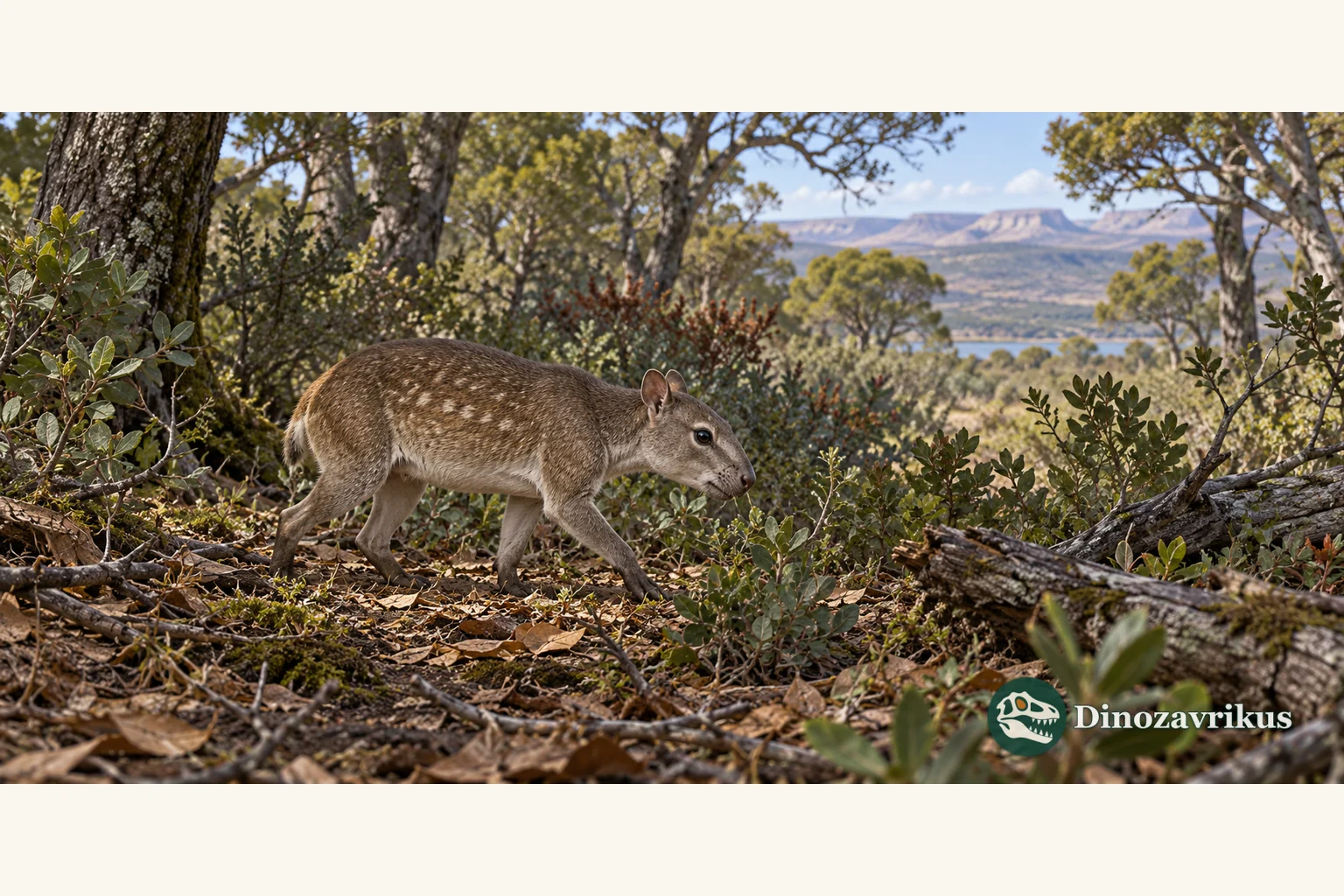
The genus is associated chiefly with middle Eocene Patagonian faunas, especially the Barrancan subage of the Casamayoran South American Land Mammal Age. Records are linked to the Sarmiento Formation in Chubut and northeastern Santa Cruz. Individual museum specimens come from different outcrops, so the whole series should not be assigned one precise bed-level age.
Some collection records lack full locality or stratigraphic detail. A broad label such as Eocene is useful context, but cannot establish the exact age of a specimen. The formation provides a geological setting, not a direct record of one precise forest type or diet for Antepithecus.
Classification and biological limits
A 2016 phylogenetic revision grouped Antepithecus brachystephanus with Notopithecus adapinus, Transpithecus obtentus and Guilielmoscottia plicifera in Notopithecidae. Older studies often placed these forms within Interatheriidae as Notopithecinae. These are different taxonomic frameworks, and the classification should be tied to its analysis.
The grouping does not show that one genus was a direct ancestor of another. Teeth and jaw fragments are direct evidence; mass is a model-based inference. Body shape, limb proportions, fur, colour and behaviour remain reconstructions, none preserved directly for this genus.
Frequently asked questions
How many species of Antepithecus are currently recognized?
The 2014 revision recognizes one valid species, Antepithecus brachystephanus. Several older names were synonymized, while A. plexostephanos was transferred to another family.
Where were Antepithecus fossils found?
The record comes from Eocene deposits of Patagonia, especially Chubut and northeastern Santa Cruz in Argentina. Locality detail varies among museum specimens.
How large was Antepithecus?
One published model-based estimate is about 1.68 kg. It was calculated from dental measurements and comparative equations rather than measured from a complete skeleton.
What is unusual about its development?
Permanent premolars appear to have erupted from back to front, with the fourth replacing before the third and second. This sequence comes from comparisons of fossil teeth.