

Notopithecus was a small middle Eocene South American notoungulate. For decades its anatomy was known mainly from teeth and skull fragments, until an associated skeleton from Patagonia linked the dental record with the vertebrae and limbs.
The genus is included in the ancient mammal catalogue. The associated skeleton adds anatomical detail, although parts of the life reconstruction still rely on comparison with related typotheres.
Quick facts
| Scientific name | Notopithecus Ameghino, 1897 |
|---|---|
| Type species | Notopithecus adapinus Ameghino, 1897 |
| Group | Notoungulata, Typotheria; family assignment depends on the revision |
| Age | Middle Eocene, Patagonia |
| Range | Chubut Province, Argentina |
| Best skeleton | MPEF-PV 1113 from Valle Hermoso |
| Body-mass estimates | About 1–5 kg across notopithecines; a modelled group range, not a direct measurement |
What can the fossils tell us?
MPEF-PV 1113 preserves an articulated cranium and mandible, vertebrae and most of the postcranial skeleton. It provided limb evidence missing from earlier accounts of the genus.
The MPEF individual is an old animal with heavily worn teeth. Comparisons across specimens reveal changes during growth and an unusual back-to-front sequence of premolar eruption.
Ameghino's type material was later re-examined. Bárbara Vera's revision designates MACN-A 10822a as lectotype of N. adapinus; other names are treated as synonyms, uncertain species or nomen dubium.
MPEF-PV 1113 includes a scapula, limb bones, ankle elements, metapodials and phalanges. Measurements help compare typotheres but do not directly provide a running speed or a full behavioural record.
Discovery and the type series
Florentino Ameghino named Notopithecus adapinus in 1897 from Patagonian fossil material. Over the following decades, isolated teeth and fragments in museum collections were assigned to several species. Missing or incomplete original material made those names difficult to compare consistently.
Bárbara Vera's systematic revision clarified the type series. Her 2012 journal paper discussed MACN-A 10822 as the type specimen; the associated doctoral revision designated MACN-A 10822a as lectotype. That lot includes a maxilla, humerus, tibia, fibula and five vertebrae. The varying historical labels reflect the later sorting of the collection, not two complete skeletons.
The Valle Hermoso skeleton
The specimen MPEF-PV 1113 comes from Valle Hermoso in Chubut Province, Argentina. A field team led by Kirk Johnson collected it in 1991, but it remained unidentified until Vera described it in 2012 as the most complete known individual of Notopithecus.
The specimen preserves an articulated cranium and mandible, several vertebrae, a scapula, forelimb and hind-limb bones, ankle elements, metapodials and phalanges. Many pieces remained in anatomical position, although the fossil was divided into blocks and is partly disarticulated. That association lets researchers compare linked parts of one animal rather than assemble a body from unrelated finds.
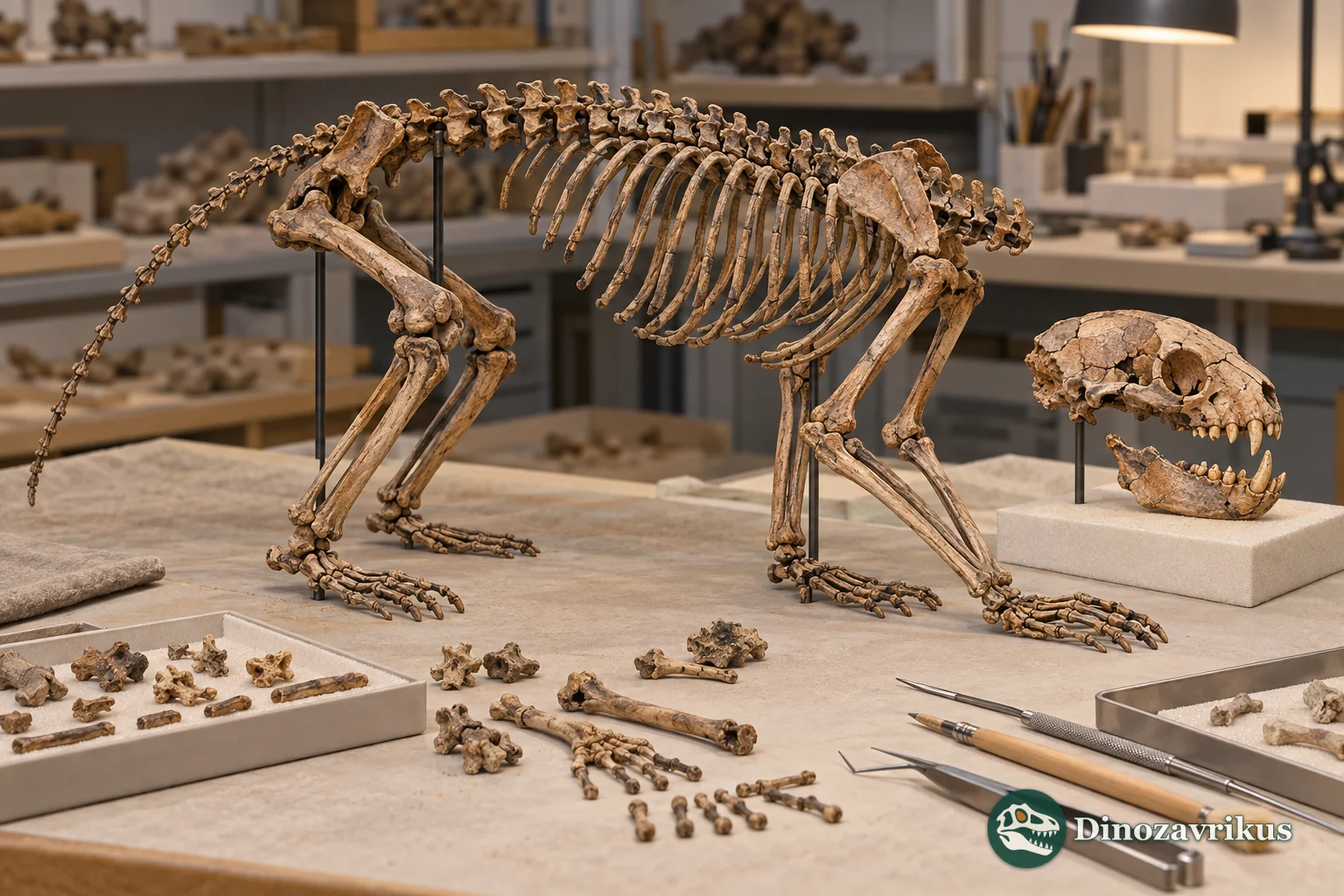
MPEF-PV 1113 belonged to an old individual with heavily worn teeth. This matters when dental differences are used to separate species: wear and age can change the visible shape of a tooth. Associated postcranial bones also help test which limb remains can be linked to the genus.
Teeth, feeding and growth
Notopithecus had low-crowned, lophodont cheek teeth. Their ridges are compatible with processing plant material, but no published stomach contents directly identify a menu. Tooth shape supports a broad dietary inference rather than a list of particular plants.
Comparisons among specimens show that dental features changed during growth. Vera also described a premolar eruption sequence that proceeds from the back of the row toward the front, an unusual pattern among notoungulates and a character relevant to relationships within the group. The worn teeth of MPEF-PV 1113 provide an adult endpoint for those comparisons.
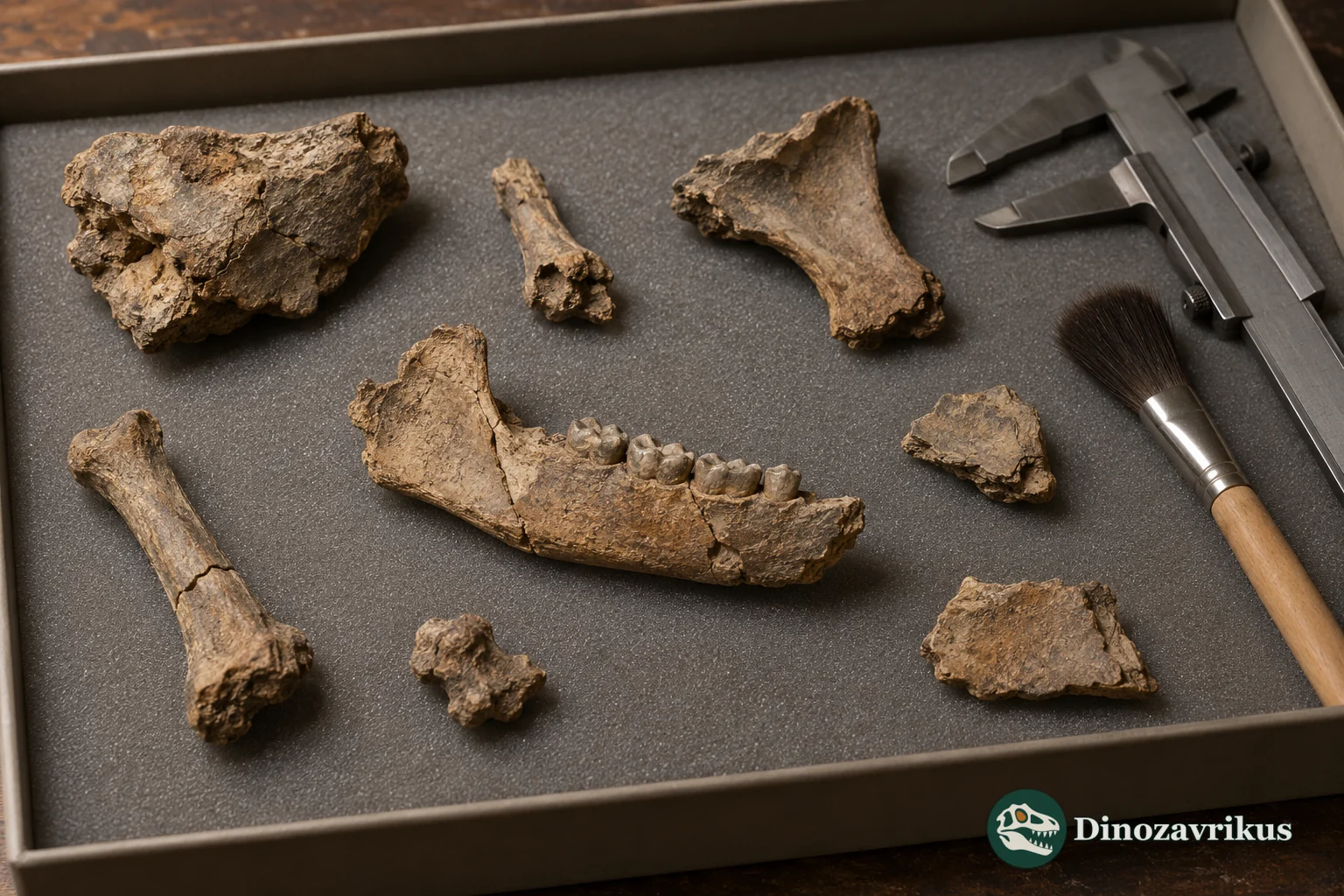
Published body-mass estimates for notopithecines span roughly 1 to 5 kilograms. They come from measurements and comparative models across the group, not from weighing a complete Notopithecus. The associated skeleton improves the anatomical basis for comparisons while leaving model choice and range important.
Species names and family placement
Vera's revision recognizes N. adapinus as the valid species of the genus. The type material of Notopithecus fossulatus does not permit a reliable diagnosis, so that name is treated as a species inquirenda. N. summus is regarded as a nomen dubium. Several other historic names were synonymized with N. adapinus or reassigned to related genera.
Family-level classification has also changed. The genus was traditionally placed in Interatheriidae. Vera's phylogenetic work recovered a Patagonian group and revalidated Notopithecidae for several genera, including Notopithecus, Antepithecus, Transpithecus and Guilielmoscottia. The family name should therefore be tied to the classification being followed rather than presented as a settled universal choice.
Other South American notoungulates in the catalogue, including Notostylops and Nesodon, show how varied the broader group became. They are comparisons across a wider history, not substitute specimens for the anatomy of Notopithecus.
Age and environment
The best documented remains come from middle Eocene deposits in Patagonia. Researchers use South American land-mammal ages such as the Casamayoran and its Barrancan subage to place the fossils within local biochronology. These intervals are not exact calendar dates for each bone.
Valle Hermoso lies in the Eocene sedimentary record of Chubut. Sedimentology and associated fossils provide the environmental setting; the teeth and skeleton alone do not establish a precise landscape, coat colour, seasonal movement or social behaviour.
The fossil skeleton makes limb comparisons possible, but the published life reconstruction still includes comparative choices. Vera's 2012 figure based the skull chiefly on MPEF-PV 1113 and used Interatherium robustum to help restore unpreserved postcranial parts, modified to match the new limb evidence.
Frequently asked questions
When did Notopithecus live?
The known material comes from the middle Eocene of Patagonia and is placed using Casamayoran biochronology.
What is the most complete specimen?
MPEF-PV 1113 from Valle Hermoso preserves an articulated skull and mandible, vertebrae and most of the postcranial skeleton. Bárbara Vera described it in 2012.
What did Notopithecus eat?
Its low-crowned ridged teeth are compatible with plant material, but no direct gut contents are known for the species.
Why is Notopithecus fossulatus uncertain?
Vera's revision concluded that its type material does not allow a reliable diagnosis, so the name is treated as a species inquirenda rather than a secure species of the genus.