

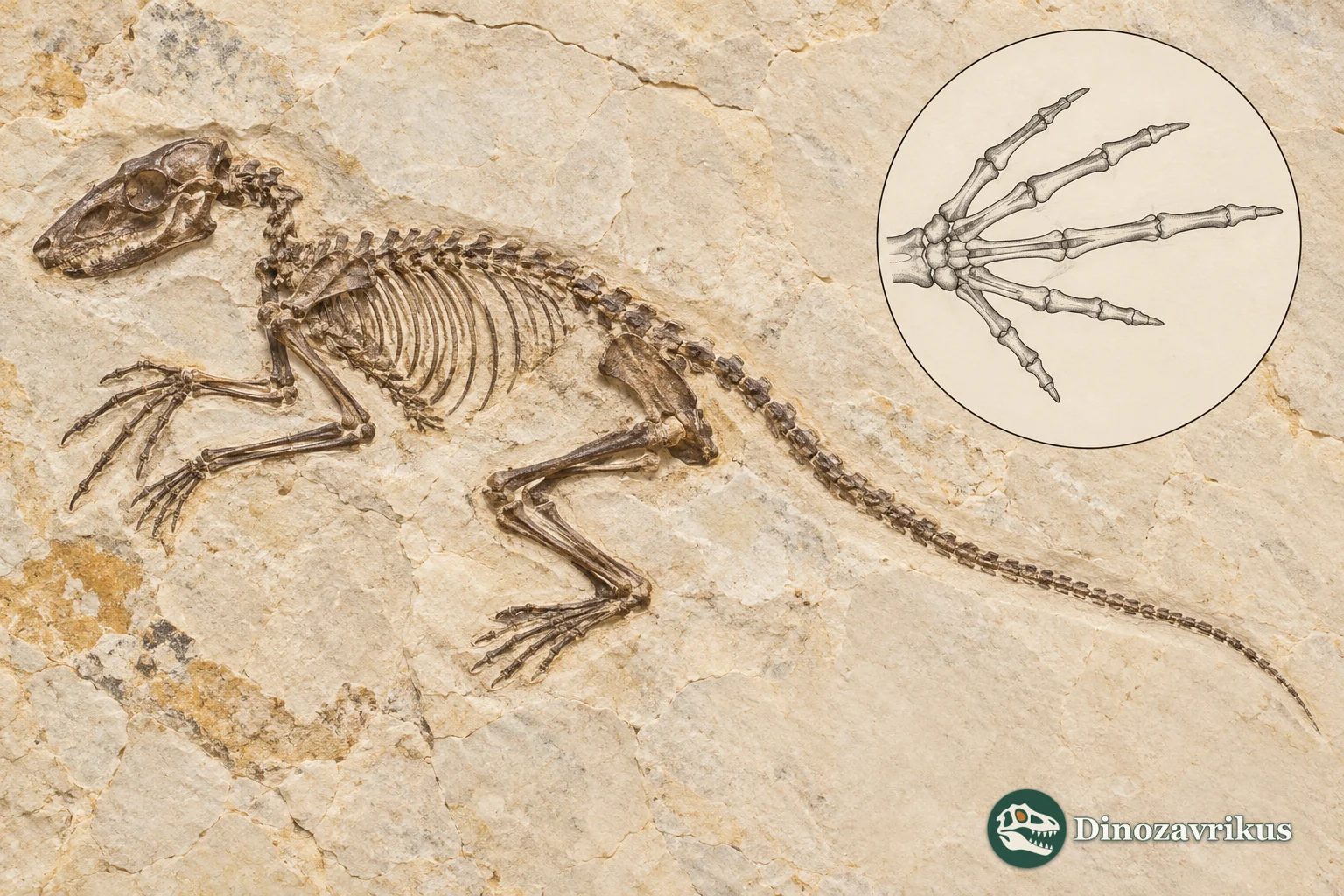
Apatemys was a small member of the extinct apatemyid lineage in Eocene North America. It is more than a name based on teeth: a nearly complete skeleton of A. chardini preserves its hands, body proportions and long tail. Elongated fingers led researchers to propose probing bark for insect larvae. That is a functional inference, not an observed feeding event.
The genus belongs in the ancient mammal catalogue. The rare skeleton and more fragmentary later fossils must be interpreted at different levels of confidence.
Quick facts
| Scientific name | Apatemys, family Apatemyidae |
|---|---|
| Age | Eocene; individual species span different intervals |
| Range | North America, including Wyoming |
| Key skeleton | A. chardini, Fossil Butte Member of the Green River Formation |
| Skeleton dimensions | Head and body about 15 cm; tail about 21 cm |
| Other material | Skulls, jaws and isolated teeth |
| Notable anatomy | Elongated second and third fingers in the studied skeleton |
| Foraging | Probing bark for insect larvae is inferred, not directly observed |
What can the fossils tell us?
The nearly complete early Eocene specimen preserves the body, limbs and long tail. Its measured dimensions belong to this specimen, not automatically to every Apatemys species.
Digits II and III are elongated. Their anatomy suggests probing crevices in bark for prey; the fossil does not preserve a feeding event.
Later localities often yield isolated teeth. Their shape and position allow comparison, but a single crown is less informative than a skull and skeleton.
The early Eocene A. chardini skeleton, Bridger Formation species and later Great Plains teeth cannot be treated as one population. Each referral depends on specimen and stratum.
An exceptional skeleton from Fossil Butte
Researchers described a nearly complete articulated A. chardini skeleton from the lower Eocene Fossil Butte Member of Wyoming's Green River Formation. Unlike loose teeth, it retains the relation of bones to one another. The authors measured its head and body at roughly 15 cm and its tail at roughly 21 cm. These are measurements of one specimen, not a fixed size for all animals assigned to Apatemys.
The hand is particularly informative. The second and third fingers are elongated and could reach into narrow cracks. The describing authors proposed that the animal extracted larvae from bark, perhaps assisted by its strong anterior teeth. No fossil hand preserves the act of feeding, and the skeleton cannot tell us the animal's coat colour, favourite tree or exact time spent above ground.
Teeth, species and old identifications
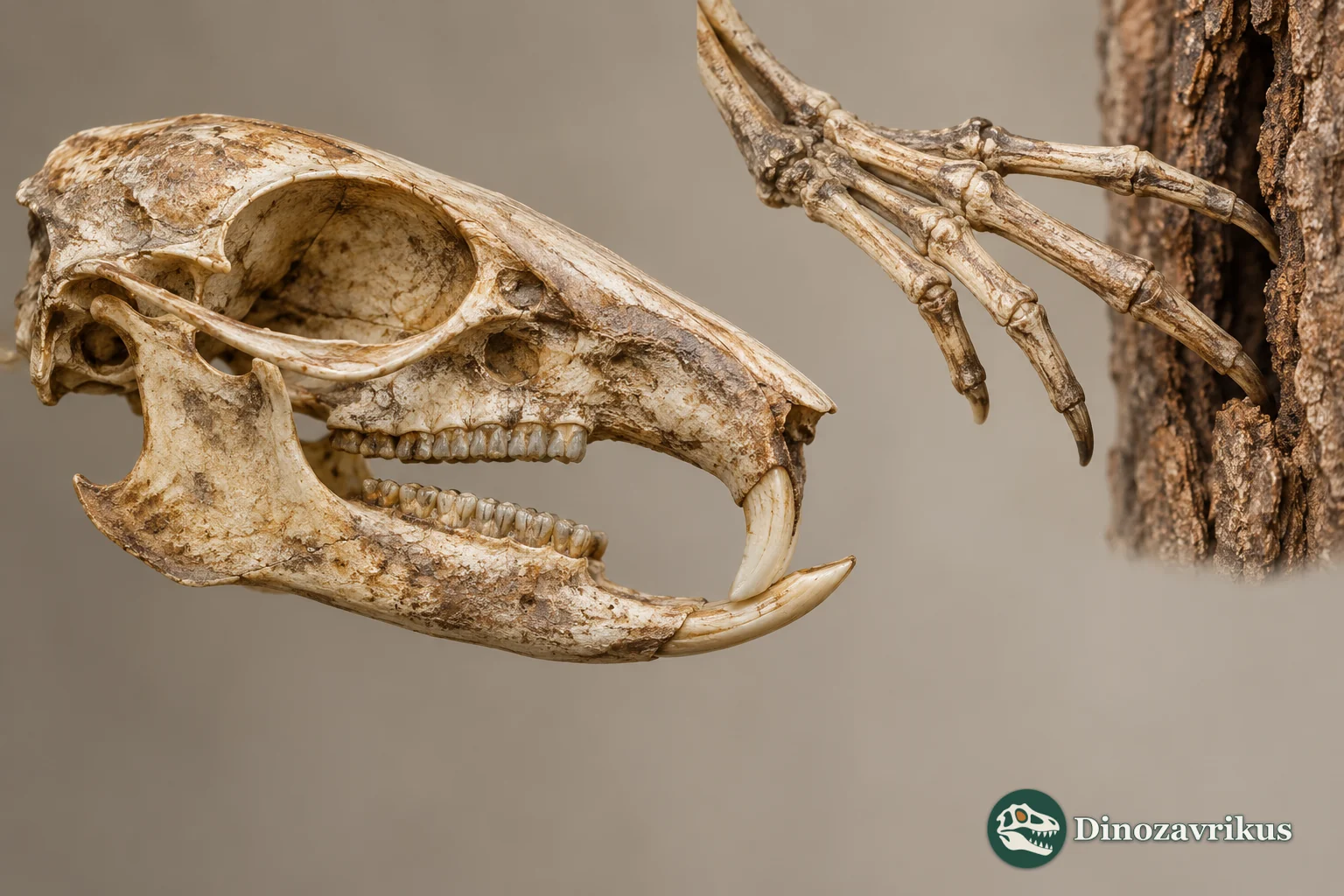
Much of the apatemyid record consists of teeth and jaws. Researchers compare large front incisors, unusual premolars, molar form and size. Wear can obscure a diagnostic surface. Similar crowns need not belong to the same species, and old museum labels require checking against anatomy and geological context.
Bridger Formation material in Wyoming includes teeth assigned to A. bellulus and A. rodens. Scarcer later apatemyid teeth from the Great Plains show that the group's history is not confined to the early Eocene skeleton. A later tooth does not make the particular A. chardini individual long lived. Taxonomic boundaries remain questions for comparison of actual specimens.
An inferred life among Eocene trees
The skeleton and its setting permit an arboreal interpretation. Long fingers fit the proposed search under bark, but fossils do not measure the insect share of the diet or prove the animal never descended to the ground. The cover depicts a possible behaviour, with fur, plant species and stance supplied by the artist.
These fossils belong to the Palaeogene Period. A quite different small Eocene mammal, Vulpavus, is shown in a forest setting on this site as well. Similar backgrounds do not demonstrate close kinship or a documented encounter.
Frequently asked questions
Was Apatemys a direct ancestor of modern lemurs?
The fossils do not demonstrate such direct ancestry. Apatemyids were an extinct lineage; similarities in climbing or foraging adaptations alone cannot establish a parent lineage of living primates.
Why were its fingers so long?
The elongated fingers of the studied skeleton may have helped probe crevices in bark for prey. That is an inference from anatomy, not direct observation.
Is a full skeleton known for every species?
No. A. chardini has a particularly informative nearly complete specimen; other species are often represented by teeth and jaws.
Why are 15 and 21 cm both reported?
About 15 cm is head-and-body length and about 21 cm is tail length for the described skeleton. They are separate measurements, not conflicting estimates.