

Araloselachus was a lamniform shark known from isolated teeth. The type species comes from western Kazakhstan. Teeth of a second species, A. cuspidatus, have been described from the Early Miocene of Bavaria and the Middle Miocene of southern Hungary.
Quick facts
| Group | Lamniform sharks |
|---|---|
| Type species | Araloselachus agespensis |
| Type locality | Gulf of Perovsky, western Kazakhstan |
| Age of type material | Early Miocene |
| Fossil material | Isolated teeth |
| Body length | Not established from the described teeth |
What can the fossils tell us?
Leonid Glikman named the genus in 1964. The type species is recorded from Early Miocene beds in the Gulf of Perovsky.
Bavaria yielded six upper anterolateral teeth and one damaged anterior tooth. A Hungarian tooth retains a pair of cusplets on each side.
Cappetta included the robust-toothed species in Araloselachus. Hovestadt proposed returning it to Carcharias.
The genus and its type species
Leonid Glikman established Araloselachus in 1964. The type species, A. agespensis, is known from the Early Miocene Aral Formation in the Gulf of Perovsky. The better documented European teeth discussed here belong to A. cuspidatus, which Louis Agassiz named in 1843 and which was subsequently transferred to this genus.
What the teeth show
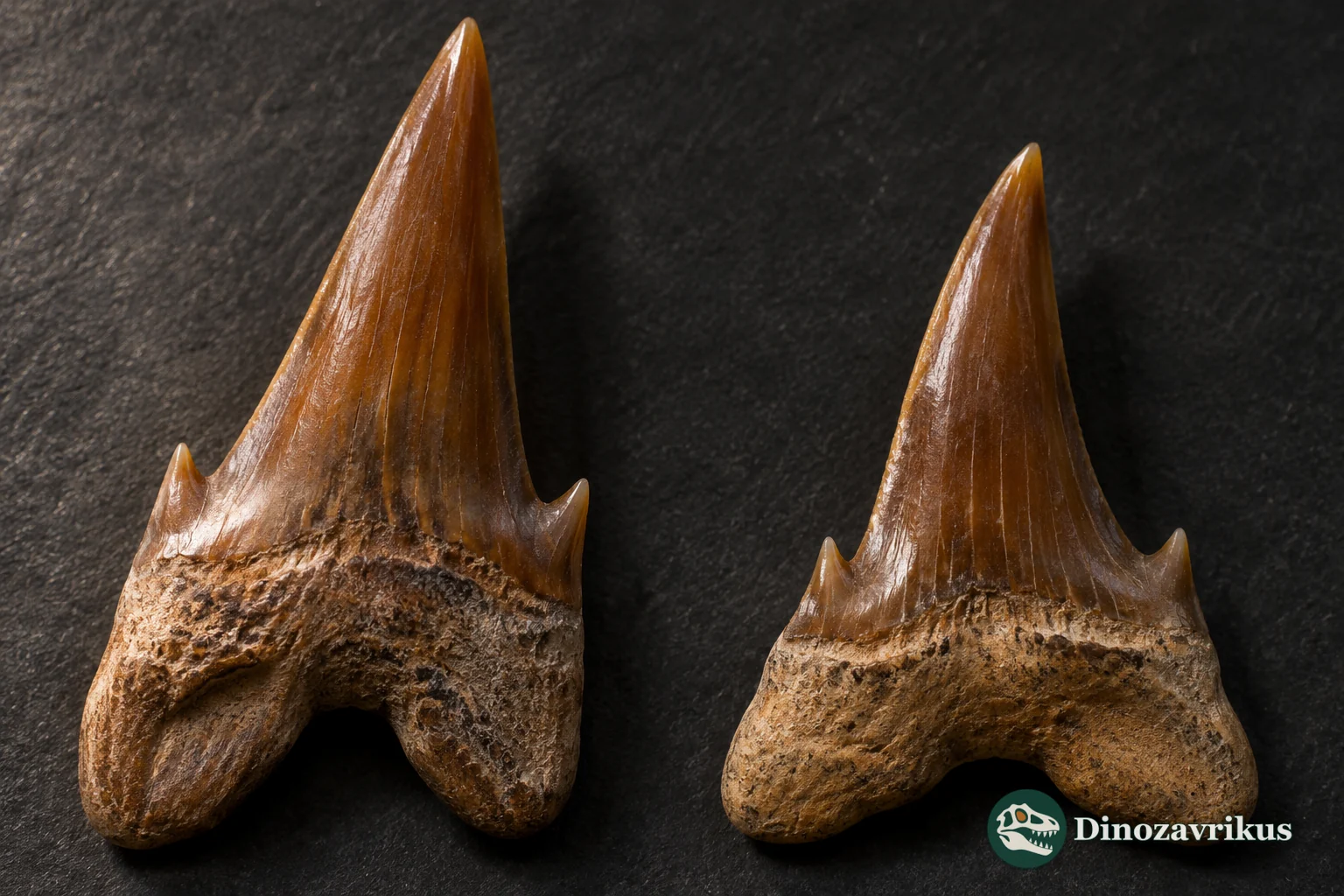
Six upper anterolateral teeth and an anterior tooth from the Simssee area in Bavaria were assigned to A. cuspidatus. The anterolateral crowns are triangular and lean towards the rear of the jaw. Their roots are low, with short, clearly separated lobes. The anterior tooth has a tall, sturdy crown. Its apex and lateral cusplets are damaged, but the preserved enameloid is smooth.
The tooth ELTE.VER.2022.02 from Tekeres in southern Hungary bears two hooked cusplets on each side of the main cusp. Its cutting edges are smooth, and a broad projection on the inner face of the bilobed root carries a defined nutritive groove. Position in the jaw and damage both matter when comparing this specimen with the German sample.
Why two genus names appear
The species was long assigned to Carcharias. Henri Cappetta used Araloselachus in 2012. The Bavaria study pointed to the robust profile and straight, smooth anterior crown, whereas Dirk Hovestadt proposed a return to Carcharias in 2020. This is a disagreement about the taxonomic weight of the dental characters.
Teeth can change shape along a single jaw. The profile of Misrichthys illustrates a separate case of relating isolated shark teeth to likely positions in the dentition.
Habitat and appearance
The Simssee teeth come from Early Miocene marine molasse. Tekeres preserves a Badenian fish assemblage from the Central Paratethys. These settings document the fossils in separate Miocene basins without establishing a preferred depth or a migration route.
The pointed teeth are suitable for gripping, but the described fossils do not contain direct evidence of particular prey. Fin shape, exact body length and colour remain uncertain. The living animal on the cover is one plausible artistic interpretation based on other lamniform sharks.
Frequently asked questions
Where was the type species found?
In the Early Miocene Aral Formation near the Gulf of Perovsky in western Kazakhstan.
What teeth were found in Bavaria?
The Simssee study assigned six upper anterolateral teeth and one worn anterior tooth to A. cuspidatus.
Why is the species also called Carcharias cuspidatus?
Researchers disagree on whether the isolated teeth warrant a separate genus assignment.
Can the teeth reveal body length or colour?
The specimens discussed here do not provide a dependable body-length estimate, and colour is unknown.