

Some head shields of Arapahoia carry a distinct spine at the back. Others lack it. Comparing fossils from Arizona showed that some of the apparently spineless specimens had lost the part of the shell that bore the spine.
Quick facts
| Group | Trilobites |
|---|---|
| Age | Cambrian |
| Region | North America: United States |
| Type species | Arapahoia typa |
| Scientific name | Arapahoia |
| Diet | Unknown |
What can the fossils tell us?
Specimen OU 239107 preserves part of a broad spine extending backwards from the occipital ring.
The butleri type has a broken occipital ring. The 2026 study cited this among the reasons to combine two named species.
A head or tail shield alone does not preserve the body length of the animal it belonged to.
Wyoming and Arizona material
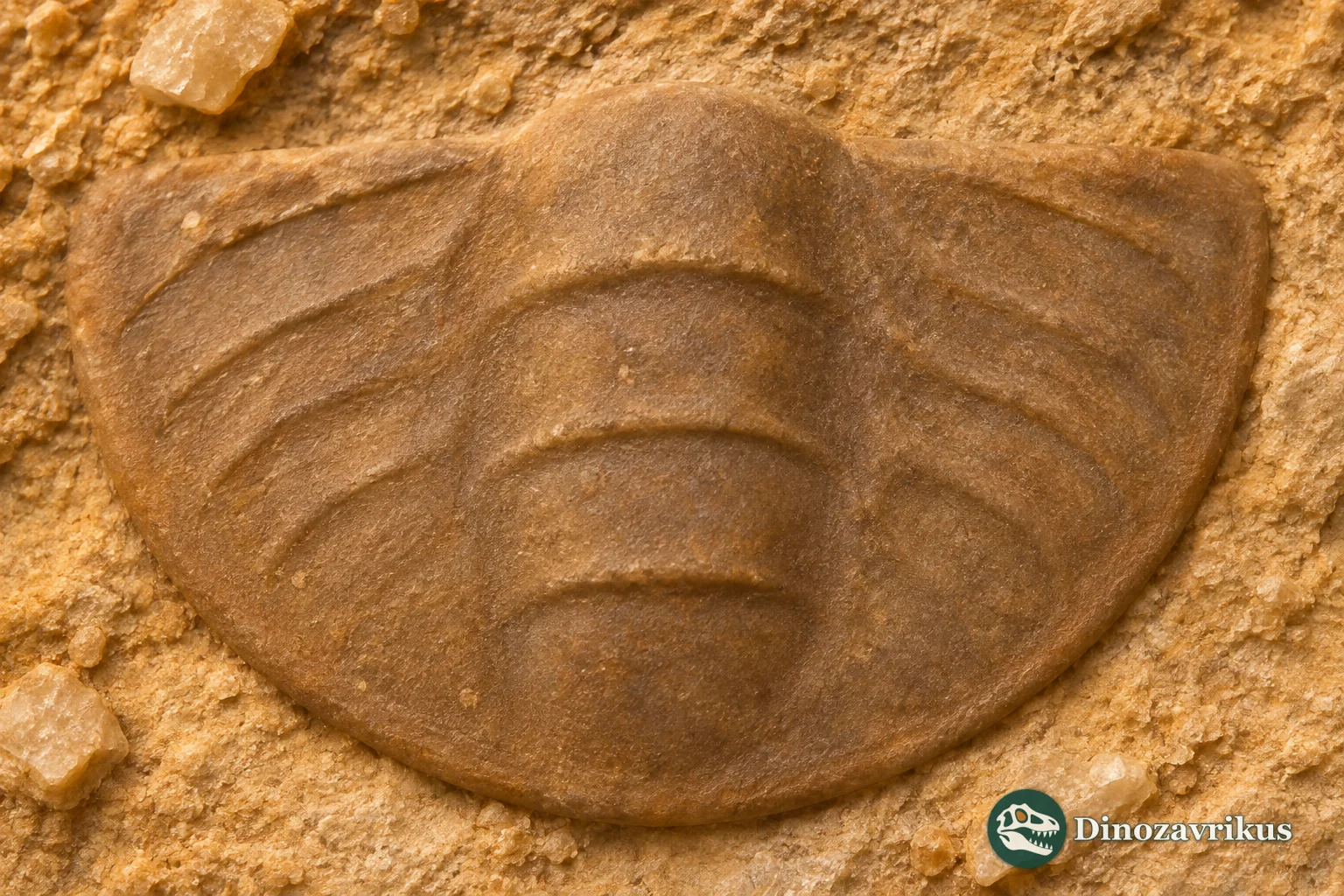
Miller established the genus in 1936 with Arapahoia typa from the Depass Formation of Wyoming. Faint furrows on the central part of the head are easier to see where the outer surface has weathered away. The tail shield is short and wide, with a prominent segmented axis. In Arizona A. ransomei, it has a broadly rounded profile.
How a break created two species names
The Arizona specimens were originally named Hesperaspis ransomei and H. butleri, chiefly because of the difference in the spine behind the head. Both were later assigned to Arapahoia. In 2026 Frederick Sundberg and colleagues reillustrated the types. They found that the back of the occipital ring was broken in the butleri holotype LACMIP 8095 and in several other shields.
The authors used A. ransomei for the combined material, citing the better-preserved head shield and an associated pygidium in the type series. Some additional fossils preserve part of the broad occipital spine.
The shallow-water Abrigo Formation
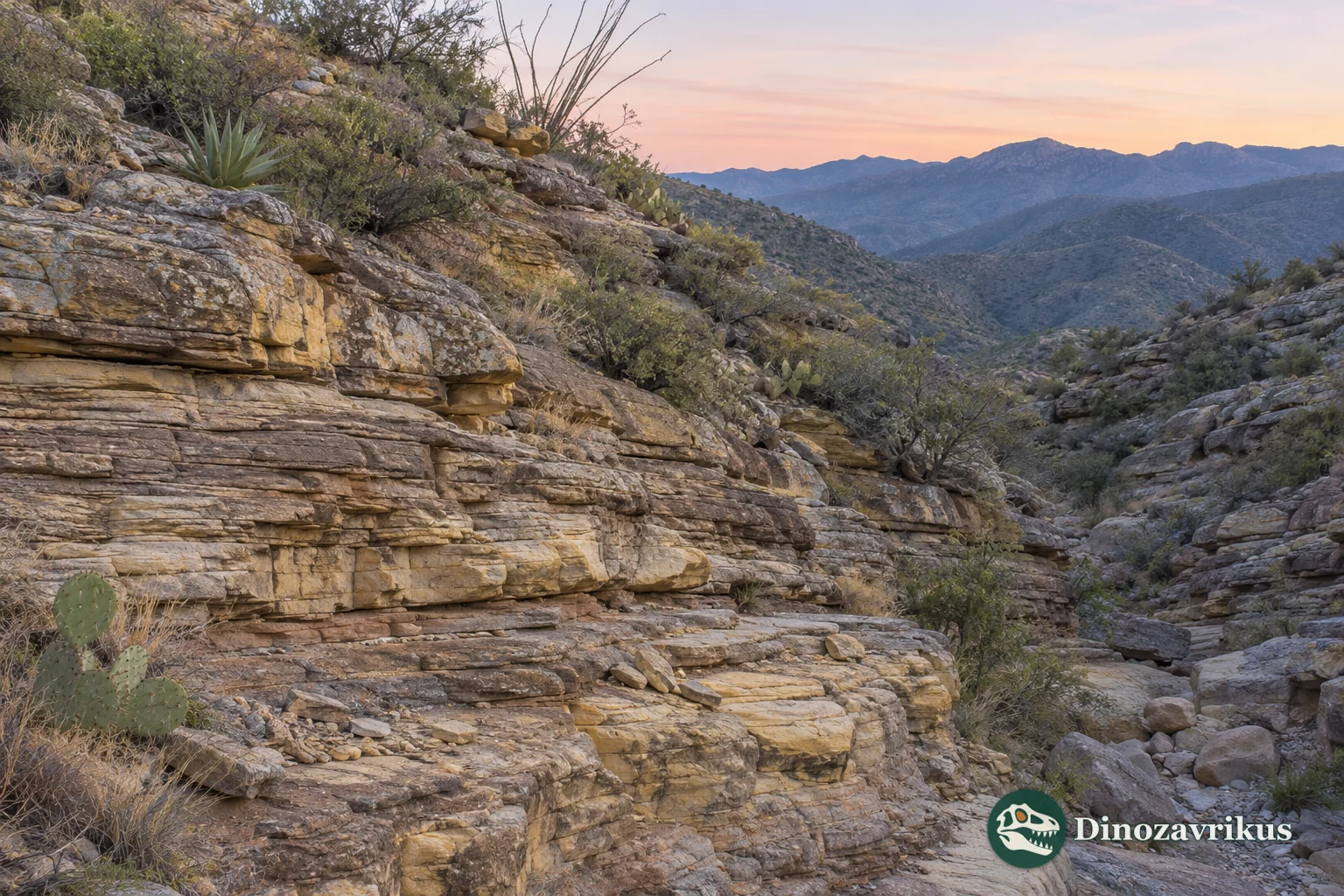
Cranidia, free cheeks and pygidia of A. ransomei came from the upper Abrigo Formation in Nugget and Peppersauce canyons. The associated fossils assign these rocks to the Cedaria Biozone. Fine-grained sandstone sometimes preserves shallow grooves on the head shield. The formation records nearshore marine environments along Laurentia.
Frequently asked questions
What is the type species of Arapahoia?
Arapahoia typa, described from the Depass Formation of Wyoming.
Why do some fossils lack the spine?
The edge of the occipital ring has broken away in several specimens. This can remove the part that carried a spine.
What shape was the tail shield?
The Arizona species has a short, wide tail shield with a rounded edge and a segmented axis.
Where were the new Arizona fossils found?
They came from the upper Abrigo Formation in Nugget and Peppersauce canyons, in the Santa Catalina Mountains.