

Archaeohyrax is a genus of small typotherian notoungulates from late Oligocene South America. Its type species, A. patagonicus, is known from an associated skull and mandible, while a large sample of cranial and dental remains is available for the Bolivian species A. suniensis. This material makes the genus useful for studying tooth form and wear through growth, but it does not provide direct evidence of behaviour or a precise diet.
The genus belongs in the ancient mammals catalogue. A phylogenetic study compared it with Hegetotherium and other typotheres; a relationship in an analysis does not mean one genus was the direct ancestor of another.
Quick facts
| Scientific name | Archaeohyrax Ameghino, 1897; type species A. patagonicus |
|---|---|
| Group | Typotheria, Notoungulata; Archaeohyracidae in its traditional sense |
| Time | Late Oligocene; Deseadan South American land-mammal age |
| Genus range | Patagonia, Argentina, and Salla, Bolivia; assignments depend on taxonomic revision |
| Type specimen | MACN A52-617: associated skull and mandible |
| Recognised species | A. patagonicus and A. suniensis |
| Skull measurement | The A. patagonicus holotype skull is 147.5 mm long; this is not body length |
What can be checked in Archaeohyrax fossils?
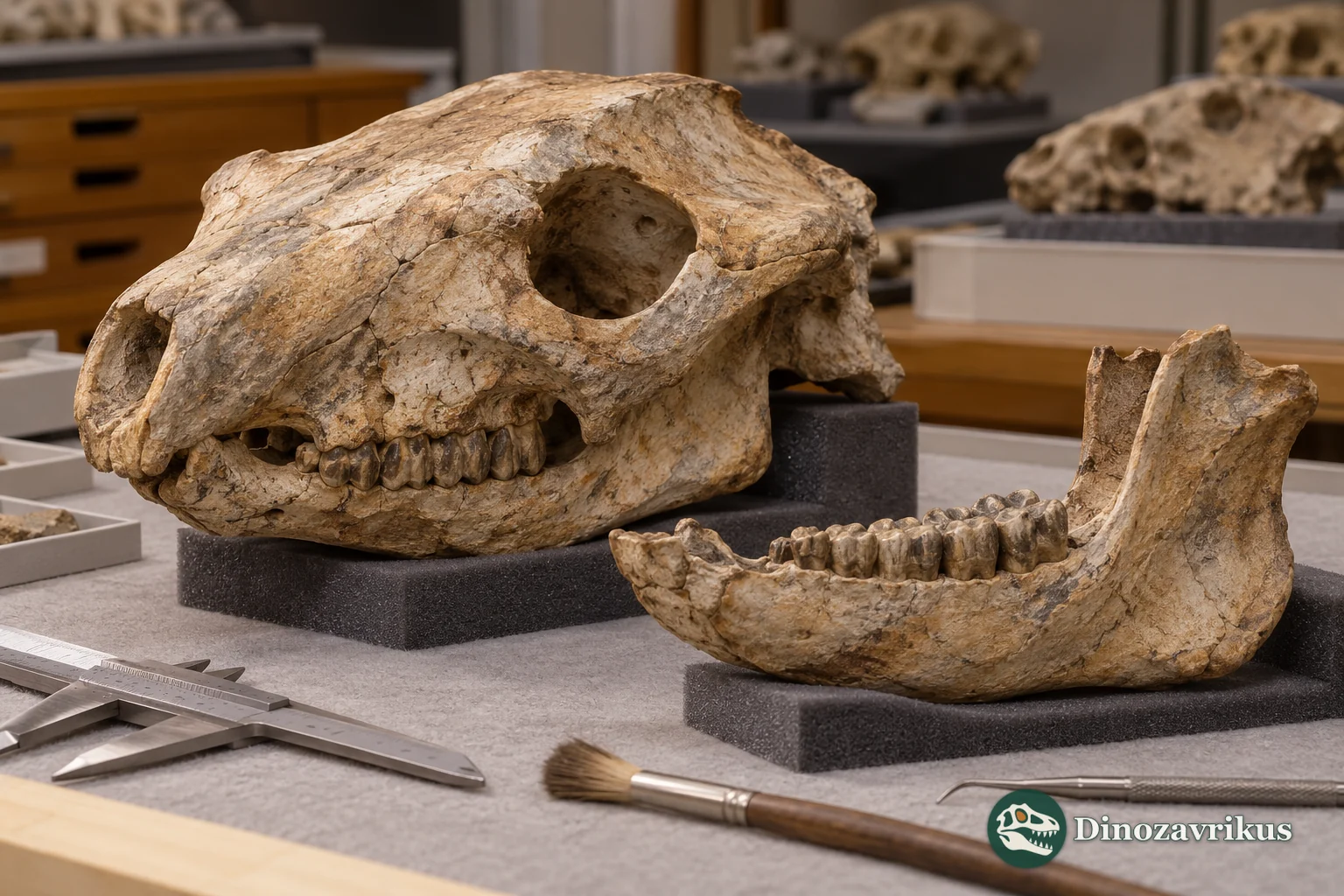
Holotype MACN A52-617 includes a cranium and associated mandible. Their association allows the upper and lower tooth rows to be compared, although parts of the specimen are obscured by consolidant and are not equally visible.
The revision describes tooth replacement and wear stages in the cheek teeth. Some dimensions decrease in length and increase in width with wear, so measurements cannot automatically be treated as taxonomic differences.
The species was described from a skull and mandible from Salla; fossils from Quebrada Fiera, Argentina, were later referred to it. A 2022 revision lists 57 specimens there, including jaw fragments and isolated teeth.
A 2009 analysis linked late archaeohyracids with Hegetotheriidae, while noting incomplete cranial data for several genera. The historical family name does not imply close relationship to living hyraxes and does not settle the group's boundaries by itself.
Naming and the type specimen
Florentino Ameghino described Archaeohyrax patagonicus in 1897 from Cabeza Blanca, Chubut Province, Argentina. Its holotype, MACN A52-617, consists of a cranium with an associated mandible. Ameghino had illustrated the specimen, but Guillaume Billet, Benjamin Patterson and Christian de Muizon noted in their 2009 revision that the original text and drawings were not precise enough for a detailed anatomical account. They redescribed the specimen and compared it with material in museum collections.
Additional teeth and jaw fragments were referred to A. patagonicus, but the historical field labels do not always provide precise localities. Some specimens are labelled as coming from “Río Chico opposite Malaspina”; the authors did not establish the exact meaning of that phrase. A museum label is evidence of how an object was catalogued, not a modern coordinate.
Two species and a large sample from Bolivia
The 2009 revision recognises two species. A. patagonicus is the type species from the Deseadan of Patagonia. A. suniensis was described from Salla-Luribay, Bolivia, based on a skull and mandible; its holotype MNHN-SAL 4 belongs to a young adult. Archaeohyracid remains are exceptionally abundant at Salla, unlike many South American localities where the group is represented by only a few fossils.
Later studies referred material from Quebrada Fiera in Mendoza Province, Argentina, to A. suniensis. A 2022 revision lists 57 specimens from that locality, including cranial and jaw fragments and isolated teeth. These remains add anatomical information and help document variation. They are not part of the type specimen of A. patagonicus.
The name does not imply that Archaeohyrax was related to modern hyraxes, or dassies, from Africa and western Asia. Archaeohyrax is a South American notoungulate. Similarity in the English name is not evidence of close relationship.
Skull and measurements
The A. patagonicus holotype preserves a complete upper tooth row and nearly complete lower row. The 2009 redescription measured its maximum skull length at 147.5 mm and its condylobasal length at 142.8 mm. These measurements describe the skull only; they do not directly give total body length or mass. The study also reports individual tooth and jaw measurements for comparisons among specimens.
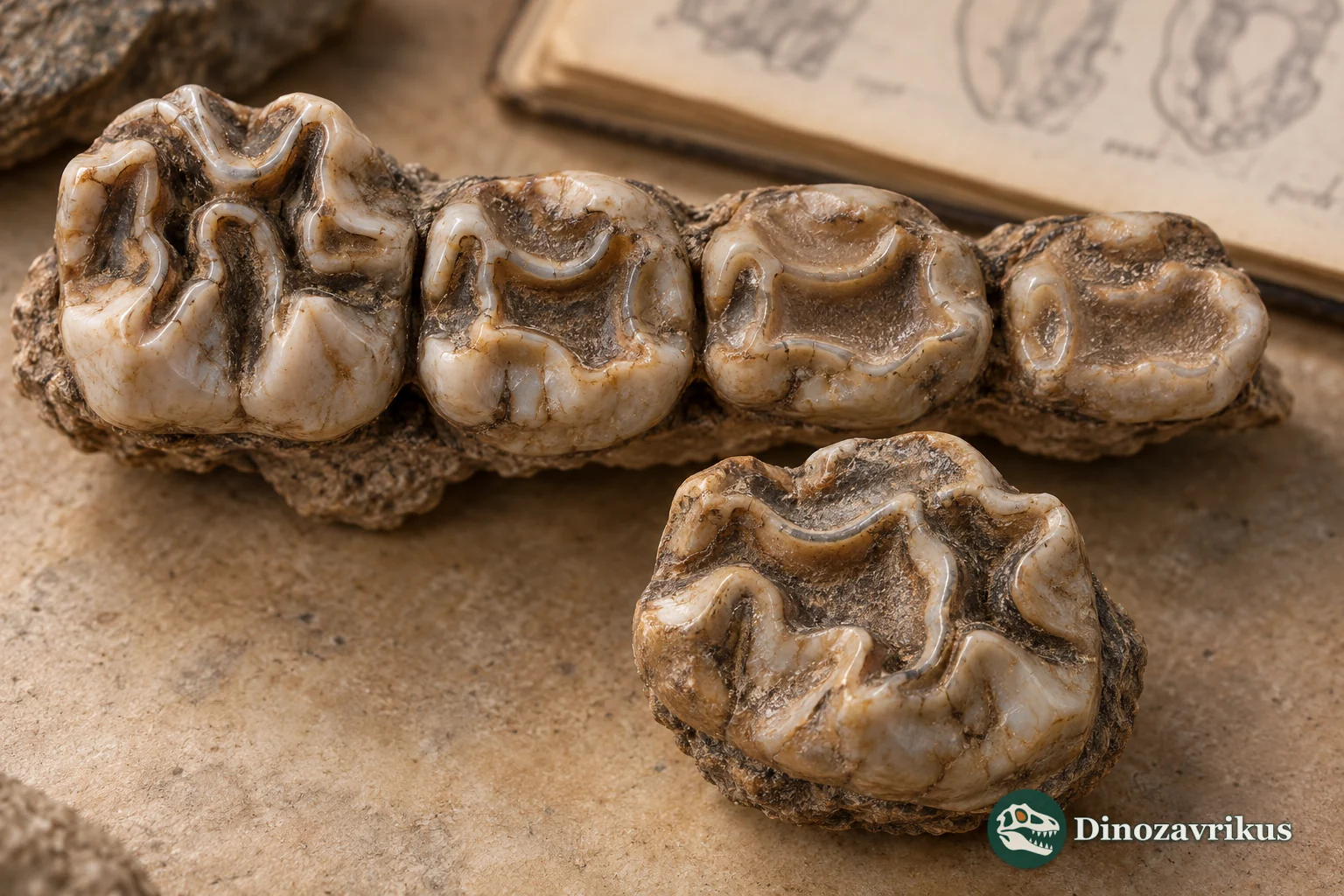
The cheek teeth have a complex enamel pattern with folds and enclosed basins that change as the crown wears. For A. suniensis, researchers described several growth and wear stages. The same tooth can look different in younger and older animals, so measured length and width depend partly on wear. Comparisons are most useful when specimens are matched by stage.
Age and relationships
The type species comes from Deseadan deposits of the late Oligocene in Patagonia. A. suniensis is also associated with the late Oligocene fauna of Salla; its Quebrada Fiera records are assigned to the upper Oligocene. These are stratigraphic and regional biochronological ages rather than exact dates for each fossil.
The 2009 phylogenetic analysis supported a clade of late archaeohyracids and a close relationship to Hegetotheriidae. The authors also stressed a limitation: cranial anatomy was unavailable for several genera, weakening the phylogenetic signal. New material and different taxon sampling can change the result. The traditional family Archaeohyracidae may not represent a separate natural group under every analysis.
Fossils establish the form and variation of skulls, jaws and teeth. The sources reviewed here provide no direct evidence of reproduction, social groups, gait, pathologies or stomach contents for the genus. Diet and complete external appearance therefore remain interpretations with different levels of support.
Frequently asked questions
When did Archaeohyrax live?
Both recognised species are from late Oligocene South America and are associated with the Deseadan. The age of an individual tooth or skull depends on the stratigraphy of its locality.
Which species belong to the genus?
The 2009 revision recognises Archaeohyrax patagonicus from Patagonia and A. suniensis from Bolivia. Material referred to A. suniensis was later described from Quebrada Fiera in Mendoza, Argentina.
What is the holotype?
The holotype of A. patagonicus is MACN A52-617, an associated skull and mandible from Cabeza Blanca, Chubut. The A. suniensis holotype, MNHN-SAL 4, is a skull and jaw from Salla.
Was Archaeohyrax related to living hyraxes?
No. Archaeohyrax was a South American notoungulate, whereas living hyraxes are a separate Afro-Arabian mammal group. The similar name does not indicate close relationship.