

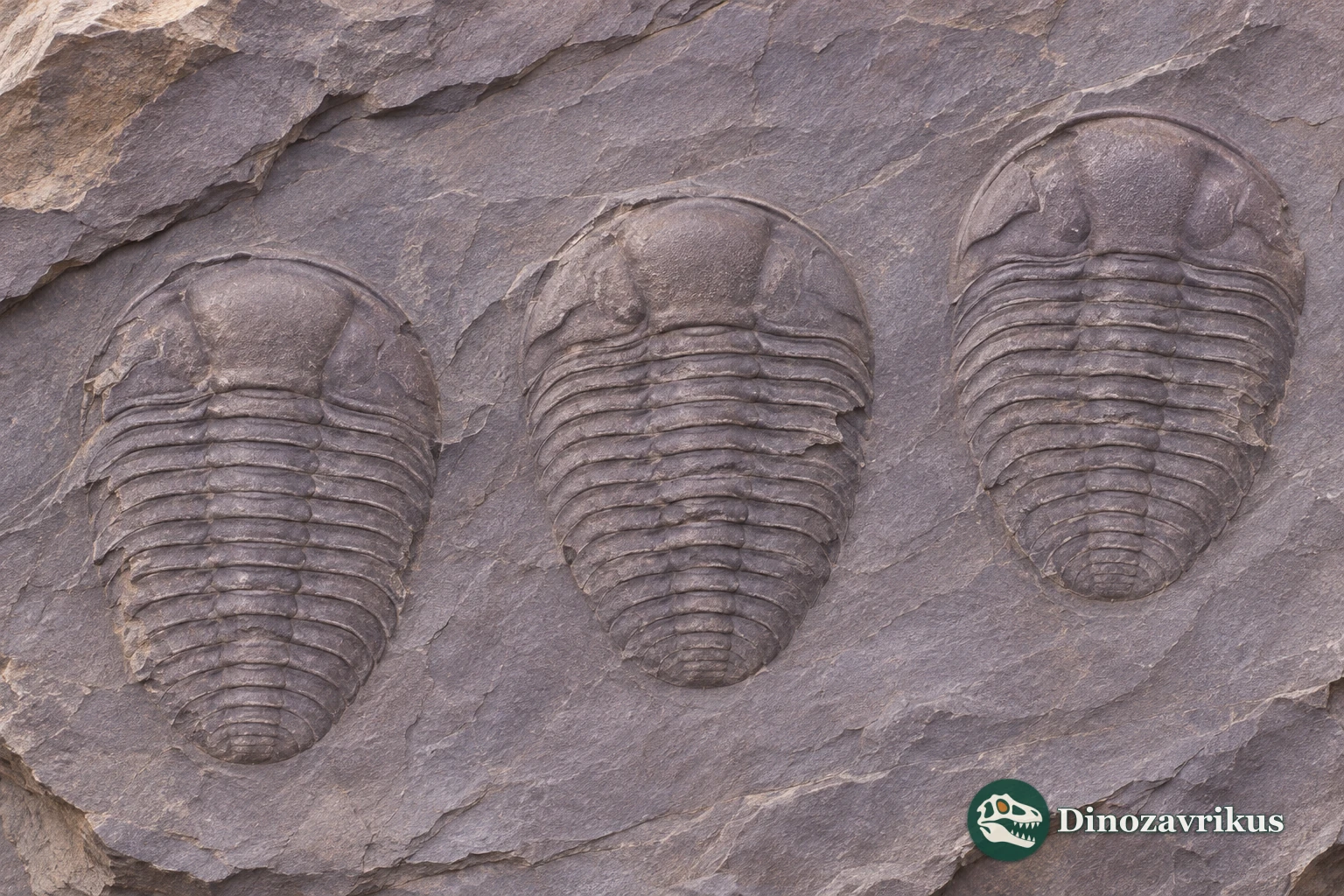
Archegonus was a Carboniferous proetid trilobite. At the Mokrá Quarry near Brno, three dorsal shells were preserved together on a shale slab. Their head and tail shields remain connected by articulated thoracic segments, which makes the overall body outline easier to recognise.
Quick facts
| Group | Trilobita, proetids |
|---|---|
| Age of the material discussed | Early Carboniferous |
| Type species | Archegonus aequalis |
| Genus established | Hermann Burmeister, 1843 |
| Type area | Posidonia shales at Herborn, Germany |
| Known material | Cranidia and articulated dorsal shells |
What can the fossils tell us?
Their arrangement and articulated parts are visible. A shared burial surface provides limited evidence about the behaviour of the living animals.
That is the length of the centre of the head shield. The example gives no direct measurement of the whole body.
A conodont zone and a foraminiferal zone place the shale near the end of the Tournaisian. These are age markers for the deposit.
The name and the type species
Hermann von Meyer described the type species in 1831, tentatively placing it in Calymene. Hermann Burmeister established Archegonus for aequalis in 1843. The type locality is in the Posidonia shales at Herborn in Germany's Rhenish Massif.
The name later covered a number of subgenera. That broader usage should be distinguished when comparing particular specimens. In the account of the Moravian Karst material, for instance, Archegonus and Semiproetus were treated as two genera with different material.
Three shells in a row at Mokrá
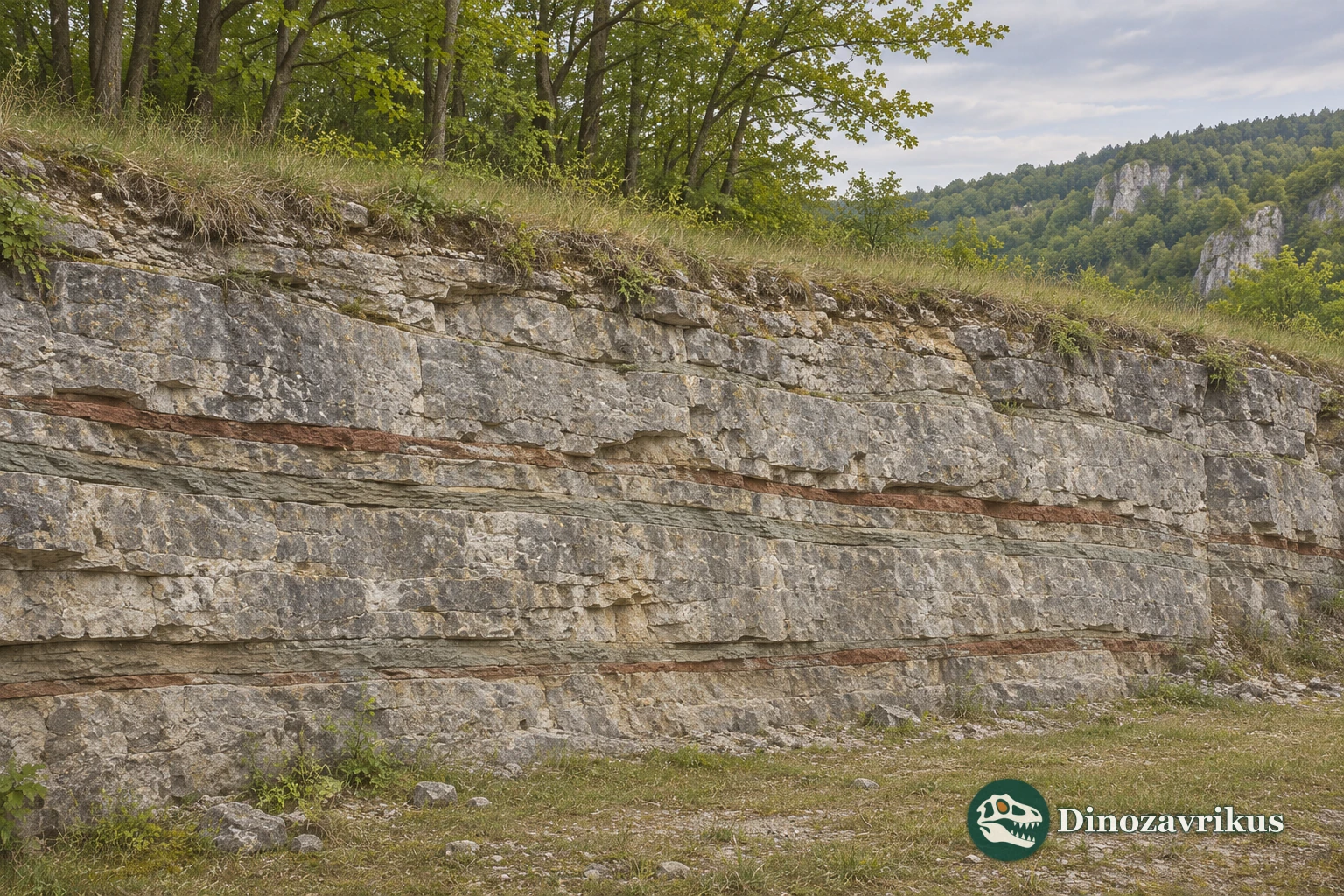
In the Březina Formation at Mokrá Quarry, three articulated shells of A. aequalis philliboloides were preserved in shale specimen SR 10. Burial and compression flattened the shells dorsoventrally, but the team could still compare their key features with the type material. The holotype for that subspecies is cranidium SMF 22002 in the Senckenberg collection in Frankfurt.
Conodonts of the Scaliognathus anchoralis Zone and foraminifera of zone MFZ8 locate the record in the latest Tournaisian. The three skeletons are especially useful for comparing a connected body with the isolated parts often found in the same beds.
A four-millimetre cranidium in the Sudetes
Halszka Osmólska described the internal mould IG 442.II.26 from Glinno, Poland, as A. aequalis aequalis. The cranidium is 4 mm long and its glabella measures 3 mm. The eye lobe is relatively broad, while the specimen itself is smaller than the published comparison specimen.
The same nominotypical subspecies was recorded in the Go alpha interval in both the Sudetes and Westphalia. The combination of anatomy and stratigraphic position made the comparison possible, despite the lack of articulated material in the Polish sample.
Frequently asked questions
What is the type species of Archegonus?
The genus is based on A. aequalis, originally described by Hermann von Meyer.
How many shells were on the Mokrá slab?
Three articulated dorsal shells occur on the same slab of shale.
How old are the Moravian specimens?
Conodonts and foraminifera place their beds in the latest Tournaisian of the Early Carboniferous.
Does the four-millimetre measurement describe a whole trilobite?
It is the length of the central part of the head shield in the specimen from Glinno.