

Arechia is an Eocene stingray first named from Moroccan teeth. Researchers later recognised similar teeth in skeletons from Bolca in Italy. Those skeletons revealed the body of one species: a rhomboidal disc, a thick short tail, a caudal fin and a serrated sting immediately ahead of it.
Quick facts
| Group | Stingrays |
|---|---|
| Age | Eocene |
| Type species | Arechia arambourgi |
| Skeletons | Monte Postale, Bolca, Italy |
| Italian neotype | 110.3 cm total length |
What can the fossils tell us?
Once treated as male and female teeth of one species, the sets were reassigned to Arechia and Merabatis.
The nearly complete neotype has a disc about 69 cm wide. The skeletons also preserve the tail fin.
Their transverse crest is taller than in the Moroccan species. These isolated teeth do not establish a link to the Italian species.
How the Moroccan teeth were separated
Camille Arambourg initially described teeth from the Ypresian phosphates of Ouled Abdoun as one species, Raja praealba. He attributed the differences to sexual dimorphism. Henri Cappetta revised the material in 1983. He placed the presumed male teeth in Merabatis and used the presumed female teeth to establish Arechia. A similar historical mix-up occurred with Jacquhermania, when teeth from two rays were treated under one name.
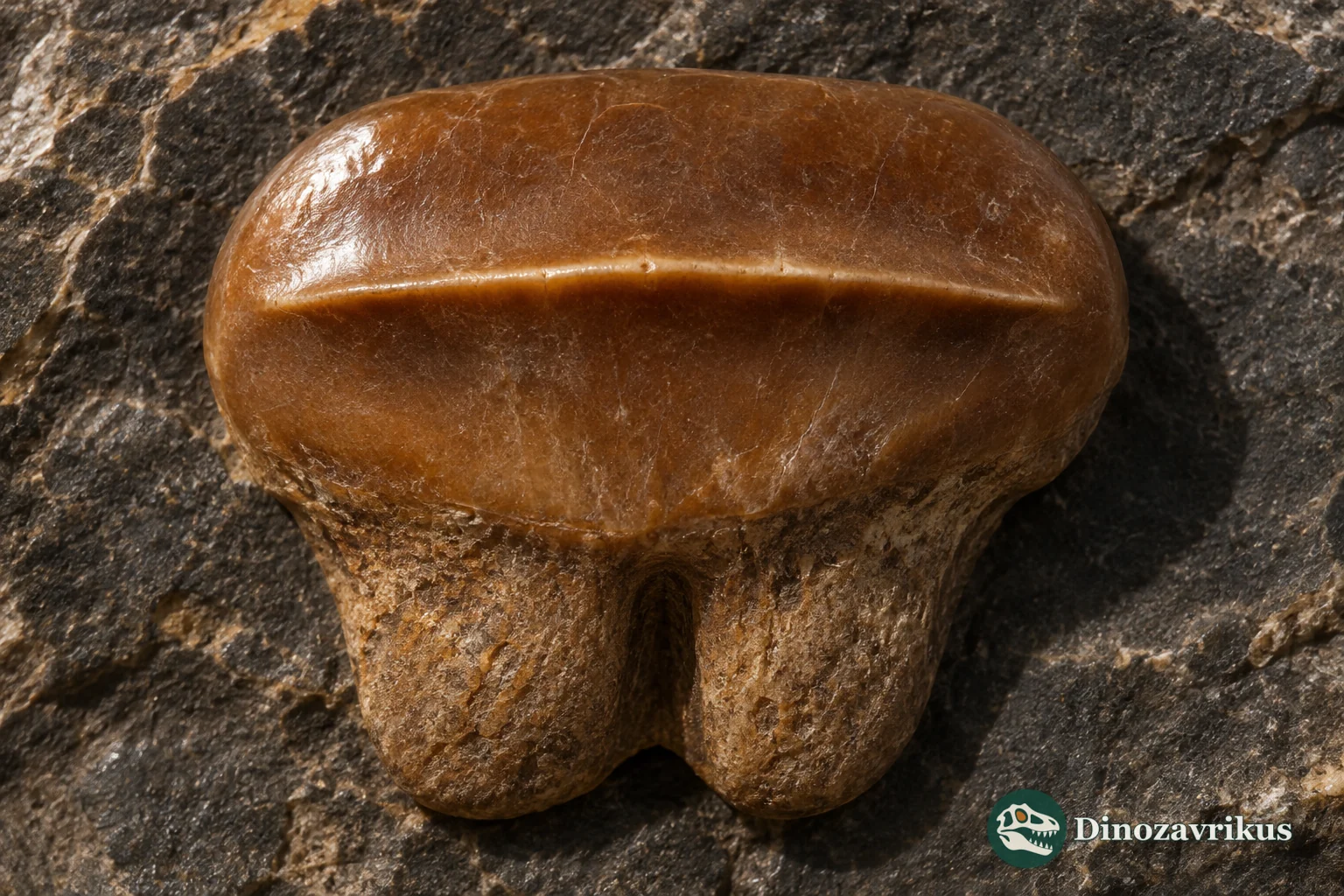
A high cutting crest crosses the smooth Arechia crown and stops short of the sides. It accounts for the working relief of the crown, which lacks an isolated high cusp. A deep furrow divides the low root. The same combination helped researchers match the Moroccan-type teeth with teeth preserved in Italian skeletons.
The skeletons from Bolca
The Italian species was described in 1818 and spent much of its history under other genera. Giuseppe Marramà and colleagues reassigned it as Arechia crassicaudata and designated neotype MCSNV IG.VR.27607. The nearly complete articulated skeleton from Monte Postale, Bolca, measures 1103.4 mm in total length and 685.4 mm across the disc. These are measurements of one Italian specimen.
The disc was slightly longer than wide, with its widest point in the front third. The tail accounted for about 44–52 percent of total length and was thicker near the base. Most of the studied specimens preserve one serrated sting, positioned about halfway along the tail just ahead of the caudal fin. A phylogenetic analysis of skeletal characters placed the Italian species among the urolophid stingrays.
Tunisian teeth and the Italian habitat
At Djebel el Kébar in Tunisia, researchers assigned 60 isolated teeth to Arechia. The largest is 3 mm long. The cutting crest is higher than in the Moroccan species, and small folds occur beside it in some teeth. The authors left the material at genus level.
The Monte Postale sediments formed in a warm coastal setting. Comparison with living urolophids supports a possible bottom-dwelling habit for the Italian ray. Worms, crustaceans and small fishes are known prey of living relatives. The fossils discussed here do not establish a specific diet for Arechia.
Frequently asked questions
What material was used to establish the genus?
Isolated teeth from Ypresian deposits in the Ouled Abdoun Basin of Morocco.
How long is the Italian neotype?
About 110 cm from the front of the body to the end of the tail.
Did Arechia have a tail sting?
A single serrated sting is preserved in most of the studied Italian specimens.
Which species is represented by the Tunisian teeth?
The authors assigned the teeth to Arechia without giving them a species name.