

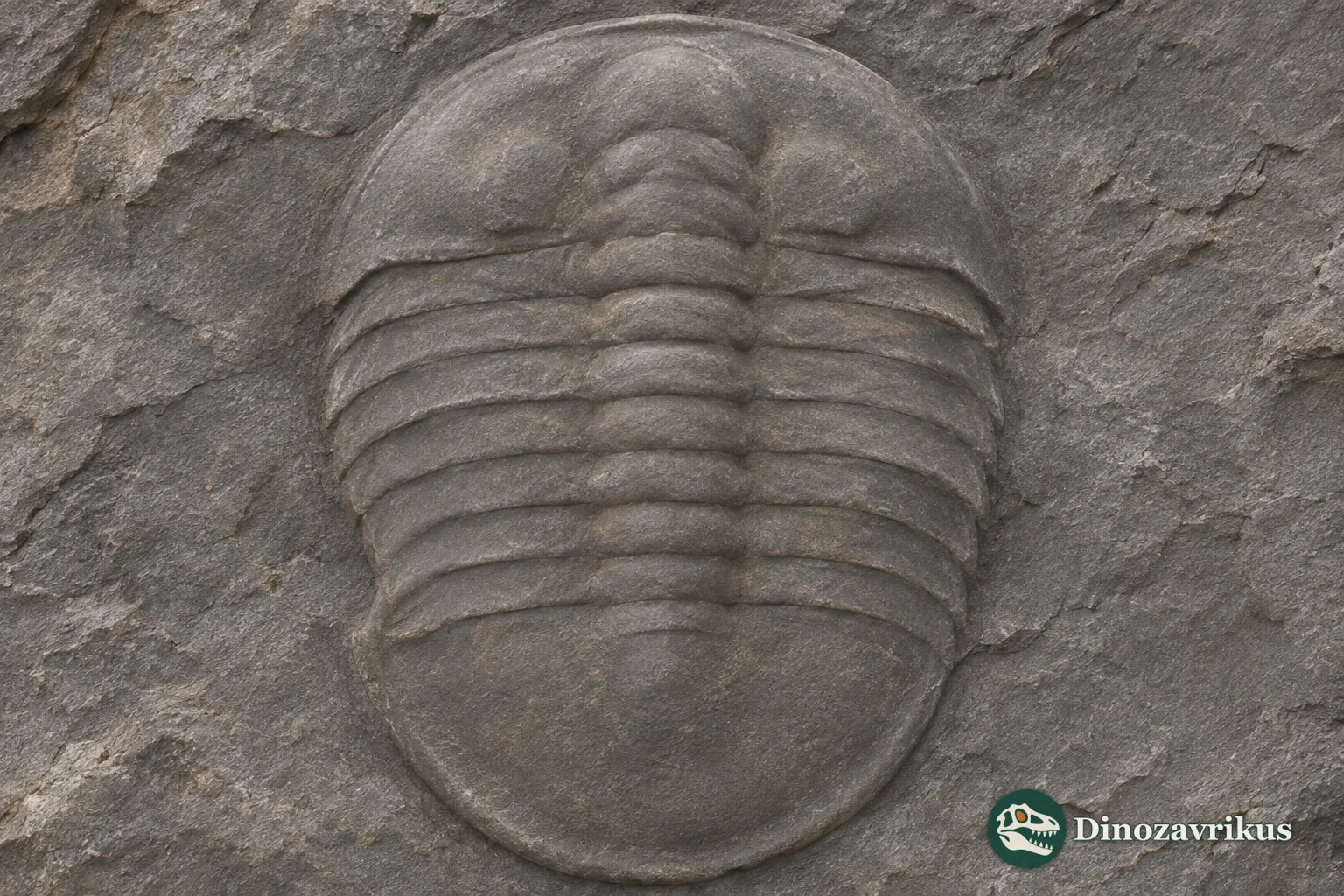
The trilobite Asaphiscus wheeleri is known from articulated Cambrian specimens in Utah. Two individuals have uneven segment margins. One fossil preserves scarring along the edge of a notch, evidence that the animal survived the damage.
Quick facts
| Group | Trilobites |
|---|---|
| Age | Middle Cambrian, Miaolingian |
| Region | North America (United States and Canada) |
| Diet | Unknown |
| Type species | Asaphiscus wheeleri |
| Figured specimen | USNM 15460, 28 mm long |
What can the fossils tell us?
USNM 15460 measures 28 mm and preserves a rounded head, the jointed trunk and a broad tail shield. This measurement is for one individual.
MWC 9973 has shortened ribs on one side and a rear notch with a scarred edge. The fossil cannot identify the cause of the injury on its own.
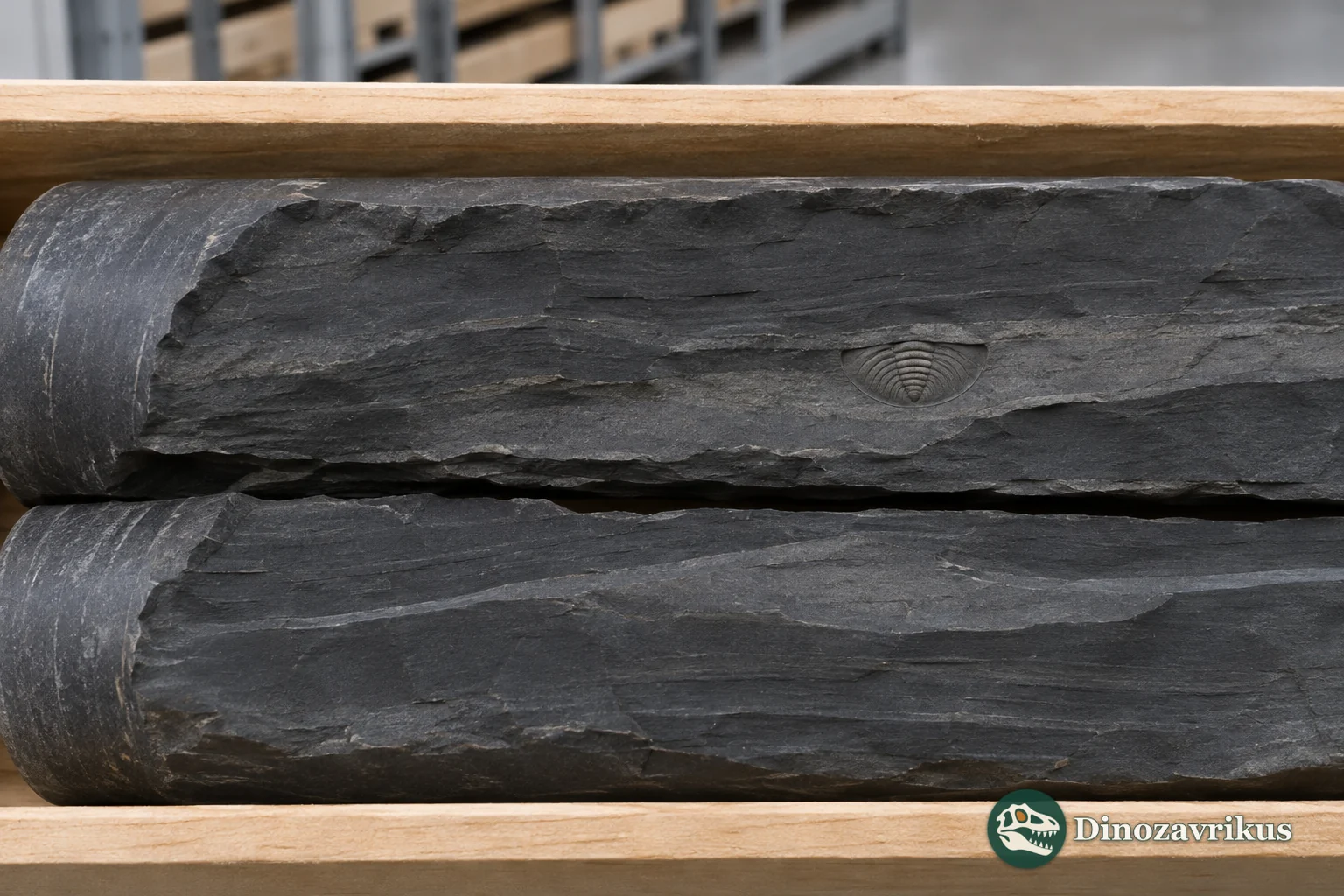
RSKM-PAL-P3426 preserves a pygidium and incomplete trunk fragments. Its recorded position in the drill core can be used to correlate layers, while the fragment alone yields no total body length.
The shape of an articulated fossil
Fielding Bradford Meek established Asaphiscus in 1873. The original specimens of the type species are incomplete. In his revision, Allison Palmer figured a nearly complete topotype, USNM 15460, from the Antelope Springs area of Utah’s House Range. The specimen is 28 mm long.
The broad head is nearly semicircular. A groove separates its raised rim from the rest of the cheeks, and its rear corners are rounded rather than prolonged into spines. Nine thoracic segments join the head to a tail shield nearly as large as the head. The tail rings may stand out more clearly where the shell surface is worn away.
Marine strata in the United States and Canada
Asaphiscus wheeleri occurs in the Wheeler Formation of western Utah, which also preserves the trilobite Elrathia. A Canadian specimen from the Earlie Formation of southwestern Saskatchewan preserves a pygidium and parts of two trunk segments. It was recovered from a mudstone interval in a drill core about 2.41 kilometres below the present surface.
Palmer transferred the Nevada species formerly called Eteraspis laeviceps to Asaphiscus. The central head shields of the two species closely resemble one another. The axis of the Nevada species' tail shield merges with the outer border, while that of A. wheeleri stops against its inner edge.
Two damaged exoskeletons
The first four ribs on the left side of MWC 9973 are about 1.5 mm shorter at an anterior indentation. A separate U-shaped notch affects ribs seven to nine and the front of the tail shield. Its margin shows clear scarring. A second fossil, FHPR 16702, shows an injury affecting the eighth rib on the right side.
Bicknell and colleagues considered failed attacks as an explanation for multiple adjacent damaged ribs. An isolated abnormality may have other explanations, including an injury after moulting when the new exoskeleton was soft. The fossils preserve the shape and repair of the shell. The animal’s colour and diet remain unknown.
Frequently asked questions
Where has Asaphiscus wheeleri been found?
Well-known specimens come from the Wheeler Formation in western Utah. A partial specimen also occurs in the subsurface Earlie Formation of Saskatchewan.
How many trunk segments did it have?
Articulated specimens of the type species have nine thoracic segments.
What indicates that an individual survived an injury?
The rear indentation on MWC 9973 has a scarred margin, indicating repair during life.
Did the type species have genal spines?
Its head shield has rounded rear corners and lacks long cheek spines.