

Asiahesperornis was a hesperornithiform bird from marine deposits near Kushmurun, Kazakhstan. Most comparisons depend on the tarsometatarsus, the bone between the lower leg and the toes. Its grooves and joint surfaces help identify the bird among other foot-propelled divers.
Quick facts
| Group | Hesperornithiforms (Hesperornithiformes), Hesperornithidae |
|---|---|
| Age | Late Cretaceous (Maastrichtian in the locality reassessment) |
| Region | Central Asia (Kushmurun, northern Kazakhstan) |
| Diet | Exact diet unknown |
| Type species | Asiahesperornis bazhanovi |
| Holotype | IZASK 5/287/86a, part of a left tarsometatarsus |
| Deposits | Base of the Zhuravlovskaya Svita |
What can the fossils tell us?
The grooves and a depression near the joint for the third toe form part of the diagnosis. The upper end of the bone is missing.
Comparable foot bones can be matched directly. A separate tooth and jaw fragment have a less secure link to the type species.
Shells, fish remains and marine reptile bones help identify the setting. They do not record the prey of this individual bird.
The foot bones at Priozernyi Quarry
Nessov and Prizemlin named Asiahesperornis bazhanovi in 1991. The left tarsometatarsus IZASK 5/287/86a is held by the Institute of Zoology in Almaty. Its complete length was estimated at about 122 mm. The quarry also yielded the shaft of a right tarsometatarsus, isolated vertebrae and part of a lower leg.
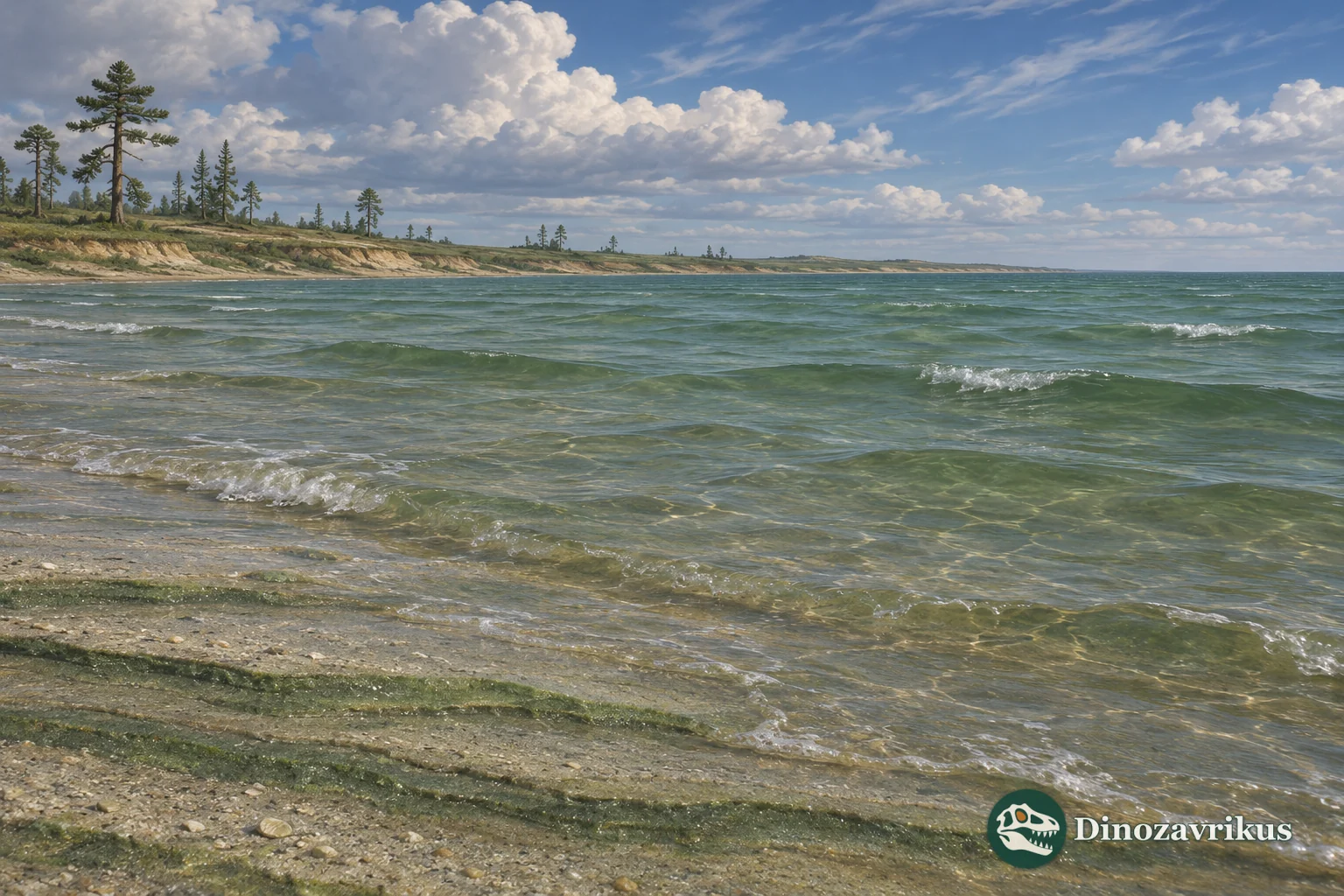
A 2006 reassessment placed the material at the base of the Maastrichtian Zhuravlovskaya Svita, above deposits assigned to the Campanian. The bird-bearing sands contain phosphatic pebbles and remains of marine invertebrates, fishes and reptiles. The site records a marine setting in the Turgai Strait.
A diagnosis from the foot
Two prominent grooves run along the front of the foot bone. One ends in a depression near the joint for the third toe. These features helped the researchers distinguish the Kushmurun material from other hesperornithiforms. A separately collected jaw preserves tooth sockets. Its exact association with the foot bones is uncertain.
The elongated foot bone and the extensive joint for the outer toe are consistent with the anatomy of other hesperornithids, which swam using their feet. A 2017 study recognised the Kazakh species and raised the possibility that it belongs to Parahesperornis. Bell and Chiappe treated the genera separately in 2020. Associated bones would give additional characters for testing that relationship.
Frequently asked questions
Where does Asiahesperornis come from?
The type was collected around Kushmurun, in the Priozernyi Quarry of northern Kazakhstan.
What was preserved in the type fossil?
Part of the left tarsometatarsus, with the upper end and part of a lower joint missing.
How did it swim?
Its foot bones resemble those of other hesperornithids, whose hindlimbs were adapted for propulsion under water.
Could it belong to Parahesperornis?
That generic assignment was proposed in 2017. A 2020 comparison retained both genera, and the Kazakh species is distinguishable by features of the foot.