

Surface sculpture helps distinguish species of Aspidagnostus. North American fossils of A. rugosus show furrows spreading across the head and depressions beside the tail axis. One articulated exoskeleton from Georgia shows how the two shields fit together.
Quick facts
| Group | Agnostida |
|---|---|
| Age | Cambrian |
| Genus established | Frederick Whitehouse, 1936 |
| Type species | Aspidagnostus parmatus |
| Type region | Western Queensland, Australia |
| Material of A. rugosus | Articulated and detached shields |
What can the fossils tell us?
The Georgia fossil shows the head and tail patterns on one individual.
Raised areas of the original shell leave recesses in the mould. An articulated specimen provides another view of the same features.
The Tasmanian cephalon was published without a species name.
The Australian type and the North American species
Frederick Whitehouse established Aspidagnostus in 1936. Its type species, A. parmatus, came from western Queensland. In 1962 Allison Palmer described the North American A. rugosus. Its cheeks carry broad shallow furrows that spread out from the middle of the head.
On the tail of A. rugosus, the median axial node is elongated. The axis tapers and stops short of the border furrow, with shallow depressions on either side. Branching furrows give some specimens a distinctly knobbly surface.
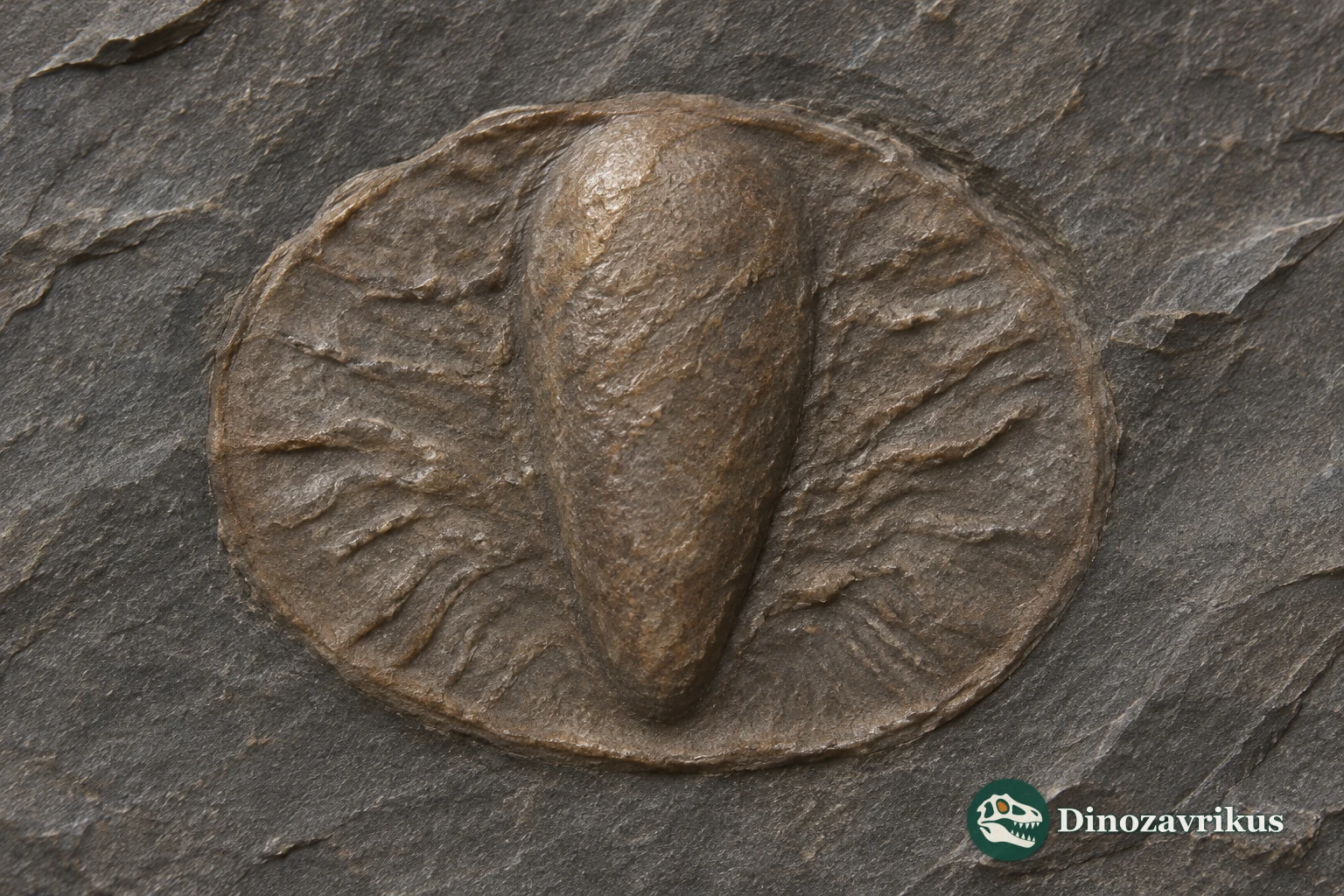
An articulated fossil from the Conasauga valley
David Schwimmer and William Montante documented an articulated specimen, CSU-07-4-8, a cephalon, CSU-07-4-9, and an external mould of a pygidium, CSU-07-4-10, from one locality in Murray County, Georgia. The complete shell and the detached parts give complementary views of the same species.
The Conasauga Formation also yielded the reticulated species of Glyptagnostus, which helped assign the bed to the Paibian. The sculpture identifies A. rugosus, while its association with a zonal fossil helps date the occurrence.
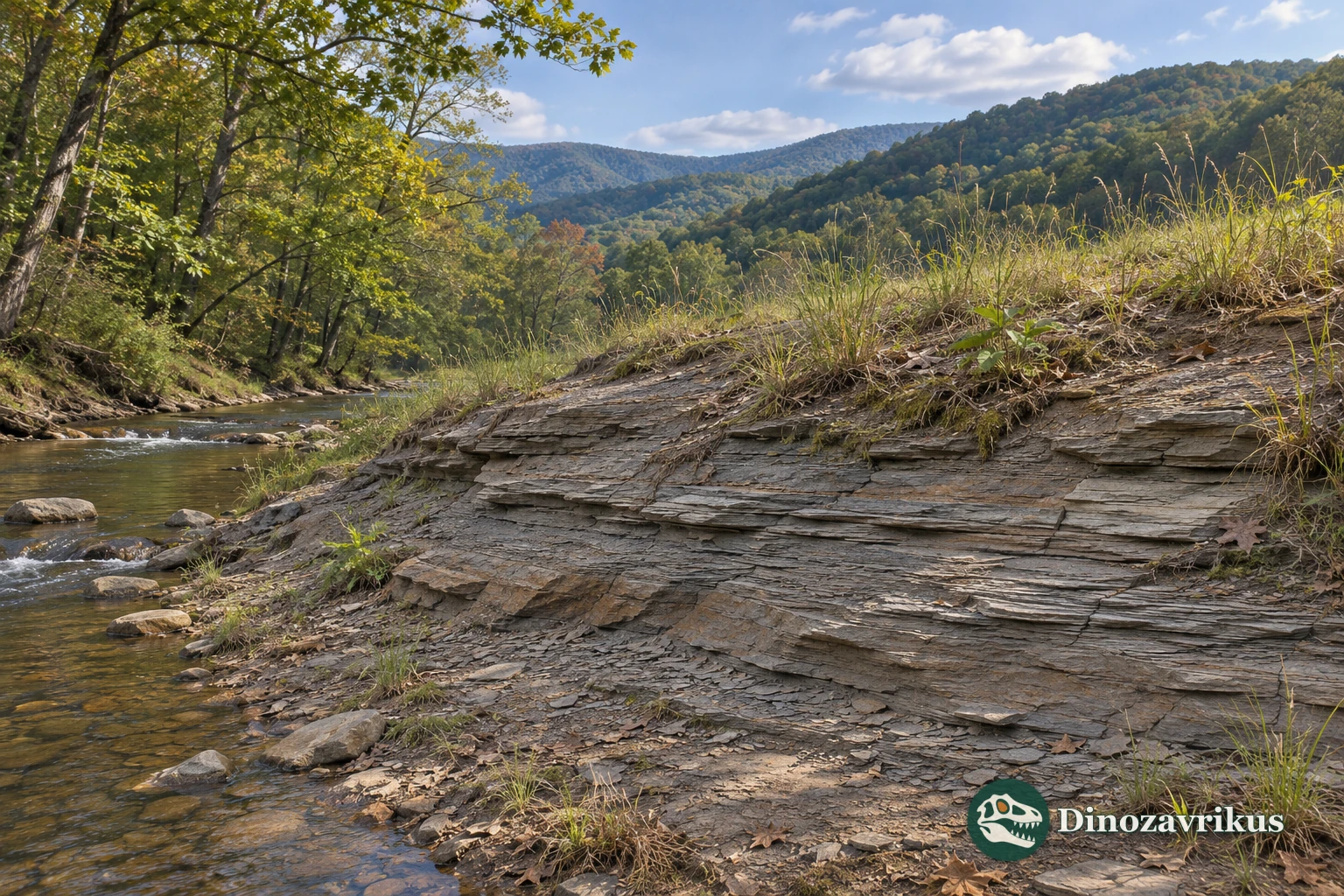
A fragment from the Tasmanian series
James Jago described a partial cephalon, UT 92498, from near Sugarloaf Gorge. It resembled another Tasmanian specimen but was too poorly preserved for a close comparison. Jago recorded it as Aspidagnostus sp. It broadens the record of the genus without establishing that the North American species was present there.
Frequently asked questions
Which is the type species?
Aspidagnostus parmatus from western Queensland.
What is distinctive about the head of A. rugosus?
Shallow furrows radiate across the cheeks from around the glabella.
Where was the complete specimen in the Georgia study found?
In the Conasauga Formation of Murray County, north-west Georgia.
Why was the Tasmanian specimen left without a species name?
The single partial head shield does not preserve enough detail for a firm comparison.