

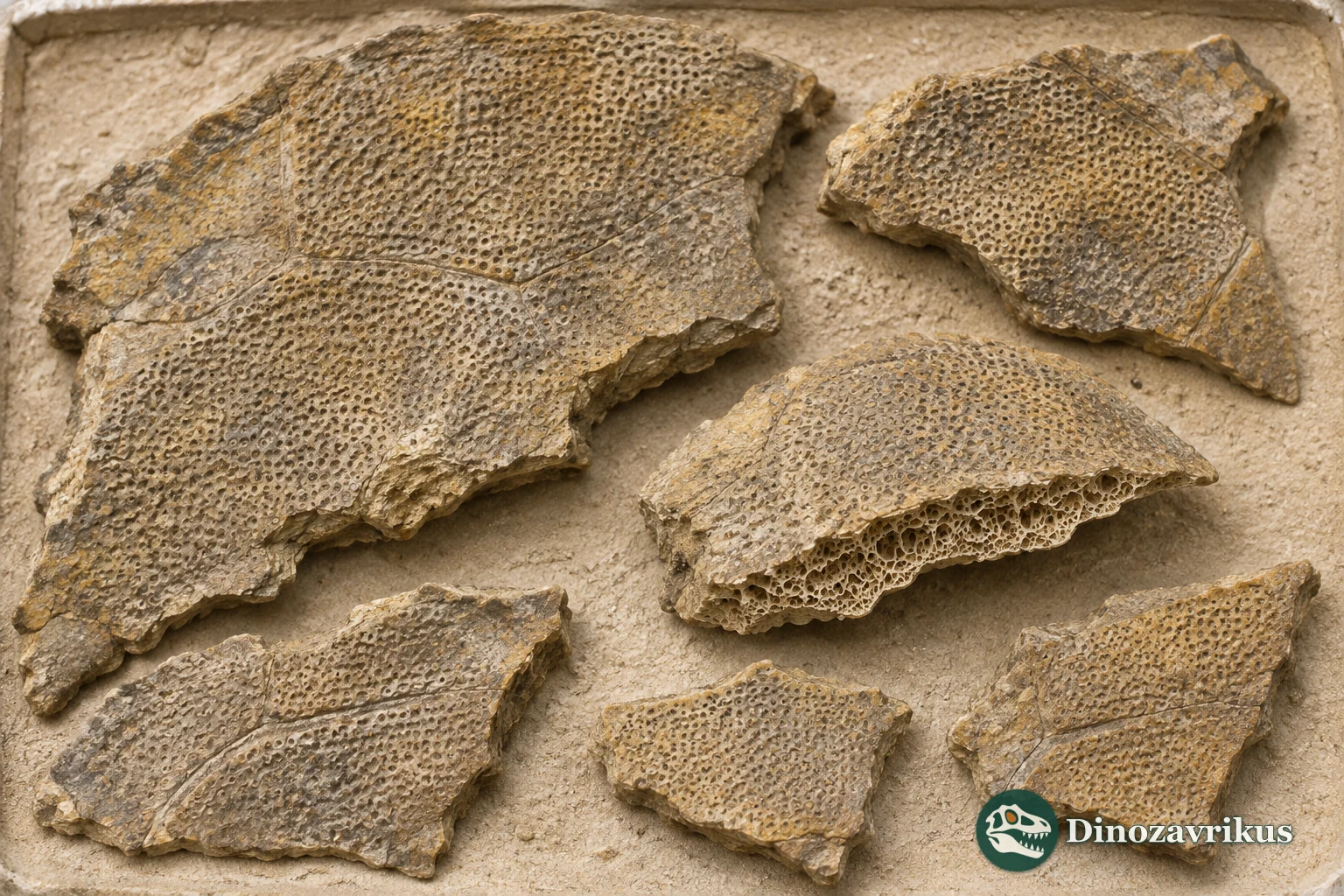
Aspideretoides was a Late Cretaceous North American member of the softshell turtle lineage. Much of its record consists of isolated, pitted shell bones. More complete fossils reveal the shape of the shell margin and the bones underneath the body, both of which help researchers test its relationships.
Quick facts
| Group | Turtles, softshell turtle lineage |
|---|---|
| Age | Late Cretaceous, Campanian |
| Region | North America, United States and Canada |
| Type species | Aspideretoides foveatus |
| Scientific name | Aspideretoides |
| Diet | No direct dietary evidence |
What can the fossils tell us?
Montana holotype ANSP 9269 consists of one upper shell fragment and four pieces of the lower shell.
The pits provide clues to identification. The shape and contacts of shell bones help distinguish otherwise similar turtles.
Secure records of the type species come from Montana, Alberta and Saskatchewan. The attribution of a Paleocene species to Aspideretoides is disputed.
Fossils on both sides of the modern border
In the mid-nineteenth century, Joseph Leidy named Trionyx foveatus from shell fragments from the Judith River Basin in Montana. James Gardner, Anthony Russell and Donald Brinkman erected Aspideretoides in a 1995 revision, with Leidy’s species as its type species. Later studies compared it with the much more complete TMP 1981.024.0007 from Dinosaur Provincial Park, Alberta. That skeleton preserves a skull, a shell and other bones.
Where the bony shell ended
Aspideretoides lacked the ring of peripheral bones that frames the upper shell in many turtles. Its shell bones also lack grooves where scute edges would have met. Together with the pitted surface of the bones, those features identify the softshell lineage. Assigning a fossil to a particular genus takes additional clues, including the arrangement of the bones along the midline. Helopanoplia, another North American softshell, has a distinct pattern of raised features on its shell.
Shell characters and competing family trees
In 2016, an analysis of shell characters placed A. foveatus among plastomenids and transferred the Paleocene species superstes to Aspideretoides. Later studies often use the name Atoposemys superstes. The position of both species varies with the way the characters are analysed. The securely dated occurrences of the type species remain Campanian.
What the fossils say about the living turtle
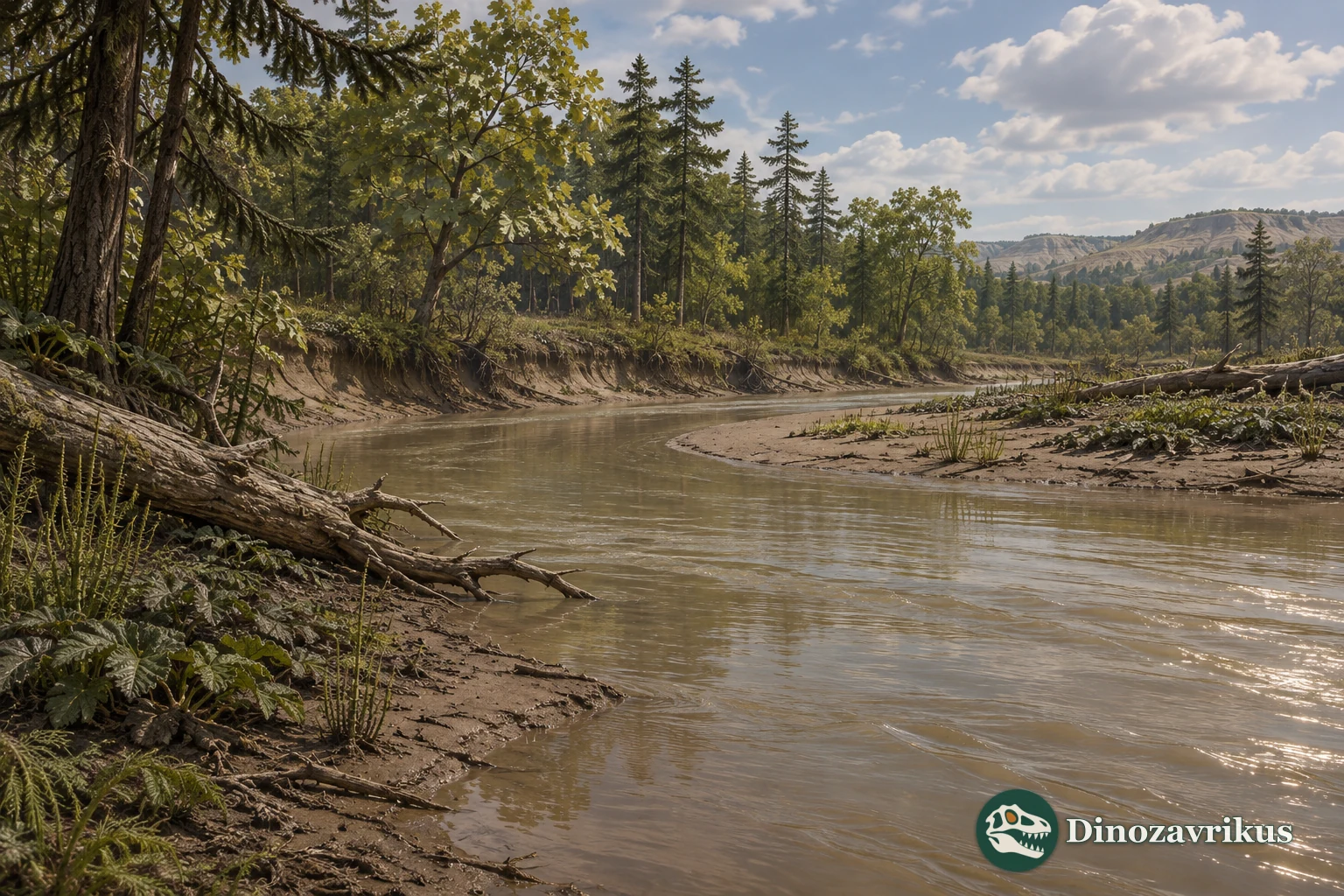
Many of the remains occur in river deposits. Comparison with other softshell turtles supports a freshwater habitat and helps reconstruct the general shell outline. Fossils have yet to reveal its colour, skin pattern or specific diet.
Frequently asked questions
When did Aspideretoides live?
The type species is known from the Campanian stage of the Late Cretaceous.
What does the type specimen preserve?
Holotype ANSP 9269 preserves one fragment of the upper shell and four fragments of the lower shell.
Why is it considered a softshell turtle?
It lacks the ring of peripheral bones and the grooves left by horny scutes. In combination with shell pitting, those features identify the softshell lineage.
Can pits alone identify an Aspideretoides fragment?
Pitting occurs in several kinds of softshell turtle. Identification also uses the shape, position and contacts of the shell bones.