

Helopanoplia was a North American member of the softshell turtle lineage. Its low bony shell lacked scutes, and much of the bone surface bore low bumps and ridges. Comparing that ornament with more complete remains changed how researchers distinguish the fossil species.
Quick facts
| Group | Turtles, softshell lineage (Pan-Trionychidae) |
|---|---|
| Age | Late Cretaceous |
| Region | North America, western United States |
| Type species | Helopanoplia distincta (= Helopanoplia beecheri) |
| Scientific name | Helopanoplia |
| Diet | No direct dietary evidence |
What can the fossils tell us?
The holotype of H. beecheri, YPM 295, comes from the Lance Formation of Wyoming. It preserves parts of the neck, shell, limbs and tail. Its skull is missing.
The second rib-bearing plate broadened towards the rim and formed a distinct corner. The angle is stronger in larger specimens.
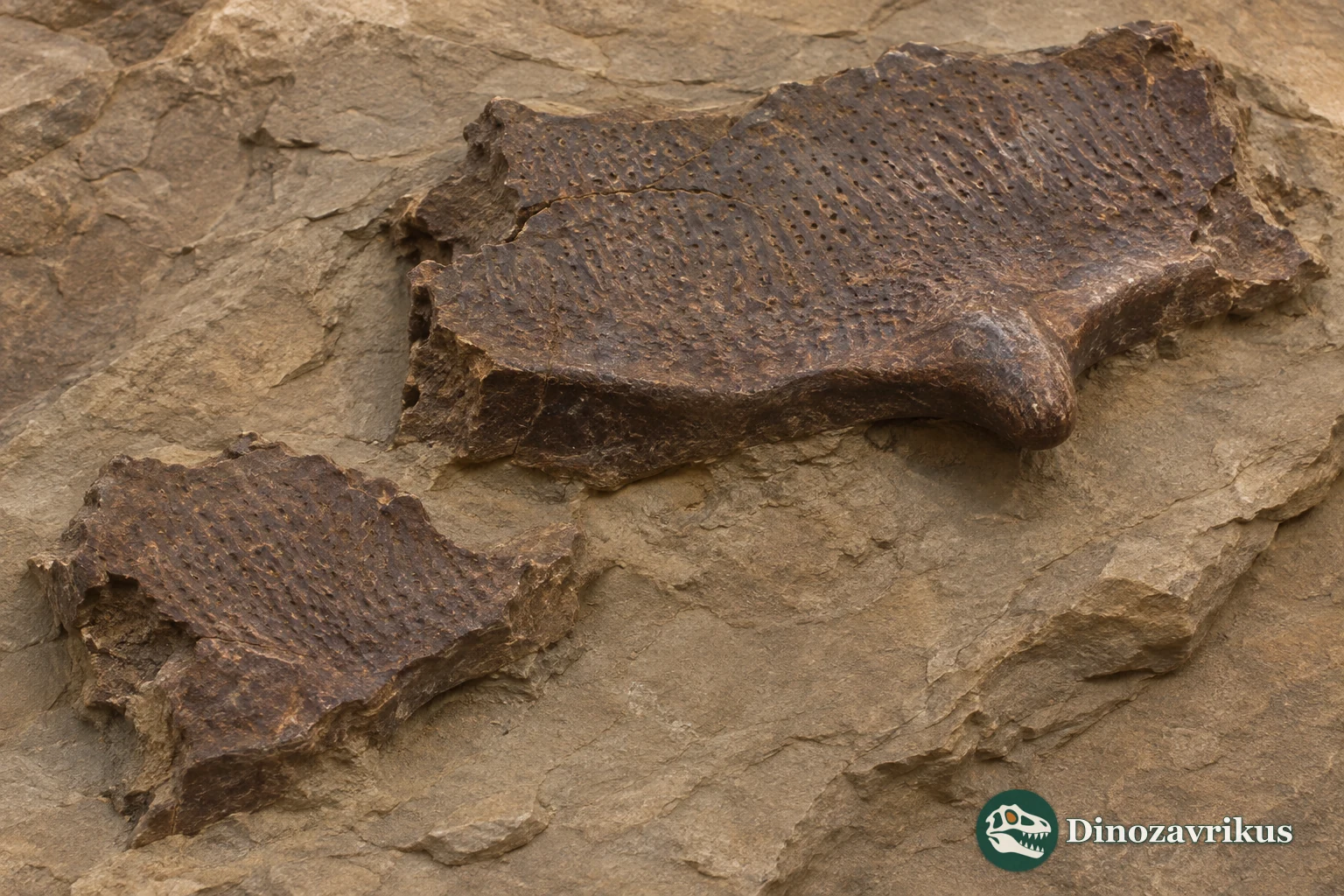
Isolated bumps, chains of bumps and short ridges can occur on bones of the same species. Shape and position of the plates give additional evidence for identification.
How two names came to describe one turtle
Oliver Hay named Aspideretes beecheri in 1904 from a partial articulated skeleton in the Lance Formation. Four years later he named Helopanoplia distincta from two shell fragments now catalogued as USNM 5732. In 2026, Walter Joyce, Léa Girard and Tyler Lyson redescribed the first type. Its shell shape and range of surface ornament supported combining the species. The older species name has priority in the new combination Helopanoplia beecheri.
The bony shell
The shell lacks the separate peripheral bones common in many hard-shelled turtles. It also lacks grooves delimiting scutes. The bony disk broadened at the second costal, while the last two pairs of these rib-bearing plates were reduced. Adocus, another North American turtle from a related lineage, retained distinct edge bones and a covering of shell scutes.
Changes as the turtle grew
The nearly complete Hell Creek carapace NDGS 353 measures about 39 cm along its midline. Bone covers the ends of its anterior ribs, which remain short and exposed in the smaller type. The authors compared these differences with changes in the shells of living softshells as they grow and proposed that age explains the variation.
Several formations and some reassigned fossils
Specimens of H. beecheri occur in the Maastrichtian Lance and Hell Creek formations of the western United States. Older Campanian shell fragments from New Mexico's Menefee Formation have been referred to the genus with their species left open. The 2026 revision moved some specimens formerly identified as H. distincta or A. beecheri to other genera. Similar ornament alone can be misleading.
Life in water
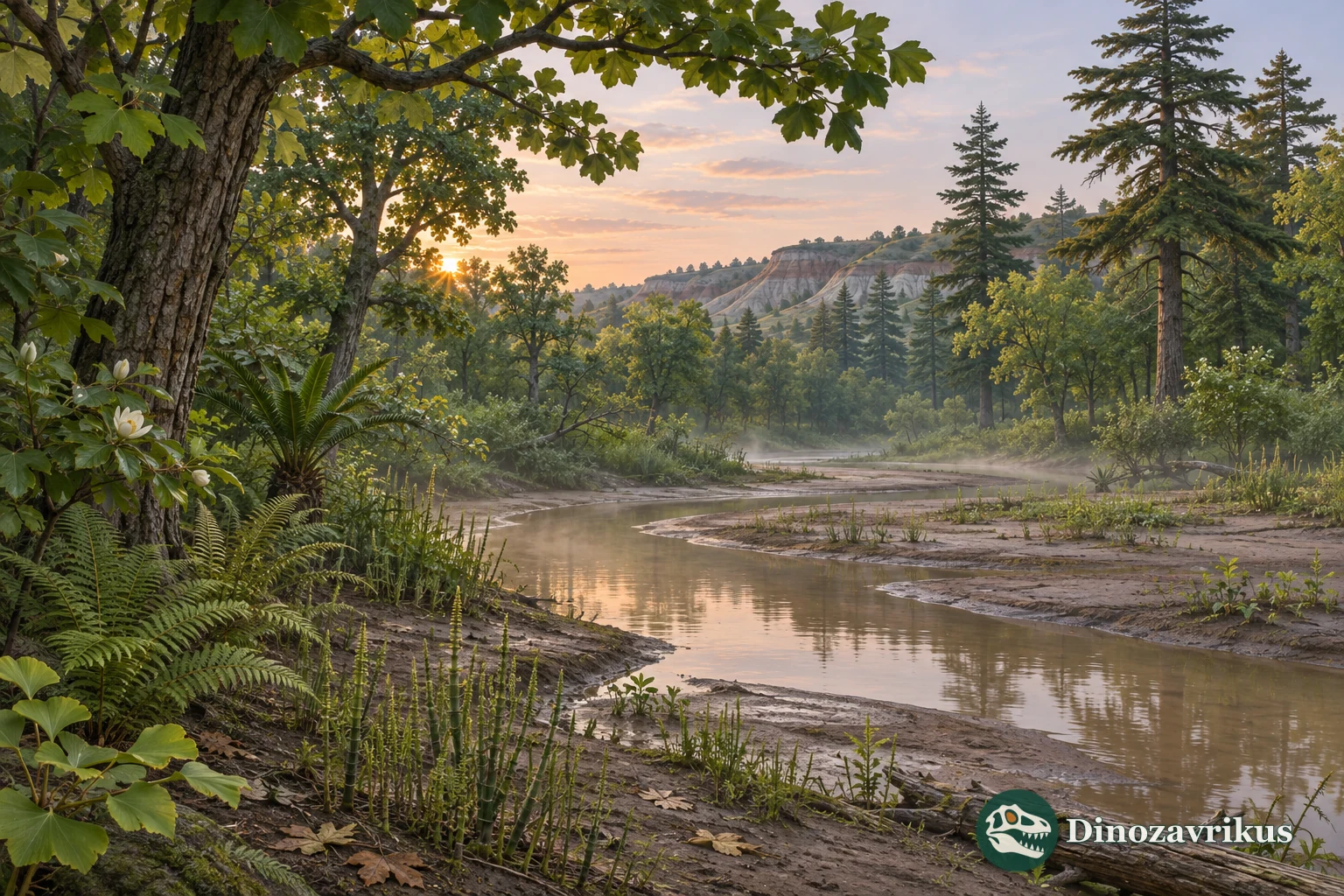
The low shell and comparison with other members of the softshell lineage support aquatic habits. The principal articulated specimen lacks the skull, so relatives guide the shape of the head in reconstructions. The available material gives no direct evidence of its diet.
Frequently asked questions
Why did this turtle have two names?
Different fossils were named separately. A 2026 revision interpreted them as the same species and combined the genus name with the older species name, Helopanoplia beecheri.
What survives of the type skeleton?
YPM 295 includes bones of the neck, shell, limbs and tail. The skull is missing.
How large was the bony shell?
The carapace of NDGS 353 measures about 39 cm along the midline. This measurement applies to the fossil bone.
Can the surface bumps identify a fossil by themselves?
The ornament is useful in combination with other features. Similar textures occur in other softshell turtles, so researchers also examine the shape and position of the plates.