

Astorgosuchus bugtiensis was a large crocodylian from the Oligocene of Bugti in western Pakistan. The front of the lower jaw is its best-known feature. Researchers used the jaw’s width and proportions from living crocodiles to estimate how long the animal may have grown.
Quick facts
| Species | Astorgosuchus bugtiensis |
|---|---|
| Group | Crocodyloid |
| Age | Oligocene |
| Locality | Bugti, Pakistan |
| Principal evidence | Front of the upper and lower jaws |
What can the fossils tell us?
Guy Pilgrim described the fragment in the early twentieth century. The revising team could not relocate it and studied the published figures and measurements.
The fourth socket on the left measures 46 by 42 mm. The broad front of the jaw is preserved, allowing comparison with complete jaws of living crocodiles.
The width of the jaw is used to estimate skull length. Modern head-to-body proportions are then applied, with different ratios yielding different totals.
The snout and two lower jaws
Guy Ellcock Pilgrim named Crocodilus bugtiensis in 1908 and described its type specimen, IM E221, in detail in 1912. The front of an upper snout came from Pishi Nala. The later team could not locate it. Jérémie Martin and colleagues placed the species in the new genus Astorgosuchus in 2019.
The team referred two large front ends of lower jaws to the species. UM-DB-LCJ1-02 came from a late Oligocene bed on the flank of the Zin anticline. The exact position in the fossil beds is unrecorded for the museum specimen NHMUK R.5266. The two lower jaws preserve no bone in common with the type upper snout, so the association relies on their dimensions and where upper and lower teeth would meet.
What the broad jaw reveals
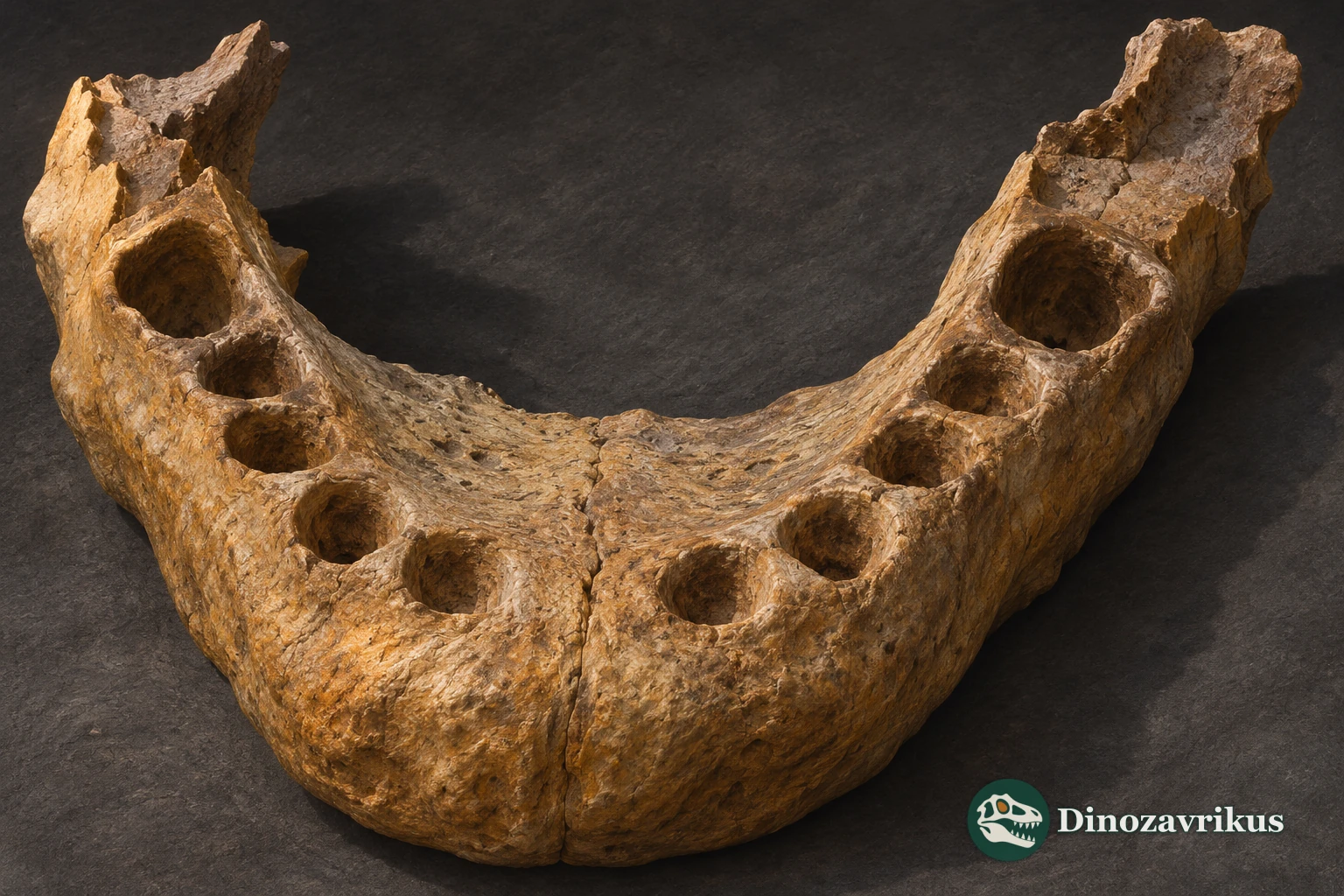
The front of the jaw is broad and robust. The joint between its two halves, the symphysis, extends back to the seventh tooth socket. The fourth socket is especially large. On the left side of UM-DB-LCJ1-02 it measures 46 by 42 mm, marking the position of one of the largest lower teeth.
The researchers modelled the relationship between lower-jaw width and skull length in 13 living Crocodylus specimens. That relationship gave estimated skull lengths of 80 and 91 cm for the two fossils. With a head-to-body ratio of 1 to 8, the estimates are about 6.4 and 7.3 m. A different ratio yields roughly 7 and 8 m. An articulated skeleton is still needed to test the proportions.
Crocodylians and bite traces at Bugti
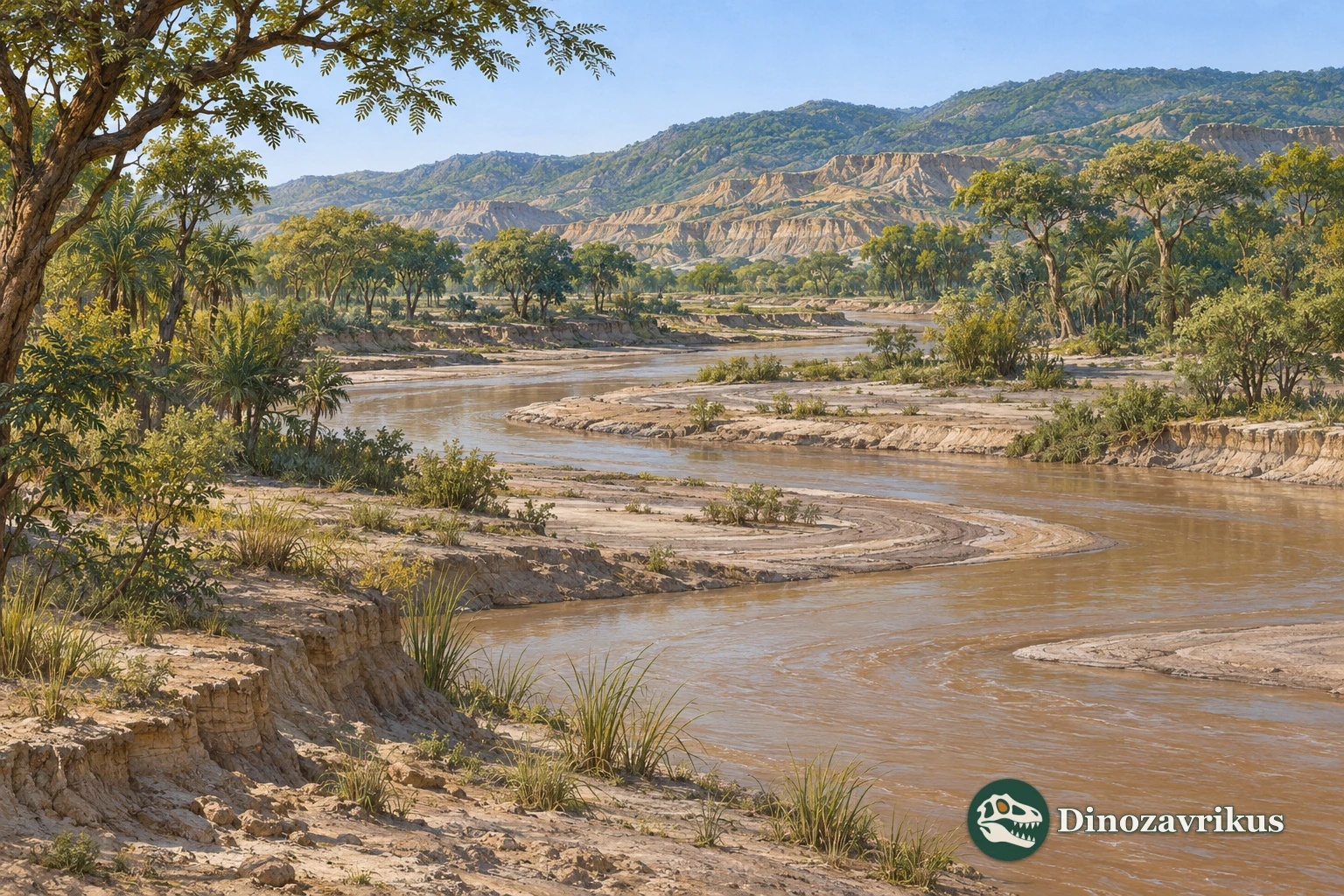
A juvenile Paraceratherium jaw from Bugti bears marks that a large crocodylian could have made. The region also supported large slender-snouted forms. The traces leave open both the identity of the biter and whether the young animal was alive at the time.
Fossil crocodylians in South Asia varied markedly in skull shape. The much longer-snouted Rhamphosuchus is an example from younger deposits.
Frequently asked questions
How long might Astorgosuchus have been?
Two jaws yielded estimates of about 6.4 and 7.3 m. An alternative set of modern body proportions yields roughly 7 and 8 m.
What happened to the type specimen?
The team revising the species was unable to locate the upper snout fragment IM E221 and used the published description for comparison.
Why was Astorgosuchus placed in a separate genus?
The revising authors compared the known jaws and treated the combination of features in their broad front ends as distinct enough for a separate genus.
Did it prey on Paraceratherium?
Marks on a juvenile jaw from Bugti are consistent with a bite from a large crocodylian. They do not identify a particular species or distinguish predation from scavenging.