

Atopomys was an extinct North American vole relative studied mainly through small jaws and molars. Thomas Patton introduced the genus from a sediment-filled limestone fissure in central Texas. Fine details of the chewing surface distinguish fossil vole lineages even when most of the body is missing. The animal on the cover is a plausible life reconstruction; its fur and posture were not preserved.
Later eastern cave discoveries widened the known record. Comparisons with Allophaiomys help explain how researchers sort ancient voles, but similar molar patterns do not make the two genera identical. Every claimed occurrence needs a fossil identification and a separately assessed deposit.
Quick facts
| Group | Arvicolinae, voles |
|---|---|
| Original species | Atopomys texensis Patton, 1965 |
| Time | Pleistocene; each cave deposit needs its own dating |
| Region | Texas and the eastern United States |
| Fossils | Jaw fragments and molars |
| Later named form | A. salvelinus in West Virginia cave fauna |
What can the fossils tell us?
The anterior loop and connected dentine spaces of the first lower molar can be compared across ancient vole lineages. They cannot reveal coat colour or an individual's diet.
The type material came from a Pleistocene limestone fissure fill in central Texas. Geological and faunal context, not the rodent's name, supports an age estimate.
West Virginia and other eastern material show that the genus was not confined to Texas. Identification and age must be evaluated for each fossil assemblage.
The tooth characters behind a new genus
Patton named A. texensis in 1965. His diagnosis considered the anterior loop of the first lower molar and the confluence of its dentine spaces. In some features Atopomys fell between the European genera Ungaromys and Villanyia, whereas other traits were more derived. An intermediate mixture of characters is not a documented sequence of direct ancestors.
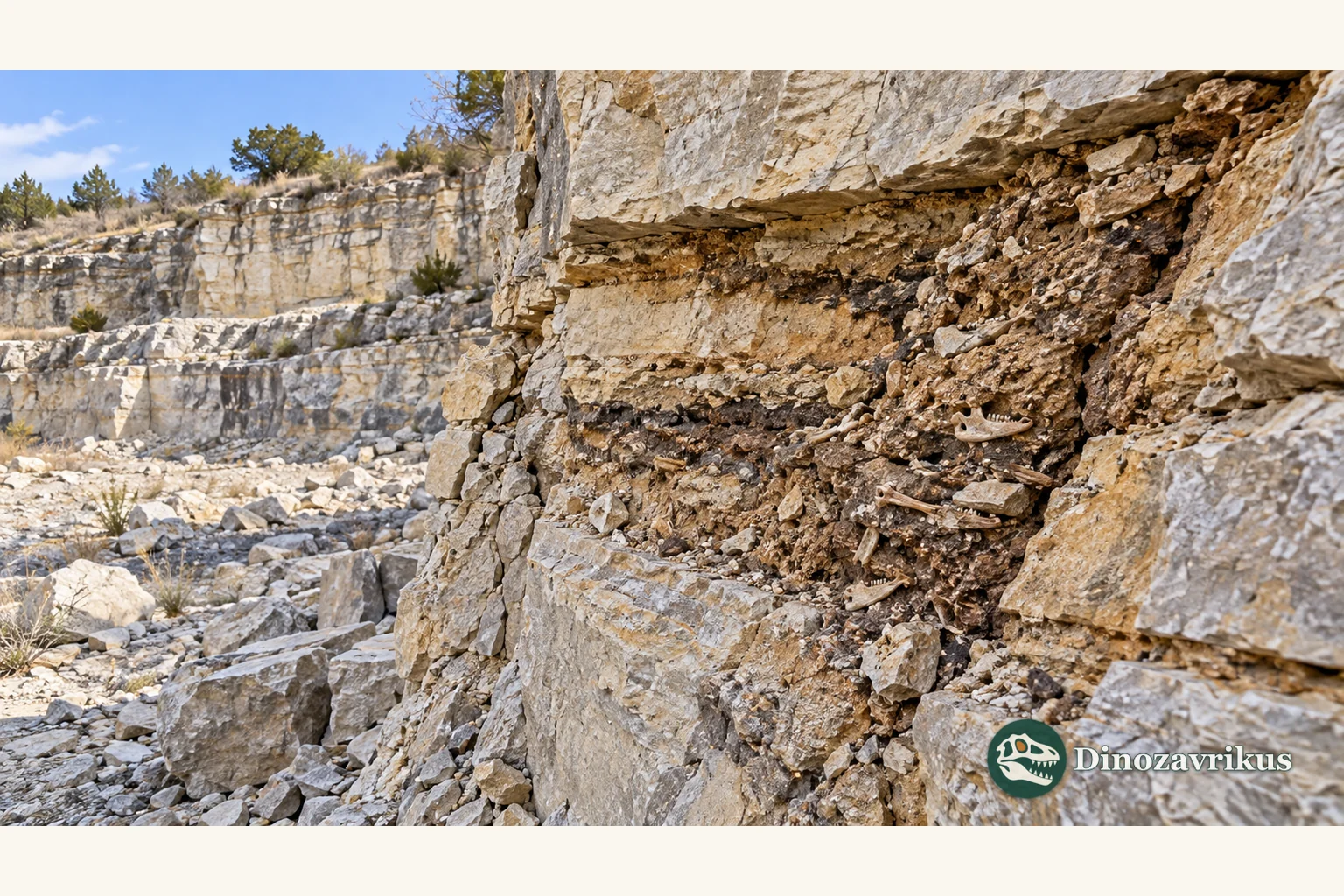
A molar can establish taxonomic comparisons but cannot supply a measured tail length or coat pattern. A largely plant-based diet is plausible by comparison with voles, yet no particular meal or habitat preference has been recovered for an individual Atopomys. The fossil fissure illustration below depicts the type of setting, not Patton's actual excavation.
A second species in a cave fauna
Charles Repenning and Frederick Grady reported A. salvelinus from the Cheetah Room assemblage in Hamilton Cave, West Virginia. They estimated the fauna at about 740,000–850,000 years old using several small-mammal lineages and their changing tooth forms. That is a biochronological interpretation of the assemblage, not a direct radiometric measurement of an Atopomys tooth.
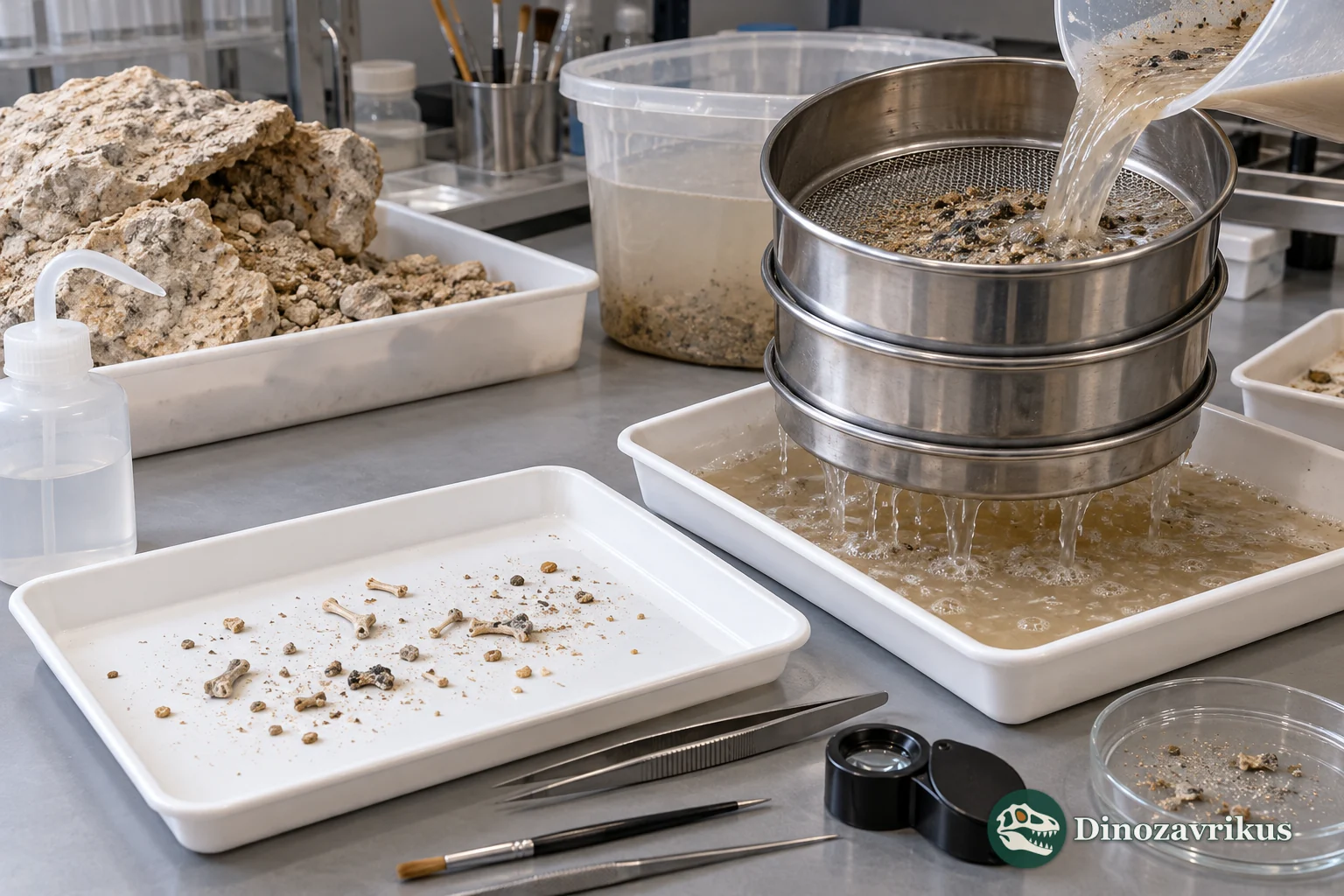
Other eastern and south-central records have since been discussed. Cave bones can accumulate or move through different processes, so distinct deposits should not be compressed into one population or one date. Washing and sieving sediment are useful ways to recover tiny fragments. The illustrated workbench below is generic, not a documented view of the Hamilton Cave project.
What the patchy record cannot settle
Middle Pleistocene cave faunas and later reported material do not make a continuous history of the genus. Revised fossil identifications or layer ages could change its apparent duration. The island mouse Rhagamys provides another example of careful reasoning from dental samples, but it was a different rodent in a different region.
No known tooth settles why Atopomys vanished, where it nested, or which plants it ate. The limestone grassland cover is illustrative rather than a reconstruction of one fossil horizon. The secure story is narrower and useful: diagnostic molars link small North American cave assemblages to a distinctive extinct vole lineage.
Frequently asked questions
Where was Atopomys first found?
The original A. texensis material came from a Pleistocene limestone fissure fill in central Texas.
Was it confined to Texas?
No. Later material, including A. salvelinus, was reported from eastern US cave faunas such as Hamilton Cave in West Virginia.
Why are its molars informative?
The first lower molar's anterior loop and enamel and dentine pattern help distinguish ancient vole lineages.
Can fossils reveal its fur and behaviour?
No. Most evidence consists of teeth and jaws, which do not preserve coat colour, individual diet or social life.