

Rhagamys was an extinct mouse relative of Sardinia and Corsica. The best studied species, R. orthodon, left jaws and loose teeth in limestone fissures and other island deposits. Its molars became larger than those of an earlier related form, but a tooth crown alone cannot supply a measured body length. The mouse on the cover is an artistic reconstruction.
Large tooth samples make this an unusually useful island-evolution case. They cannot reveal fur colour, an exact diet or the cause of extinction. On Sardinia, Prolagus belonged to the same distinctive island fauna; sharing deposits does not mean the two animals had the same habits.
Quick facts
| Family | Muridae, mice |
|---|---|
| Best studied species | Rhagamys orthodon; originally Mus orthodon |
| Islands | Sardinia and Corsica |
| Age | Middle and late Pleistocene; some early Holocene records |
| Fossils | Jaws and numerous isolated molars |
| Earlier comparison | Rhagapodemus minor in the island sequence |
What can the fossils tell us?
Samples of first upper and lower molars reveal changes in shape and size. They do not directly measure the length or mass of a living mouse.
Mean tooth size increased between Rhagapodemus minor and Rhagamys orthodon. Later populations varied without a consistent one-way increase.
Jaws and teeth occur in several island deposits. Their sequence constrains occurrence, but does not establish one precise date of disappearance for both islands.
From Mus orthodon to an island genus
Hensel described the species as Mus orthodon in 1856. Major later used Rhagamys for the distinctive island mouse. A changed genus name reflects comparisons of jaws and teeth, not the origin of a new species at the date of renaming. Researchers compare the older Rhagapodemus minor with later R. orthodon, while individual fossils from successive layers cannot automatically be made into a direct ancestor-descendant chain.
A Monte Tuttavista study measured 252 first lower and 208 first upper molars from populations in this sequence. Tooth size increased across the transition to R. orthodon. Within middle and late Pleistocene samples, molar shape was comparatively stable and size fluctuated without continuing directional growth. The study compared evolutionary models; the data do not support the simple story that each later population was larger.
What Sardinian fissures preserve
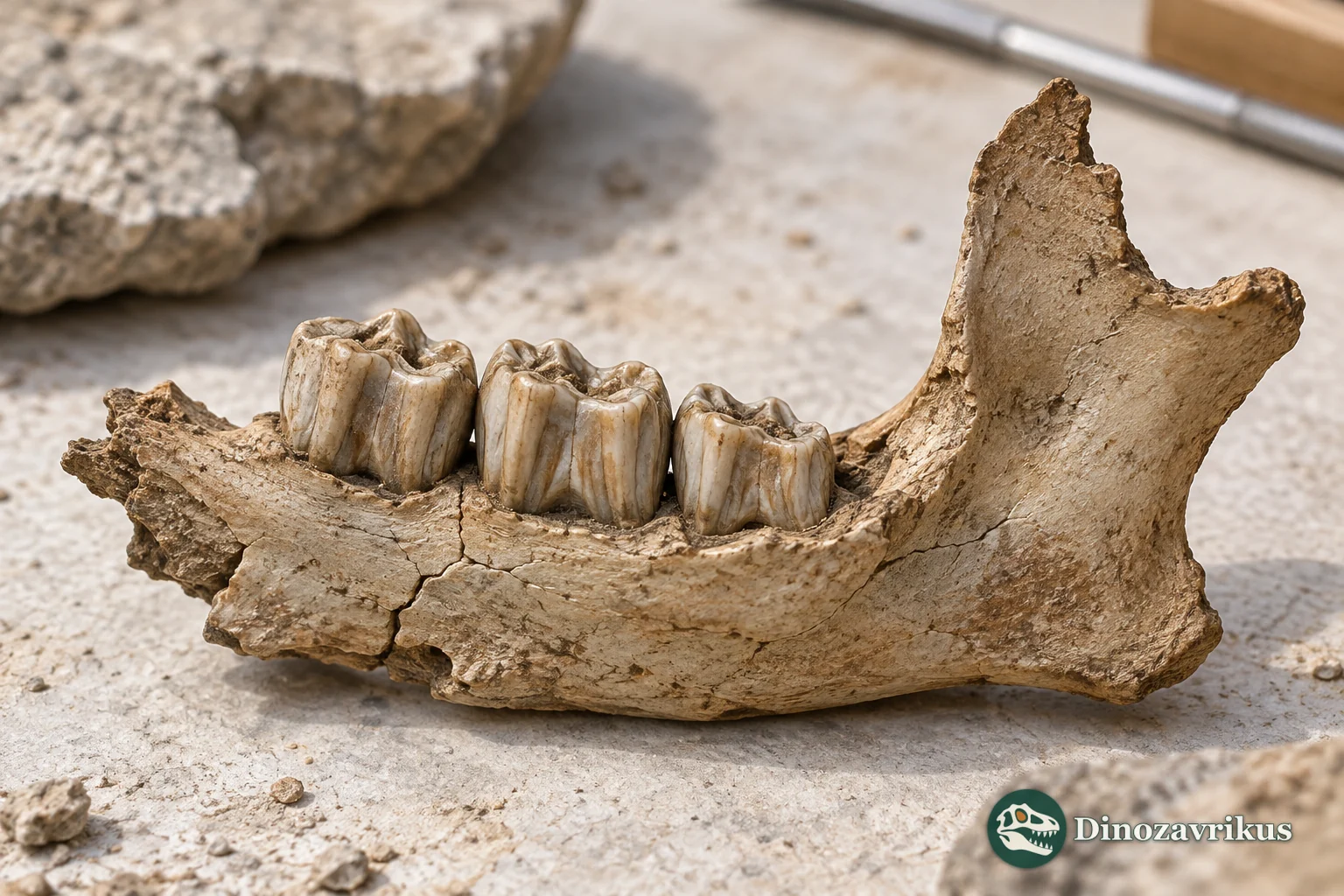
Su Concali Quarry yielded jaws and isolated high-crowned molars assigned to R. orthodon. Their proportions help distinguish the mouse from the earlier island form. A deposit provides geological context, whereas a loose tooth without its layer supplies no exact calendar age. A jaw catalogued as R. orthodon is also held by the University of Cagliari museum, but one specimen cannot stand in for the full island sequence.
A smaller Corsican form has been proposed alongside R. orthodon at some sites. Its diagnosis rests partly on the second upper molar and needs testing against adequate samples. Simultaneous presence of two secure species should therefore remain a hypothesis. The Cretan island mouse Kritimys offers a comparison of island adaptation, not proof that the two genera were the same.
Late records and unresolved disappearance
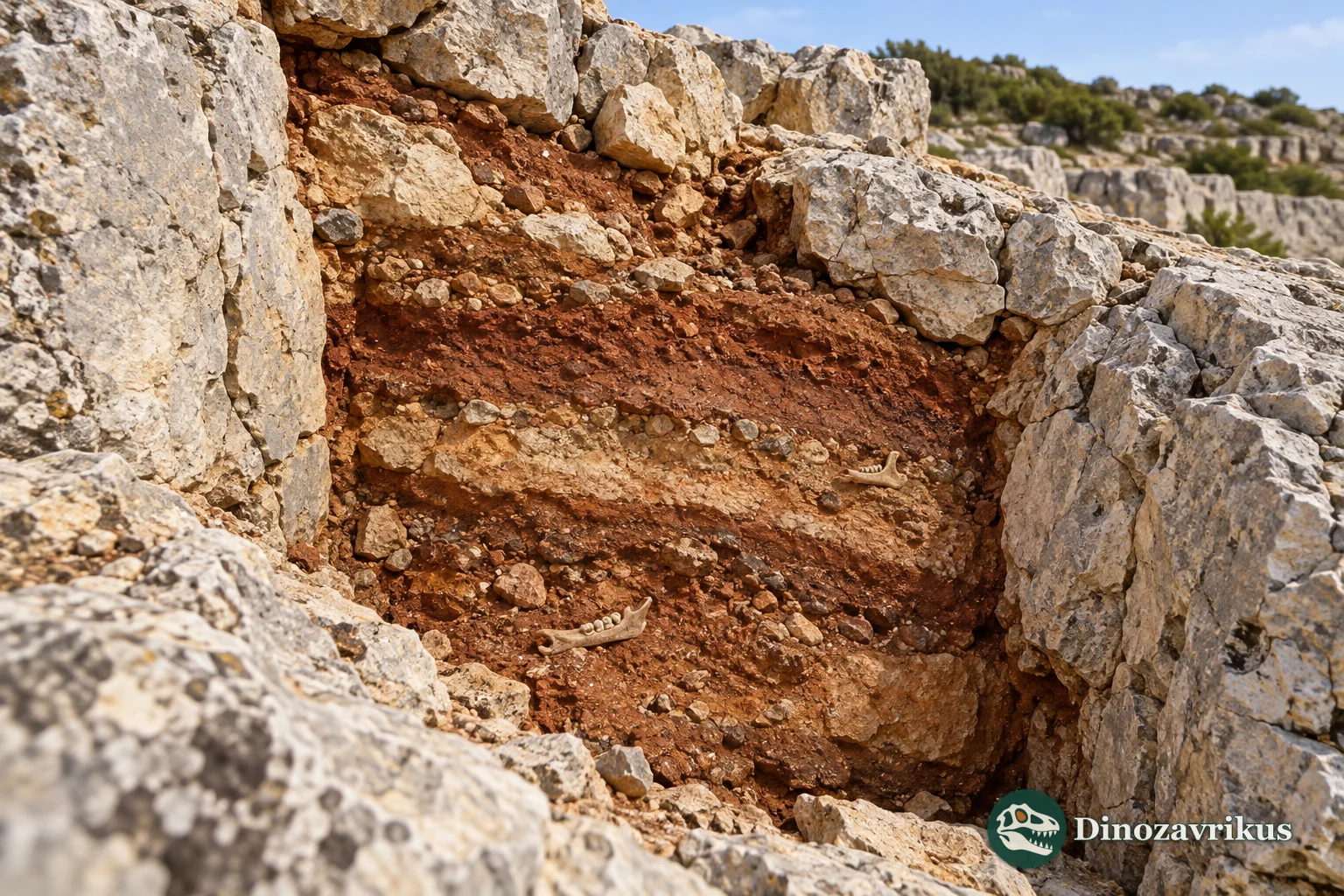
Occurrences reach the late Pleistocene and some early Holocene island deposits. Differences in dating and identification among sites prevent a single verified date for the last Sardinian and Corsican populations. Environmental change and human arrival have been discussed for island faunas, but no fossil identifies one cause of the final Rhagamys disappearance.
The Sardinian deer Praemegaceros formed part of a wider island fauna. Regional overlap does not document an encounter or competition. Teeth also tell us nothing secure about litter size or coat pattern. The limestone shoreline in the life reconstruction is one plausible setting, not a documented location for the pictured mouse.
Frequently asked questions
Was Rhagamys an exceptionally giant rat?
Its molars exceeded those of some earlier island relatives, but crown size is not a direct measurement of body length or mass.
Where was Rhagamys orthodon found?
Fossils come from Sardinia and Corsica, including Sardinian limestone fissures and Su Concali Quarry.
Did its teeth keep getting larger throughout the Pleistocene?
No. A substantial increase occurred across an early transition, followed by fluctuating sizes without a consistent directional trend.
Do we know why Rhagamys disappeared?
No. Late island records establish neither one precise extinction date nor a direct cause.