

Australosutura was a Carboniferous trilobite with a vaulted head shield and a shell covered in tubercles. The type species comes from Australia. Separate head and tail shields document a second species from Patagonia and preserve details of its relief.
Quick facts
| Group | Brachymetopid trilobites |
|---|---|
| Age | Early and Late Carboniferous |
| Named by | K. Campbell and R. Goldring, 1960 |
| Type species | Australosutura gardneri |
| Records | Australia, Argentina, United States and China |
| Patagonian material | Head and tail shields |
What can the fossils tell us?
In the Patagonian species it accounts for about 74–78% of cranidial length, as measured on head shields.
A US species described from tail shields has a broader axis and fewer rings than the Patagonian species.
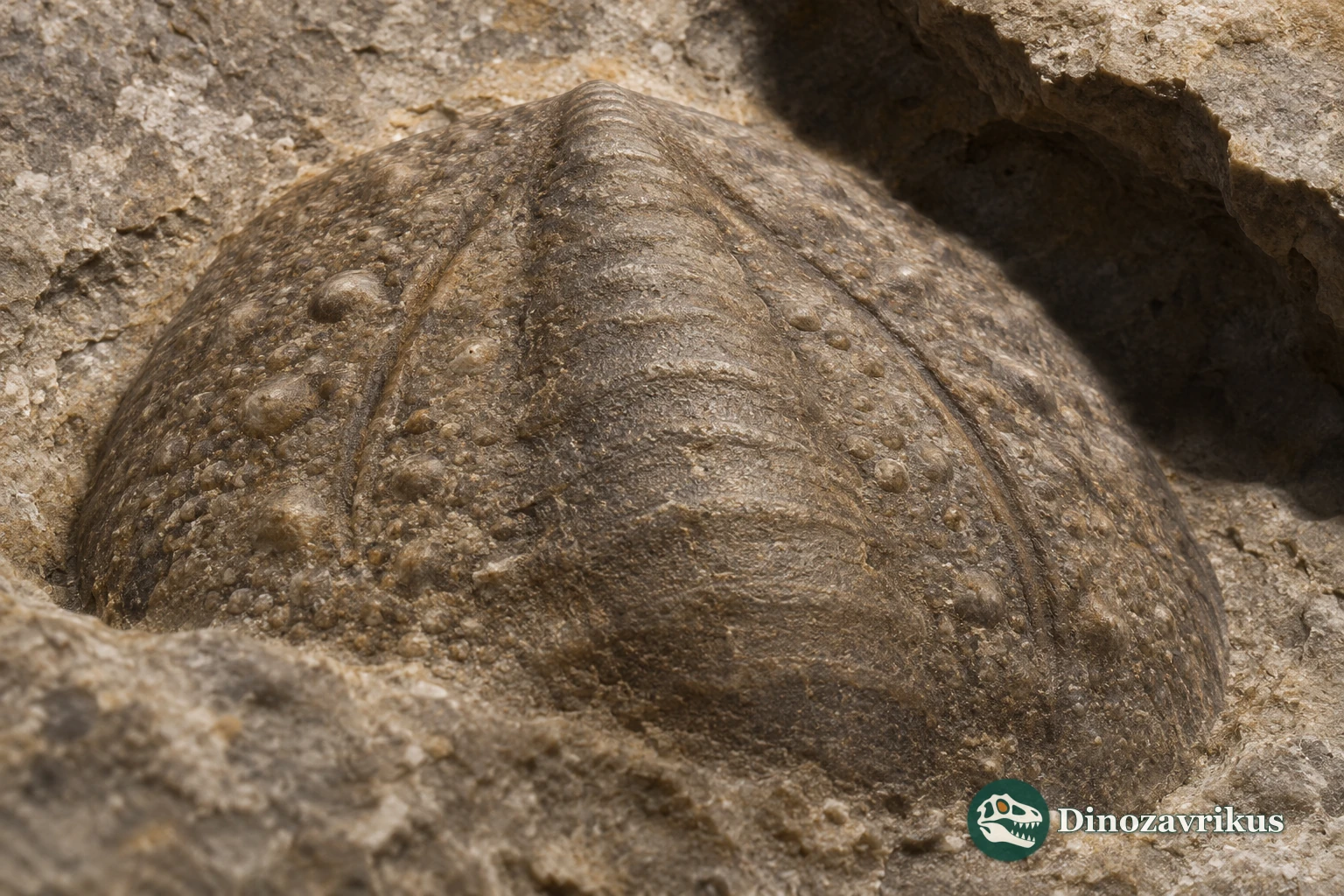
The tubercles are more conspicuous on the Patagonian fossils than on one Early Carboniferous species from the United States.
How the Australian and Patagonian fossils came to represent separate species
Campbell and Goldring erected Australosutura in 1960. They based the genus on a species previously called Cordania gardneri and used additional specimens from the original locality in New South Wales. Similar material from Argentina was initially put in the same species.
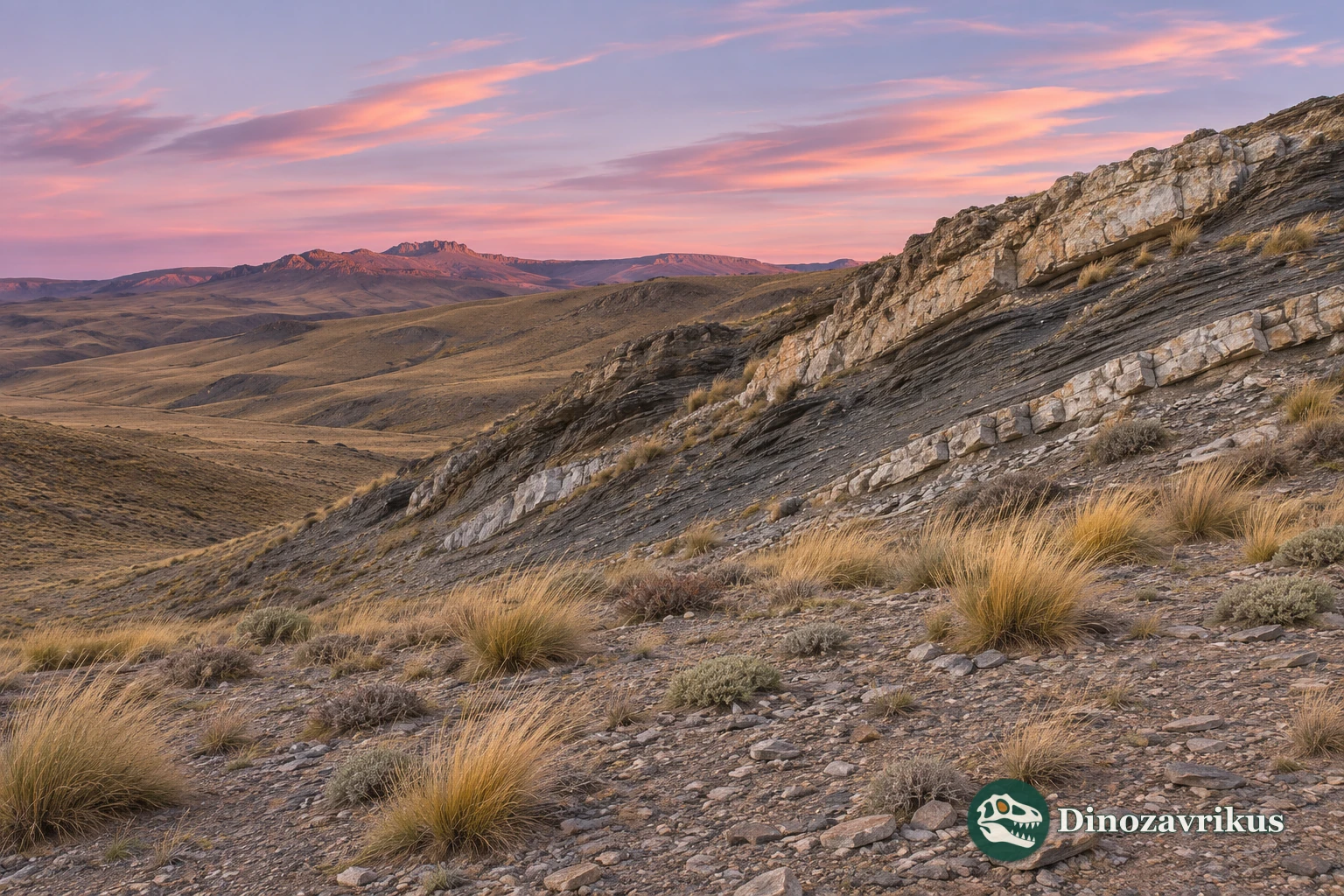
The Argentine material was later named A. argentinensis. A 2019 study of the Pampa de Tepuel Formation in Chubut reported five additional head shields, two tail shields and two fragments. They were collected in the northern part of the Sierra de Tecka, in Late Carboniferous beds.
What the head and tail shields show
The Patagonian species has a strongly vaulted cephalon. The raised central area, or glabella, has a rounded front. Deep lateral furrows near its rear separate small triangular lobes. Tubercles of several sizes cover the shell.
Australosutura belongs to the same family as Brachymetopus. The tail shield can help distinguish its species. In A. osagensis from the United States, the tail axis is broader and has fewer rings than in the Patagonian species.
Records from other marine basins
The Early Carboniferous A. llanoensis from the United States has a similarly shaped but less vaulted glabella, a flatter tail shield and less conspicuous tubercles. Another Early Carboniferous species, A. asiatica, was described from China.
Frequently asked questions
Where was the type species found?
In New South Wales, Australia.
What was the original name of the type species?
It was originally described as Cordania gardneri. Australosutura was erected as a separate genus in 1960.
Which parts of Australosutura were found in Patagonia?
The published fossils include detached head and tail shields and shell fragments.
How does the Patagonian tail shield differ from that of A. osagensis?
It has a narrower axis with more rings.