

Avitabatrachus uliana was a small frog from Cretaceous deposits in northern Patagonia. It was first described from an individual that had completed metamorphosis. A later study identified a second, metamorphosing individual on the same rock slab.
Quick facts
| Group | Frogs (Anura), pipimorphs |
|---|---|
| Age | Late Cretaceous, Cenomanian |
| Region | South America (northern Patagonia, Argentina) |
| Length | About 35 mm snout to vent in the type specimen (estimated) |
| Type species | Avitabatrachus uliana |
| Scientific name | Avitabatrachus |
| Diet | Undetermined |
What can the fossils tell us?
MUCPv 123 preserves a postmetamorphic frog. The smaller associated set of bones, MUCPv 123a, was referred to a tadpole of the same species.
The bone first interpreted as a fused sacrum and urostyle was identified as a separate urostyle. The two elements remained separate in young individuals.
Fusion of the sacrum and urostyle later in life was proposed. A more complete adult would help test the interpretation.
The El Gigante specimen
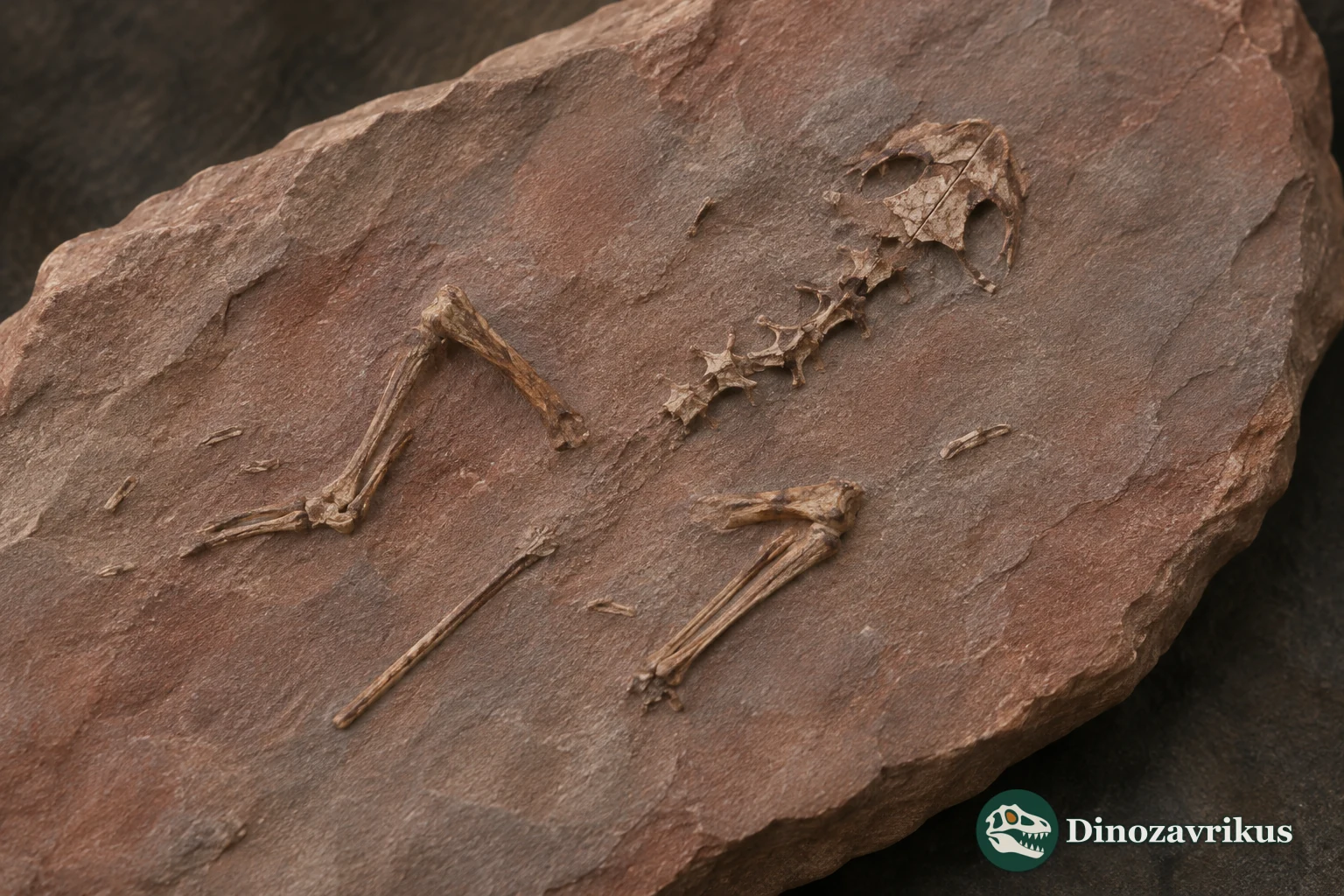
Ana María Báez, Linda Trueb and Jorge Calvo named the species in 2000. The holotype, MUCPv 123, comes from El Gigante near the present-day Ezequiel Ramos Mexía Reservoir. Some vertebrae are still articulated, with more dispersed bones of the skull and limbs nearby. Its snout-to-vent length was estimated at about 35 mm.
A second individual on the slab
The later study distinguished a smaller specimen, MUCPv 123a, identified as a metamorphosing tadpole. Its first two presacral vertebrae are separate, while those of the postmetamorphic type are fused. Avitabatrachus belongs to the early history of the group that includes living pipid frogs. Its upper jaw bears teeth, unlike that of another Patagonian fossil frog, Saltenia.
Revisiting the sacrum
A urostyle is the elongated bone behind the sacrum in frogs. The initial description treated these elements as fused. Re-examination identified the bone as an isolated urostyle and found that the sacral vertebra itself is missing from the type. Fusion in fully grown individuals remains a proposal.
Age and setting
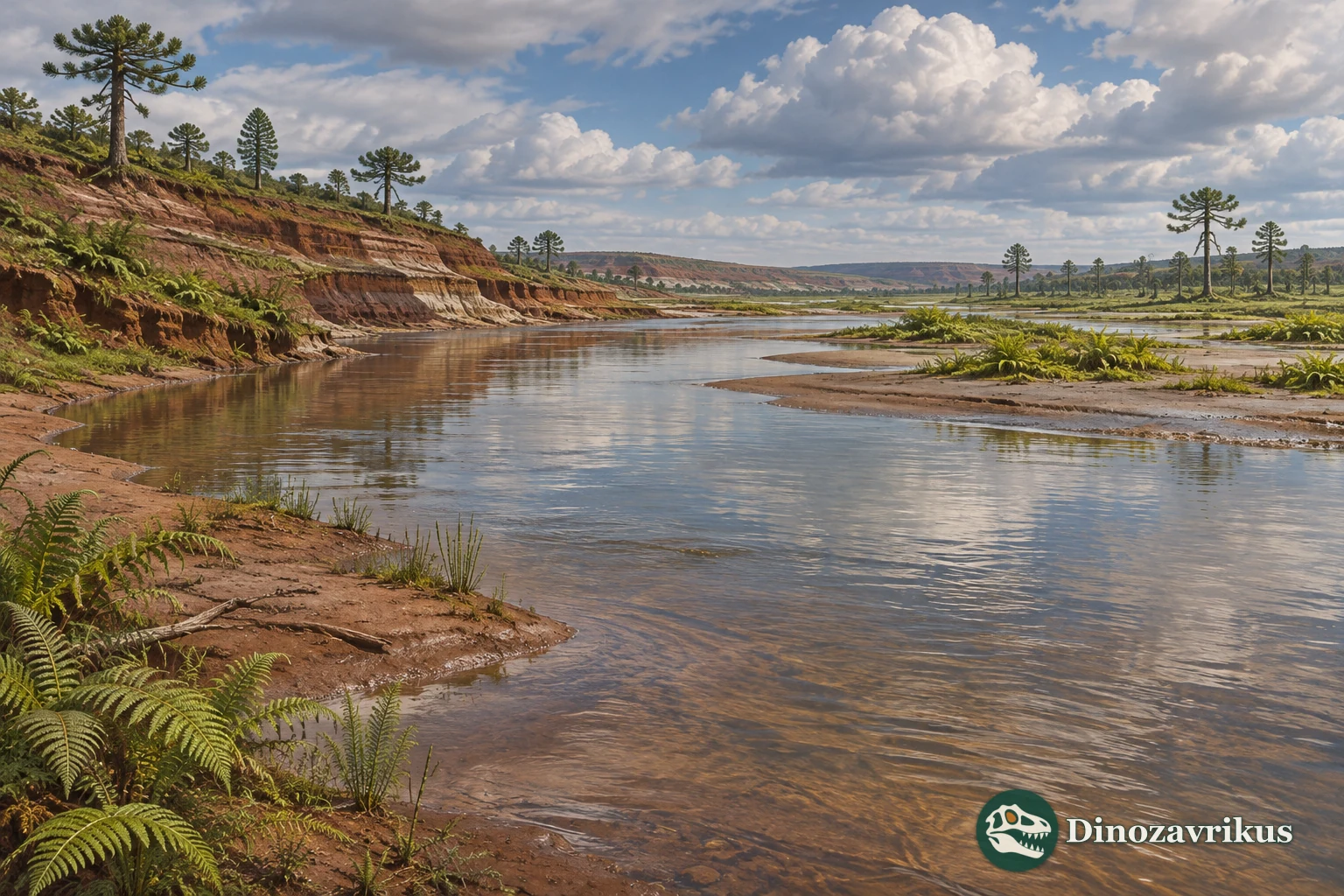
The frog comes from continental deposits of the Candeleros Formation in the Neuquén Basin. The original description allowed a Late Albian or Early Cenomanian age. The revised account uses a Cenomanian date. The succession records freshwater systems, while the remains give little detail about the frog's diet.
Frequently asked questions
Where was Avitabatrachus found?
It comes from El Gigante in northern Patagonia, in the Candeleros Formation of Argentina.
How big was Avitabatrachus?
The type was estimated to be about 35 mm from snout to vent.
How many individuals are on the slab?
Researchers recognised two. One was postmetamorphic and the smaller one was undergoing metamorphosis.
What did the re-examination show about the backbone?
It identified a separate urostyle, recognised that the sacrum is missing in the type, and described developmental differences in the first two presacral vertebrae.