

Aviturus exsecratus was a large relative of living giant salamanders. Its bones come from deposits of latest Paleocene age in southern Mongolia. Its skull and limb anatomy led researchers to suggest that it could move on land more readily than its living relatives.
Quick facts
| Group | Salamanders (Caudata), cryptobranchids |
|---|---|
| Age | Late Paleocene, Thanetian |
| Region | Asia (southern Mongolia) |
| Length | Up to 2 m based on estimates from bones |
| Type species | Aviturus exsecratus |
| Scientific name | Aviturus |
| Diet | Undetermined |
What can the fossils tell us?
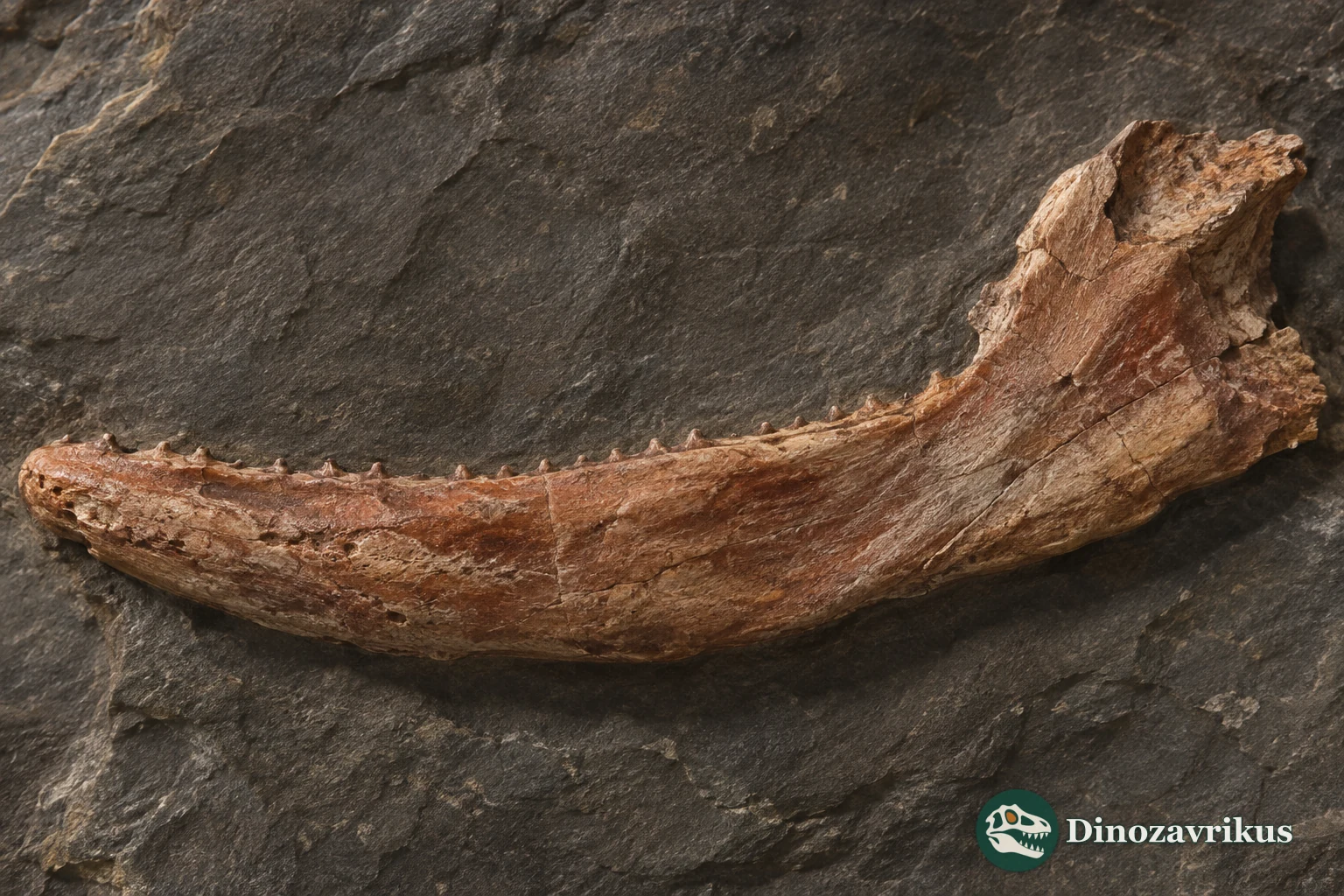
The holotype PIN 4357/27 is a nearly complete left dentary. Other material includes parts of the skull and vertebral column, an ilium and a robust femur.
The spacing of growth rings on the articular processes of vertebrae suggests a slowdown in growth between about five and eight years.
The bones are consistent with movement outside water. They give no direct measure of how much time Aviturus spent on land.
A jaw from the Nemegt Basin
Yuri Gubin named Aviturus in 1991. Its nearly complete left dentary, PIN 4357/27, came from Aguy-Dats-Bulak in the upper Naran Member of the Naran Bulak Formation. The referred fossils include bones of the skull roof and jaws, vertebrae, an ilium and a femur.
A high skull and powerful hind limbs
The largest individuals have been estimated at up to 2 m long. The reconstructed skull is relatively high, with a midline crest for jaw-muscle attachment. The femur is robust and has well-developed surfaces for muscle attachment. Davit Vasilyan and Madelaine Böhme interpreted this combination as evidence that Aviturus could support itself on land more effectively than living cryptobranchids.
Reading growth marks in vertebrae
Pavel Skutschas and colleagues examined seven articular processes from trunk vertebrae at Tsagan-Khushu. Wider intervals between rings mark the phase of rapid growth. The rings became more closely spaced around five to eight years of age, a change the researchers associated with maturity. One of the older specimens recorded growth into at least its twenty-fifth year. In the Cretaceous salamander Eoscapherpeton, changes during growth were studied through the internal structure of long bones.
Burial on a floodplain
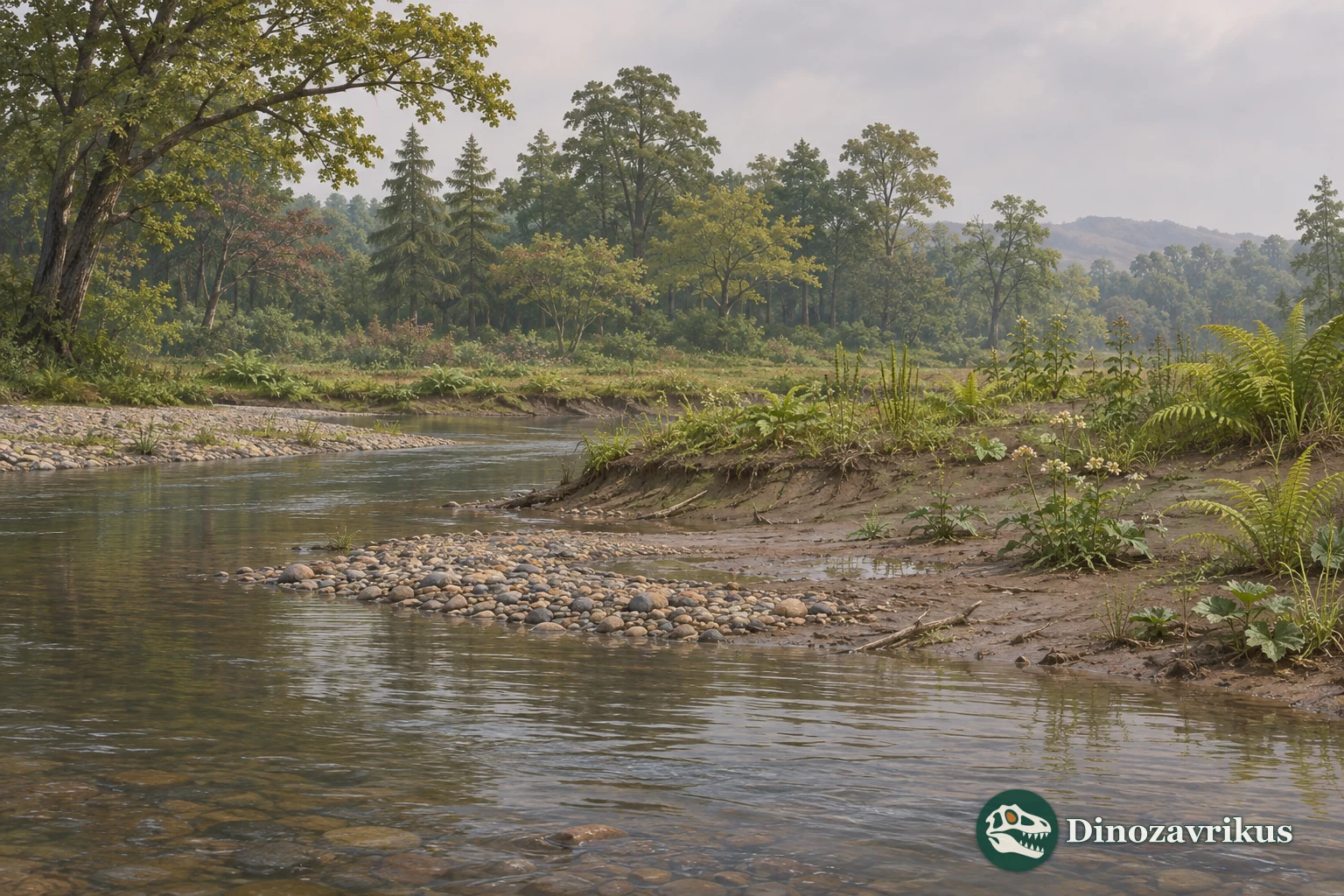
The remains were found in overbank sediments that include ancient soils. These deposits fit a landscape where the animal could have come ashore. Burial on a floodplain leaves open how the bones reached the spot and how often the salamander left the water.
Frequently asked questions
When did Aviturus live?
Its type material is from the latest Paleocene, in the Thanetian age.
Where was Aviturus found?
It is known from southern Mongolia. The type came from Aguy-Dats-Bulak and the material used to study growth came from Tsagan-Khushu.
How large was Aviturus?
Published estimates reach up to 2 m in total length, based on comparisons using the isolated bones.
How did researchers estimate individual ages?
They counted and measured the spacing of growth rings on the surfaces of the articular processes of trunk vertebrae.