

Bakonybatrachus fedori was a small frog from Late Cretaceous deposits in Hungary. The type is an incomplete right ilium. Further hip bones and part of a jaw allow closer comparisons with other fossil frogs.
Quick facts
| Group | Frogs (Anura), alytids |
|---|---|
| Age | Late Cretaceous, Santonian |
| Region | Europe (Bakony Mountains, Hungary) |
| Length | About 20–30 mm snout to vent (estimated) |
| Type species | Bakonybatrachus fedori |
| Scientific name | Bakonybatrachus |
| Diet | Undetermined |
What can the fossils tell us?
The type MTM V 2010.283.1 is an incomplete right ilium. Later finds include three more partial ilia and a fragmentary upper jaw.
The pelvis provides a snout-to-vent length estimate of 20–30 mm. Its anatomical combination supports the assignment to Alytidae.
No complete skeleton is known. Confirmed material comes from Iharkút, and a similar Romanian find remains tentatively identified.
The name and the type
Zoltán Szentesi and Márton Venczel named the species in 2012. The holotype, MTM V 2010.283.1, is held in the Hungarian Natural History Museum. Fragments of an upper jaw, a lower jaw bone and a shoulder blade were also referred to the species. They come from the Santonian Csehbánya Formation at Iharkút in the Bakony Mountains of western Hungary.
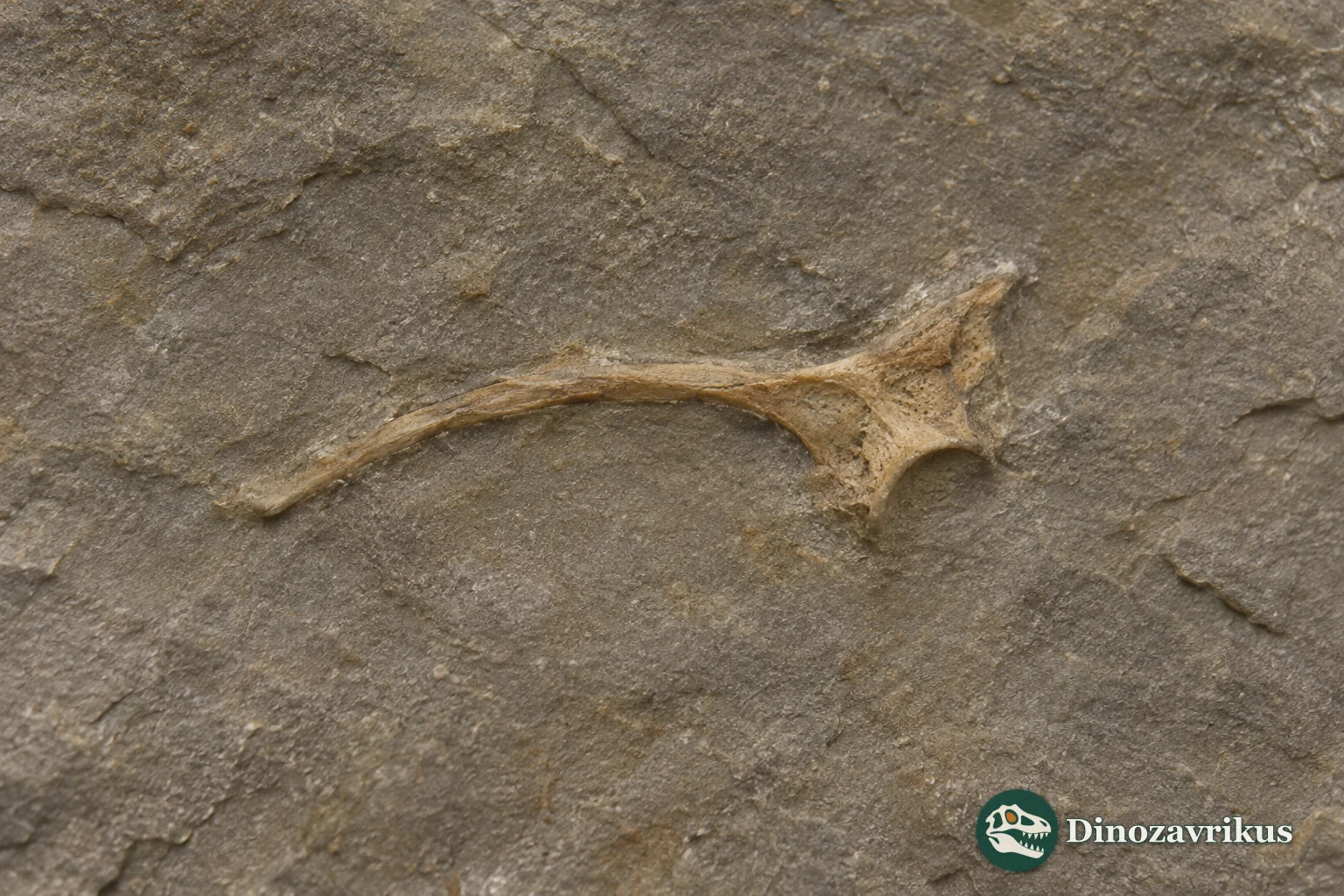
An ilium with a distinctive joint region
The ilium has a prominent crest and a low elongated protuberance with a flattened outer surface. The region above the hip socket is unusually robust, with a smaller expansion below. This combination helps distinguish it from frogs such as Paradiscoglossus, which differ in the proportions of these expansions. The isolated bones are useful for comparison even without a complete skull or limb.
A revised diagnosis
In 2025 Szentesi described three additional partial ilia and a fragmentary right upper jaw from the same Iharkút site. He refined the diagnosis and placed the species in Alytidae. The revised snout-to-vent estimate is around 20–30 mm. A similar Maastrichtian hip bone from Romania is tentatively identified, leaving the confirmed range of the species in Hungary.
Rivers and wetlands
Iharkút preserves isolated remains of many freshwater and terrestrial animals. The rocks record river channels and marshy areas. They establish where the fossils accumulated, while the isolated bones leave the frog's precise habits and diet unresolved.
Frequently asked questions
Where was Bakonybatrachus found?
The confirmed material comes from Iharkút in the Bakony Mountains of western Hungary.
When did it live?
It dates to the Santonian, an age of the Late Cretaceous.
How big was Bakonybatrachus?
The hip bones suggest a snout-to-vent length of about 20–30 mm.
Which specimen gave it its name?
The type is an incomplete right ilium, MTM V 2010.283.1, in the Hungarian Natural History Museum.