

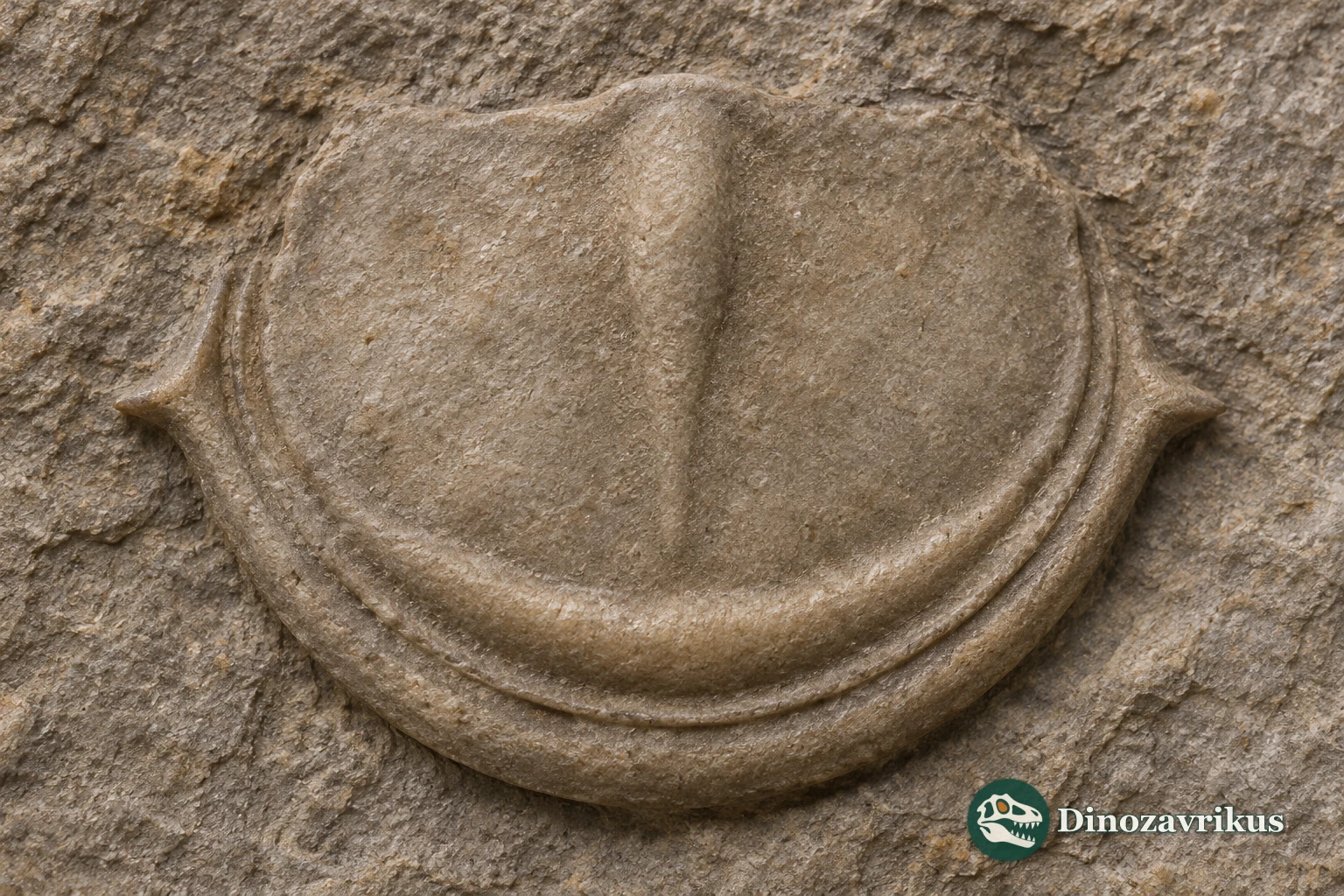
Baltagnostus is a Cambrian marine agnostoid identified in part by the relief along the back of its tail shield. A crescent-shaped border frames the low axis, and a short spine can project on either side.
Quick facts
| Group | Agnostida |
|---|---|
| Age | Cambrian |
| Type species | Baltagnostus centerensis |
| Genus established | Christina Lochman, 1944 |
| Type material | Conasauga Group, Alabama, USA |
| Fossil evidence | Head shields, tail shields and dorsal shells |
What can the fossils tell us?
Several species have an inner collar separated from the outer rim. The furrows dividing the tail axis are often much less conspicuous.
The species was first assigned to Proagnostus with a qualification. Later research compared the type material with collections from Georgia.
The Kashmir assemblage includes distorted head and tail material. The assignment draws on several features considered together.
The Alabama type species
Charles Resser described the species in 1938 from the Cambrian Conasauga Group of Alabama and tentatively placed it in Proagnostus. Christina Lochman established Baltagnostus in 1944 with B. centerensis as the type. A subsequent study reexamined the type material alongside new trilobite collections from western Georgia.
Allison Palmer illustrated a detached head and tail from the Riley Formation in Texas, each about 2 mm long. Their features placed them in Baltagnostus, while preservation limited the comparison with B. centerensis.
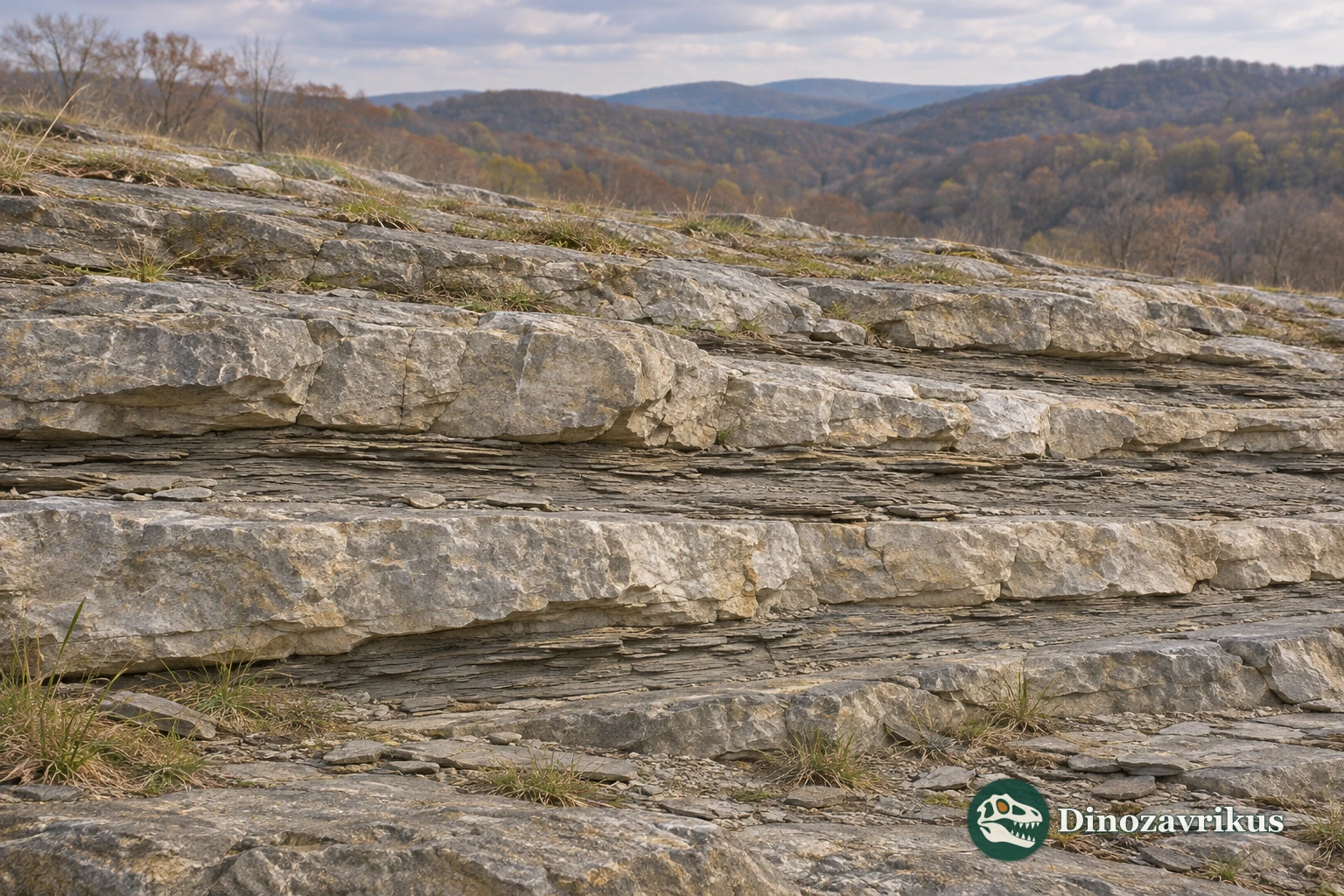
A crescent, a collar and two spines
Two articulated thoracic segments lay between the shields. The glabella could be followed forwards by a short median furrow on the head. The tail axis is weakly divided or nearly smooth, and a broad crescent borders its posterior edge. A short spine projects on either side.
Some species have a distinct collar inside the tail margin. This zoned border can be compared with that of Diplagnostus. The authors of the Himalayan revision treated Pseudoperonopsis as a separate genus, citing the absence of a zoned border as a distinction.
The distorted fossils from Kashmir
Among the material from the Nutunus Formation were the dorsal shell WIHGF641, cephalon WIHGF637 and tail shield WIHGF633B. All are strongly deformed. The authors assigned them by comparing preserved features of both shields with B. rakuroensis material from Korea and China.
A different Kashmir head shield had previously been compared with the Korean form. The revised study identified that piece as Peronopsis scutalis. Even nearby collections can contain several small agnostoids, so the outline alone is a poor test when a specimen is compressed.
Frequently asked questions
Where was the type species found?
It comes from the Cambrian Conasauga Group of Alabama.
What features of the tail shield help identify the genus?
The weakly divided axis, crescent-shaped border and paired lateral spines are useful together.
How many movable thoracic segments did it have?
Two articulated segments separated the head from the tail shield.
Why are the Texas fossils difficult to identify to species?
Their preservation leaves enough relief to recognise the genus, with too little detail for a secure match with the type species.