

Banguela oberlii was established in 2014 for an incomplete lower jaw from the Early Cretaceous Romualdo Formation of Brazil. A 2018 reassessment of that same specimen proposed Thalassodromeus oberlii. These names therefore refer to one type fossil under different generic interpretations, not to two newly discovered animals. The jaw is informative about its toothless symphysis, but it cannot document the wings, complete skull or feeding behaviour of the animal.
Quick facts
| Original name | Banguela oberlii, Headden and Campos, 2014 |
|---|---|
| Revised combination | Thalassodromeus oberlii, proposed in 2018 |
| Age | Early Cretaceous, Romualdo Formation |
| Region | Araripe Basin, northeastern Brazil |
| Type specimen | NMSG SAO 251093, incomplete lower jaw symphysis |
| Teeth | Absent on the preserved portion |
| Wingspan | Cannot be measured from this fossil |
What can the fossils tell us?
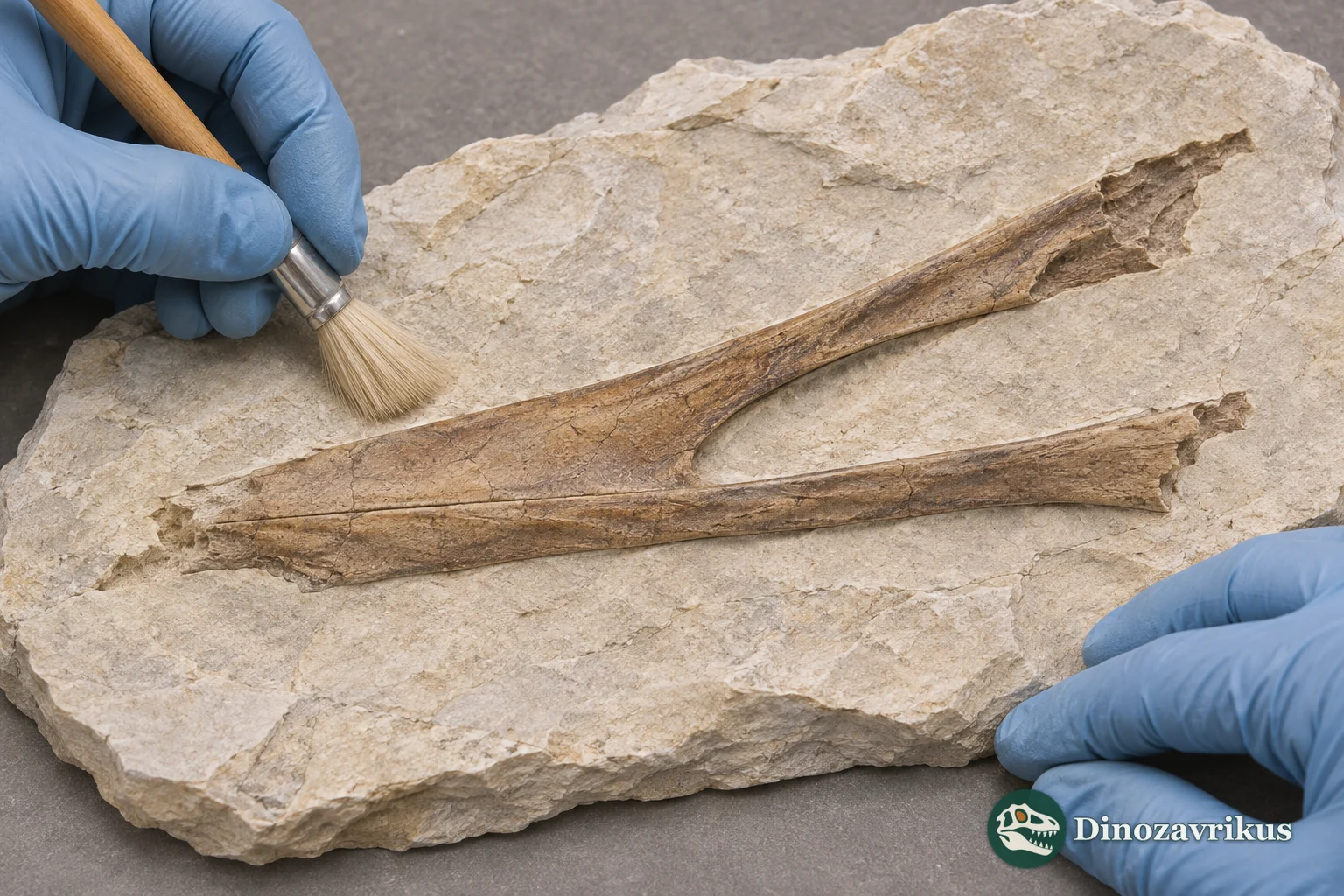
NMSG SAO 251093 retains part of the fused front of the lower jaw. Its anterior tip and posterior rami are incomplete, and no skull accompanies it.
The preserved portion lacks tooth sockets. It does not establish the animal's diet or the exact extent of a possible horny beak.
The 2014 authors placed Banguela among dsungaripterids. A 2018 comparative and phylogenetic study proposed Thalassodromeus oberlii.
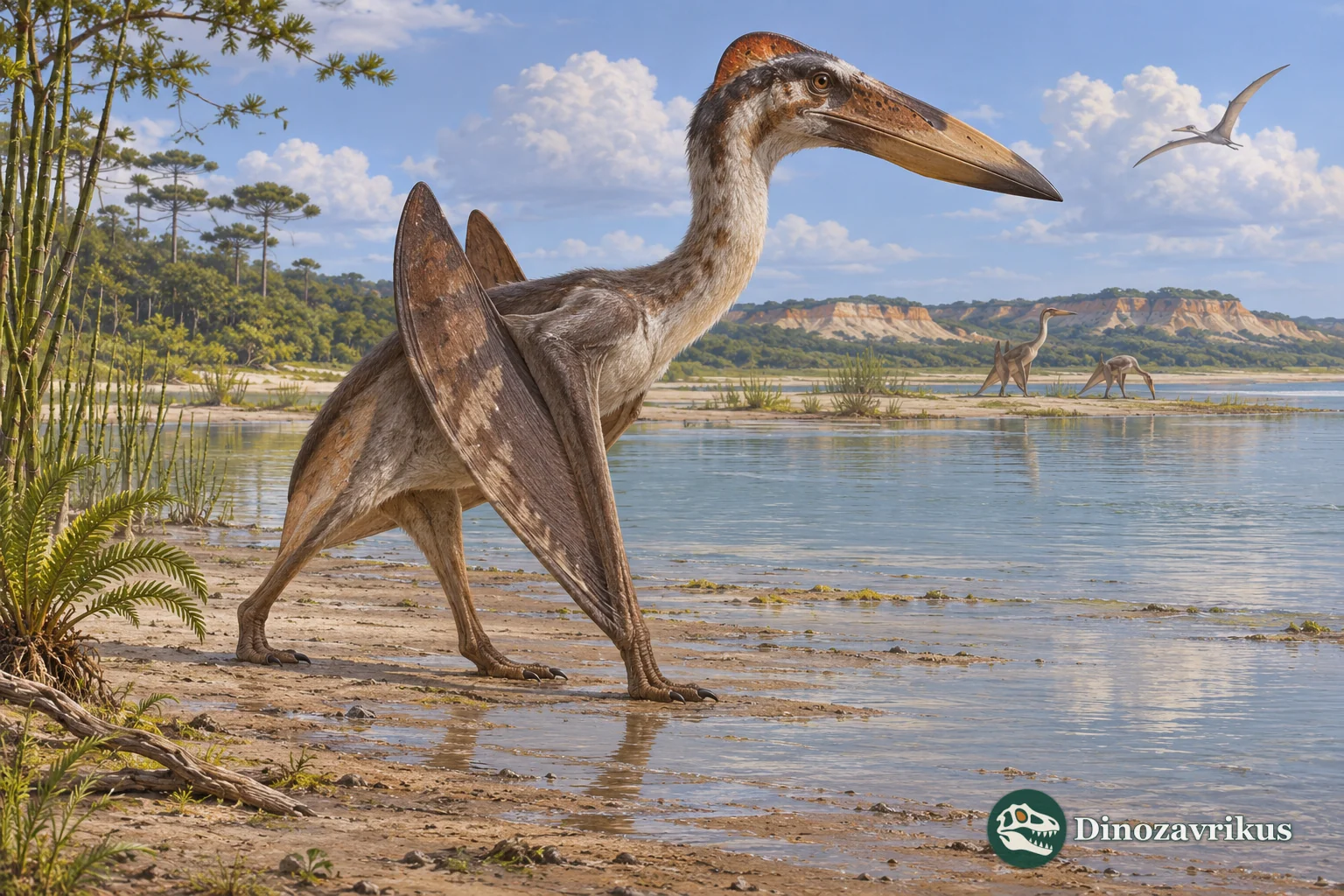
The type has no associated wings, body or upper jaw. Reconstructions of these regions depend on relatives and artistic choices.
A name attached to a jaw
The specimen NMSG SAO 251093 was previously referred to Thalassodromeus sethi. Headden and Campos examined the toothless symphysis and its combination of ridges, shelves and margins, and named a separate genus in 2014. The Portuguese-derived name alludes to the lack of teeth; the species honours Urs Oberli, who donated the fossil to the Naturmuseum St. Gallen.
The reported source is the Romualdo Formation of the Araripe Basin. A precise collecting point and bed are not documented for the specimen, so the formation supplies its broad geological setting rather than an individually measured age.
What the specimen preserves
The front portions of the lower jaw are fused, and the preserved bone has no tooth sockets. The symphysis has surfaces and edges useful for comparison, although its front tip and rear branches are incomplete. Extending those broken edges into a complete living beak is necessarily an inference. Toothlessness alone says little about what the pterosaur ate.
The Aymberedactylus profile describes another toothless jaw from the Araripe Basin, but from a different formation and with a different shape. That shared feature does not make the specimens the same species. Afrotapejara illustrates how uneven skull preservation can be even among related pterosaurs.
Why the classification changed
Pêgas and colleagues revisited the jaw using a cast, MN 4703-V, during their 2018 redescription of Thalassodromeus sethi. Their phylogenetic analysis placed the jaw alongside that species within Thalassodrominae. They retained a species distinction but combined the older specific epithet with the genus Thalassodromeus, resulting in T. oberlii.
This is an analytical interpretation of the existing fossil, not a discovery of an associated skeleton. The precise placement depends on the anatomical characters and comparison sample. Nor does assignment to the genus license copying the giant crest of the T. sethi skull onto the animal known only from a jaw fragment.
An incomplete portrait
The type lacks wings and other postcranial bones, so it does not yield a directly measured wingspan, mass or flight performance. Its sex, growth stage, colouring and feeding behaviour are also unknown. The Romualdo sediments record burial, not every habitat used in life. The jaw matters chiefly because it permits detailed comparison of toothless pterosaur anatomy and exposes how a genus assignment can change with a new analysis.
Frequently asked questions
Are Banguela and Thalassodromeus oberlii different fossils?
No. The two combinations refer to the same type jaw under different generic assignments. Thalassodromeus sethi is a distinct species used for comparison.
Is a complete Banguela skeleton known?
No. The type is part of a lower jaw, without associated wings or most of the skull.
Why was it first called a dsungaripterid?
The original authors interpreted a combination of jaw features that way. The 2018 revision compared those features with Thalassodromeus and recovered a different placement.
Does the toothless jaw establish its diet?
No. It shows that the preserved portion lacked teeth, but contains no direct evidence of food or feeding behaviour.