

Banksiops was an Early Triassic amphibian from Tasmania. Its skull was broad and low, with a rounded front. The rear side of the skull shows a feature that helps identify the genus: a deep recess along the margin of the squamosal bone.
Quick facts
| Group | Temnospondyls, brachyopids |
|---|---|
| Age | Early Triassic |
| Region | Australia, Tasmania |
| Type species | Banksiops townrowi |
| Scientific name | Banksiops |
| Diet | Unknown |
What can the fossils tell us?
UTGD 87785 was found at Old Beach in Tasmania. The specimen preserves part of both the upper and lower surfaces of the skull.
Other brachyopids also have broad snouts. The shape of the squamosal margin near the back helps distinguish Banksiops.
The skull gives an outline for the head. Its skin and colouring remain unknown.
A skull from the River Derwent
The holotype, UTGD 87785, came from Old Beach on the eastern side of the River Derwent, north of Hobart. It is an isolated skull preserving the roof and palate. The site belongs to the Knocklofty Formation. Comparisons with other Early Triassic assemblages put the site in the Induan or the early Olenekian.
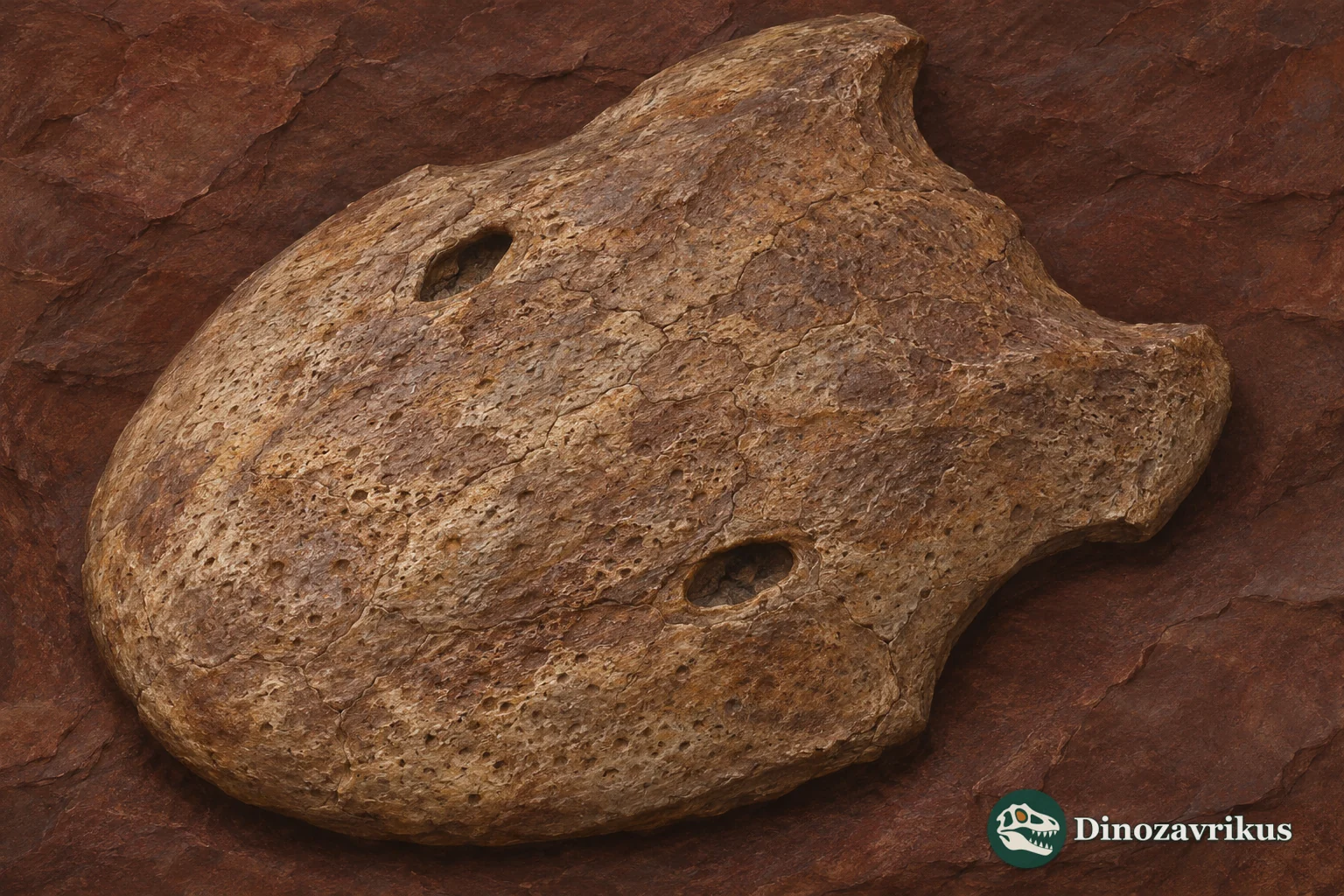
What distinguishes this brachyopid
Seen from above, the front of the skull is wide and rounded. Batrachosuchus, another brachyopid, has a similar general shape. Anne Warren and Claudia Marsicano distinguished Banksiops by the pronounced recess at the squamosal, near the rear of the skull.
Additional disarticulated remains referred to the species come from several localities. Researchers connect those finds to the type by comparing individual bones. The shape of the head is better established than the proportions of the body.
Why it had three names
John Cosgriff described the species in 1974 as Blinasaurus townrowi. The type material of Blinasaurus was later assigned to Platycepsion. In 1998 Warren and Marsicano assigned the Tasmanian species to a genus they named Banksia. That name was already in use for a genus of mites, so in 2000 they replaced it with Banksiops. The species epithet townrowi remained the same.
Frequently asked questions
Where was Banksiops discovered?
The type skull comes from the Old Beach locality on the eastern shore of the River Derwent in Tasmania.
What kind of amphibian was it?
It belonged to Brachyopidae, a family of temnospondyl amphibians.
Which part of its skull helps identify it?
The squamosal bone near the rear of the skull forms a pronounced recess.
Why was Banksia replaced?
Banksia had already been used as a zoological name for a genus of mites.