

Baptemys was a North American turtle on the lineage of the living Central American river turtle. In its type species, a single ridge ran along the top of the shell. The shape of the lower shell provided another way to distinguish the Wyoming fossils from specimens once assigned to the same genus.
Quick facts
| Group | Turtles, dermatemydid lineage (Pan-Dermatemydidae) |
|---|---|
| Age | Eocene, Bridgerian at the type locality |
| Region | North America: Wyoming, USA |
| Type species | Baptemys wyomingensis |
| Holotype | ANSP 10074, partial carapace and plastron |
| Scientific name | Baptemys |
| Diet | No direct evidence |
What can the fossils tell us?
ANSP 10074 includes parts of the upper and lower shell. It anchors the application of the name Baptemys wyomingensis.
A single keel on the carapace and an unnotched hind lobe on the plastron are among the characters used to identify the type species.
A revision placed Baptemys tricarinata in Notomorpha garmanii. The three ridges of that fossil do not describe the shell of the Baptemys type species.
The Fort Bridger material
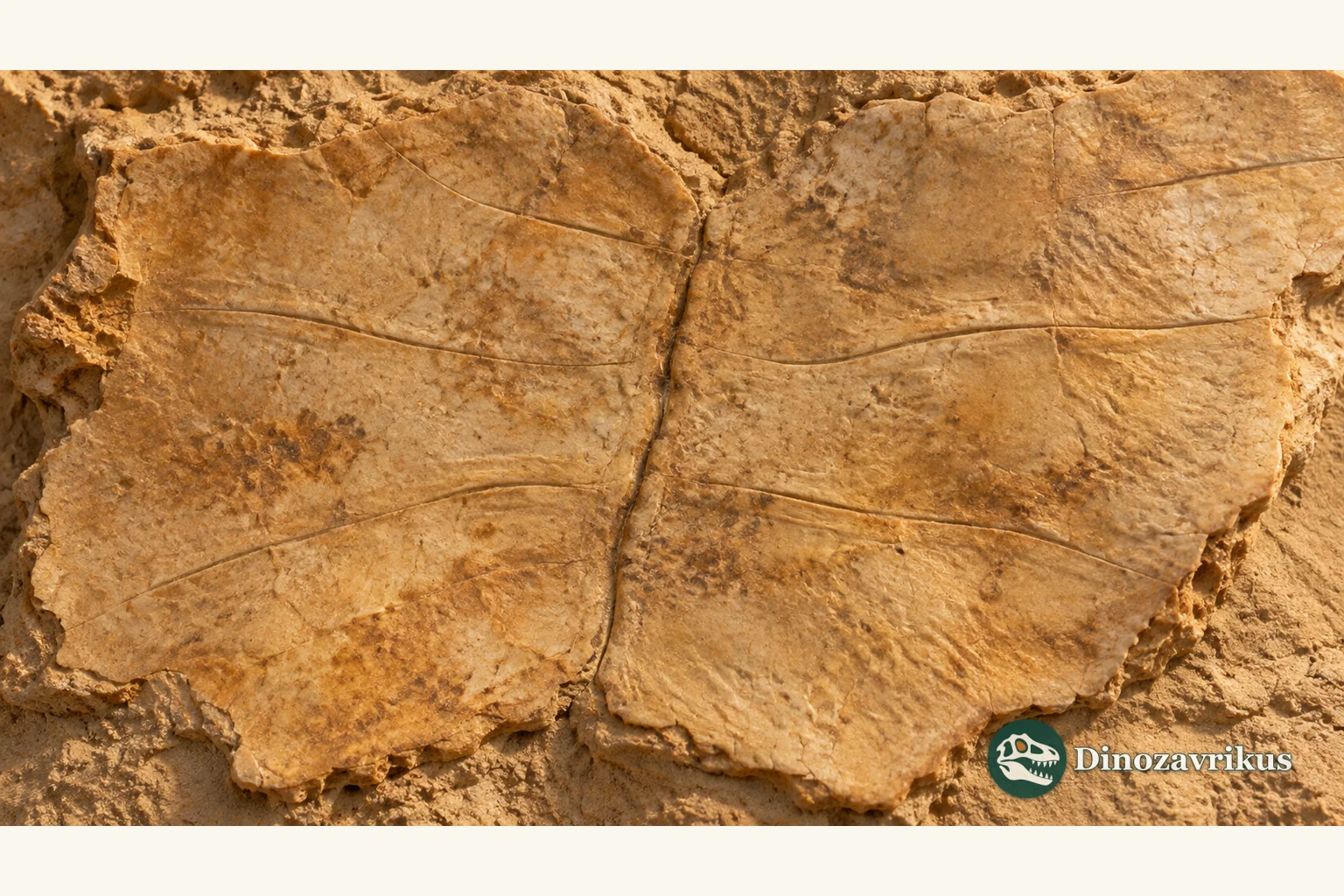
Joseph Leidy established the genus Baptemys in 1870. The type of B. wyomingensis, ANSP 10074, is a partial carapace and plastron from near Fort Bridger, Wyoming. The locality falls in the Bridgerian interval of the North American land mammal chronology.
The revised diagnosis describes a single carapace keel, a broad front lobe of the plastron and a rounded rear lobe without a tail notch. The entoplastron, the median bone toward the front of the lower shell, is wider than long. Those separate features can be checked against new material.
Why some museum labels differ
Older classifications placed several very different shells in Baptemys. The name Baptemys tricarinata was based on three-keeled material. A revision treated that name as a junior synonym of Notomorpha garmanii. Consequently, the three ridges on specimens published under the old name should not be used to reconstruct B. wyomingensis.
Interpreting a river turtle
The living Central American river turtle, Dermatemys mawii, is the surviving member of the lineage to which Baptemys is assigned. North American fossils referred to Hoplochelys offer comparisons farther back in the same lineage. Relationships among its fossil members are still being resolved.
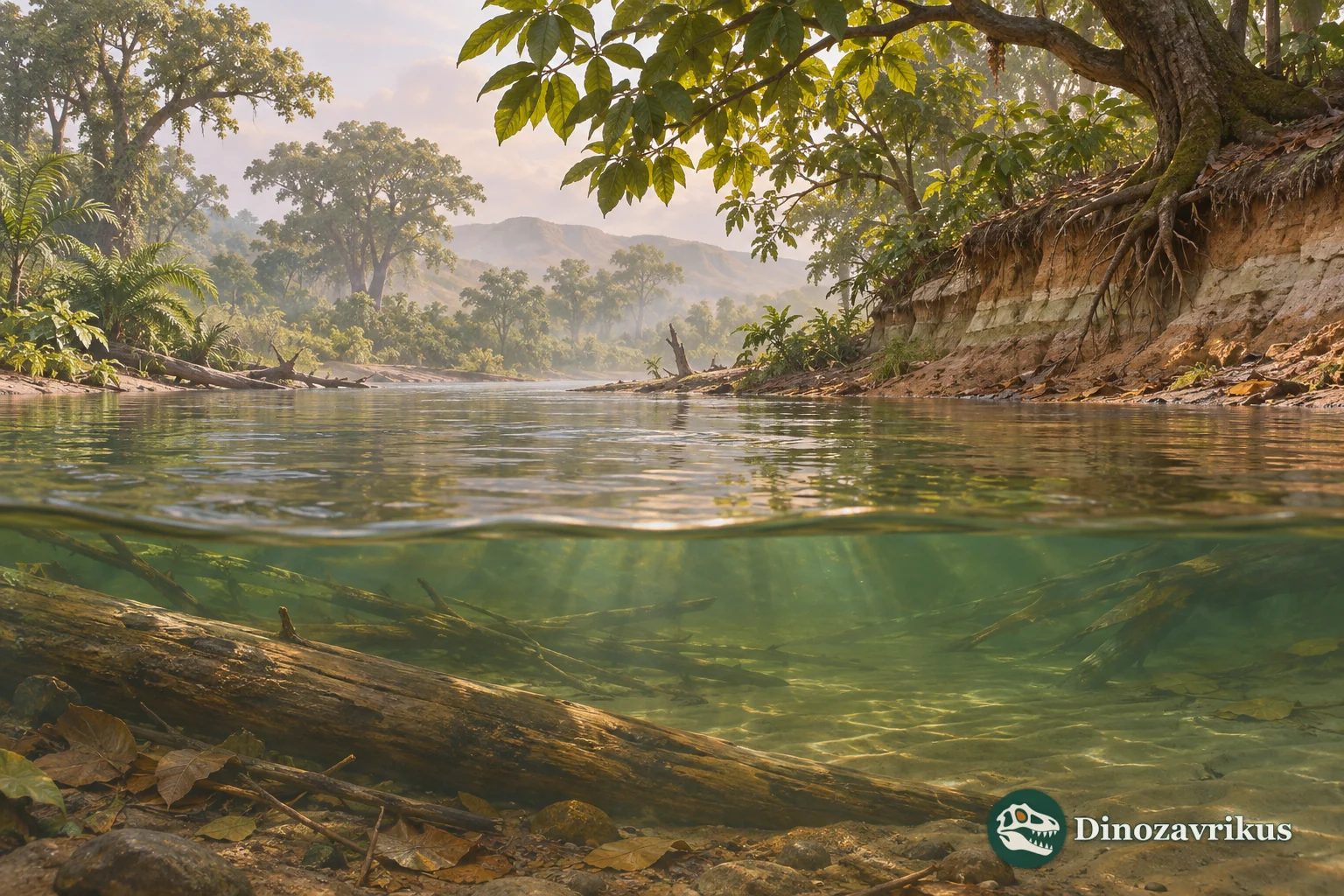
The relatively long shell and well-developed supports joining its upper and lower parts resemble features in some living river turtles. That comparison supports a riverine interpretation. It cannot establish what Baptemys ate or how closely its behaviour matched the living species.
Frequently asked questions
What age are the type remains of Baptemys?
They come from Eocene deposits near Fort Bridger, Wyoming, assigned to the Bridgerian interval.
How many keels did the type species have?
One, along the midline of the upper shell. A previously named three-keeled form was reassigned to another genus.
Does Baptemys have a living relative?
The Central American river turtle, Dermatemys mawii, is the surviving member of its broader lineage.
Do the fossils establish its diet?
There is no direct evidence of diet. Shell anatomy can help researchers assess the likely habitat.