

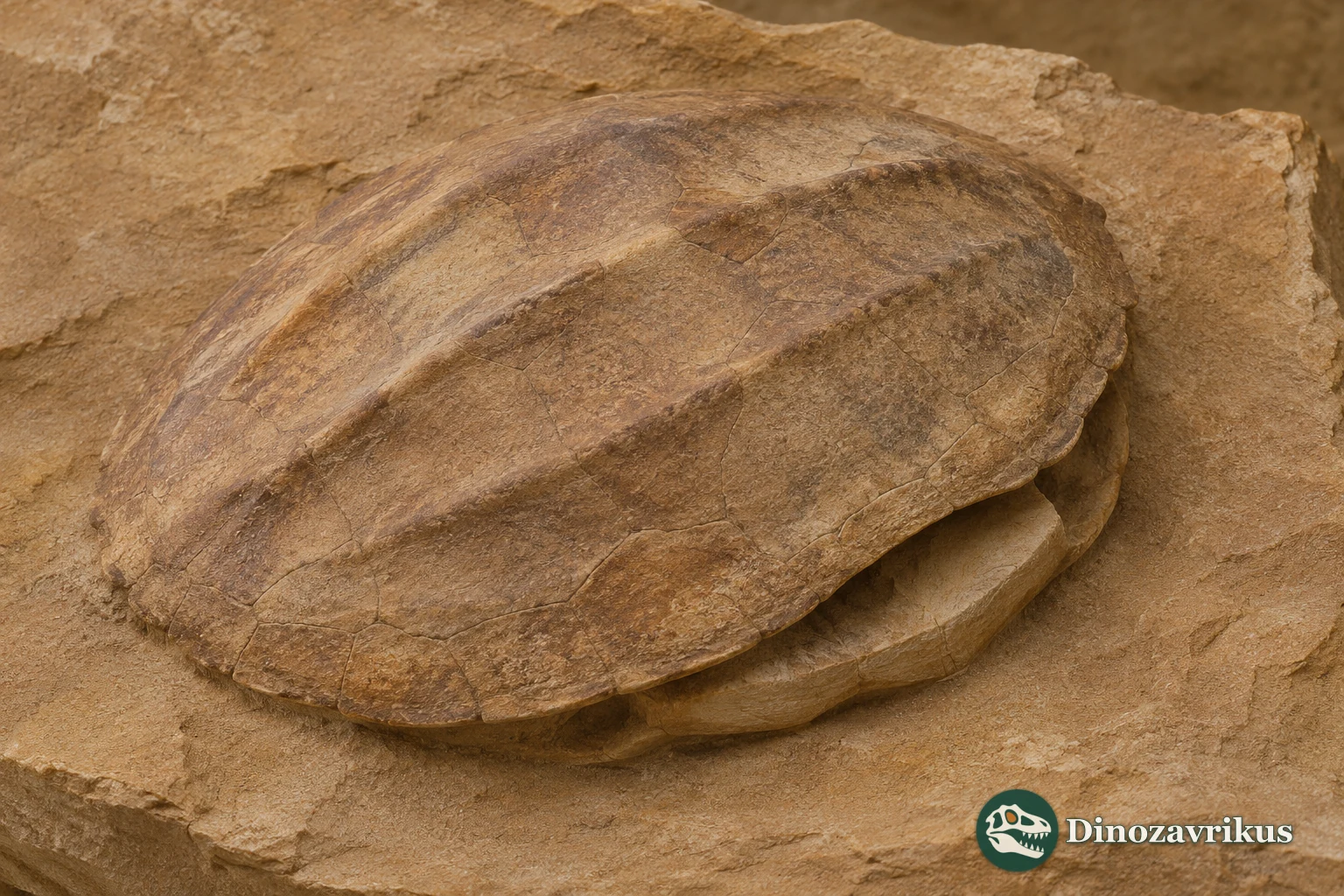
Hoplochelys was a North American freshwater turtle on the lineage of the living Central American river turtle. Its three keels and heavy lower shell are especially clear in a near-complete fossil from the Hell Creek Formation. That shell provided a comparison with younger Hoplochelys fossils from after the end-Cretaceous extinction.
Quick facts
| Group | Turtles, Central American river turtle lineage |
|---|---|
| Age | Late Cretaceous and early Paleocene |
| Region | North America, United States |
| Carapace length | About 30 cm in the H. clark holotype |
| Type species | Hoplochelys crassa |
| Scientific name | Hoplochelys |
| Diet | No direct dietary evidence |
What can the fossils tell us?
The median keel of H. clark is interrupted at scute boundaries. The middle ridge of H. crassa is continuous.
PTRM 16173 lay 21.1 m below a local boundary identified using fossil pollen. The measurement is a distance through sediment.
The heavy lower shell and its scute pattern help link Hoplochelys to the river turtle lineage. These bones leave its diet unresolved.
A shell uncovered above dinosaur bones
In the summer of 1999, a crew from the Pioneer Trails Regional Museum was removing sediment above dinosaur remains in Slope County, North Dakota. Volunteer Merle Clark recovered shell PTRM 16173 from the overlying deposits. The species Hoplochelys clark honours him. The shell is slightly crushed and fractured, with parts of the front and rear missing. The authors estimated that its carapace was about 30 cm long and its plastron about 17 cm long.
The three keels and the bones beneath them
Two lateral keels run over the rib-bearing shell bones. In H. clark, the middle ridge is broken into four parts across the second to fifth vertebral scutes. The middle keel is continuous in the Paleocene H. crassa. The two species also differ in how the grooves between scutes cross the sutures between plastral bones. Those grooves remain visible even where the scutes themselves have disappeared.
Paleocene shells that went by several names
Edward Drinker Cope named the type species H. crassa in 1888 as Chelydra crassa, based on material from two individuals. One specimen was subsequently lost. In 2011 the surviving AMNH 6091, from early Paleocene deposits of New Mexico, was selected as the lectotype. The authors treated names such as H. bicarinata and H. elongata as synonyms of H. crassa after allowing for variation in keel development and shell proportions.
River deposits and living relatives
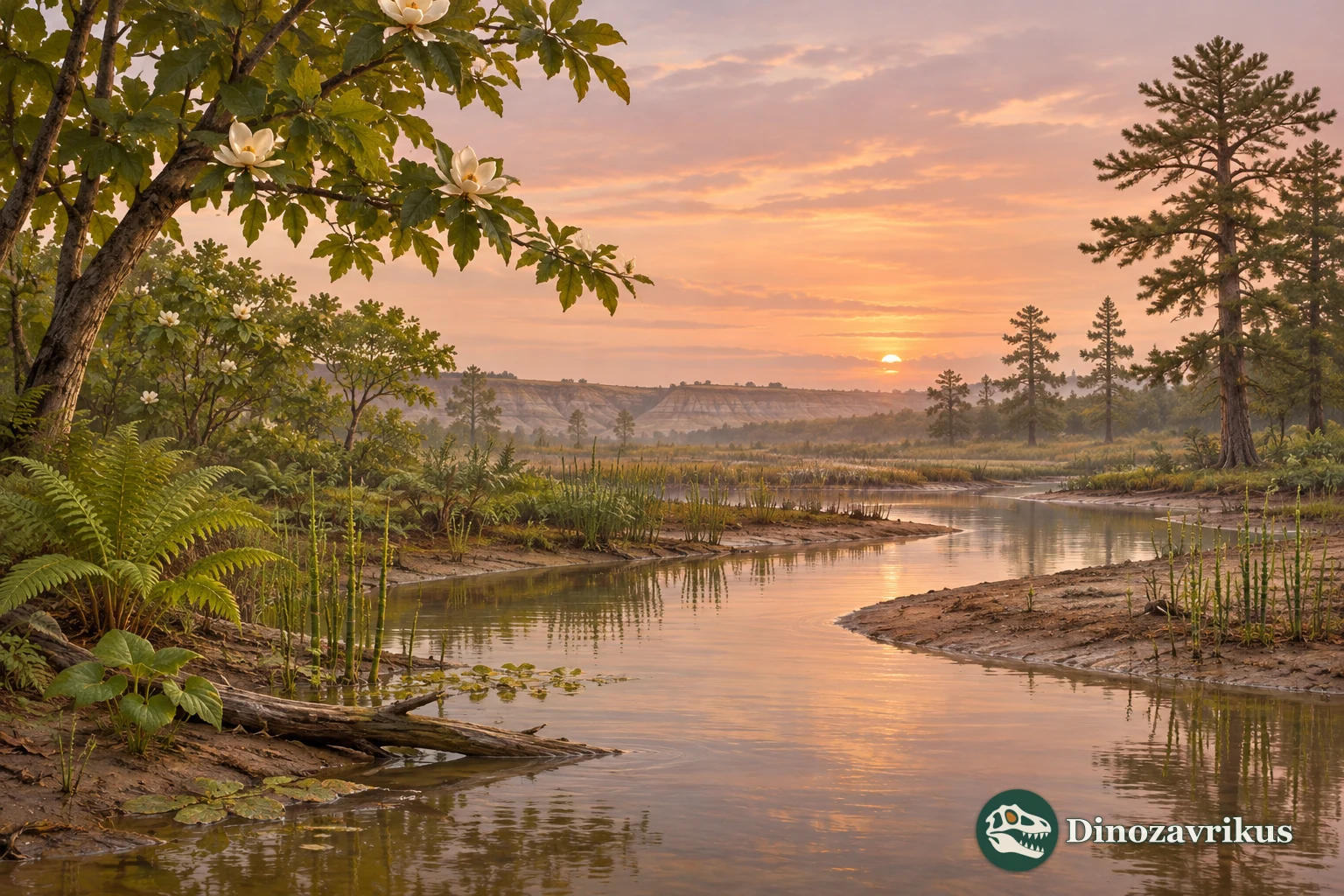
The Cretaceous type specimen came from a sequence of channels and floodplain sediments. The setting supports a freshwater habitat. The three keels, thick plastron and scute arrangement help place Hoplochelys on the lineage of the living Central American river turtle. Other lineages in Late Cretaceous North America included Basilemys, which had a differently built shell. The H. clark holotype has no associated head or limb bones. Its exact head shape and diet remain unknown.
Frequently asked questions
How many keels did Hoplochelys have?
Three. The middle keel breaks into four sections in H. clark and is continuous in H. crassa.
How big was the shell?
The authors estimated a carapace length of about 30 cm for the incomplete H. clark type specimen.
Who found the Hell Creek shell?
Merle Clark, a volunteer with the Pioneer Trails Regional Museum, recovered it in North Dakota in 1999. The species honours him.
Which living turtle is related to Hoplochelys?
Hoplochelys is placed on the lineage leading to the Central American river turtle, based on features of the shell bones and scutes.