

Basilemys was a large Late Cretaceous turtle from North America. It had a broad, shallow carapace and stout limbs. Forelimb analyses favour a primarily terrestrial lifestyle, while the distinctive relief of the shell bones can identify the genus from a fragment.
Quick facts
| Group | Turtles, nanhsiungchelyids (Nanhsiungchelyidae) |
|---|---|
| Age | Late Cretaceous |
| Region | North America, Canada, United States and Mexico |
| Type species | Basilemys variolosa |
| Scientific name | Basilemys |
| Diet | Possibly herbivorous, direct evidence is lacking |
What can the fossils tell us?
A partial carapace from Montana's Judith River Formation anchors the type species. Shells from Alberta and Saskatchewan preserve larger areas for comparison.
Small projections rise from the shell bone in rows, with deep recesses between them. The surface pattern can survive on modest fragments.
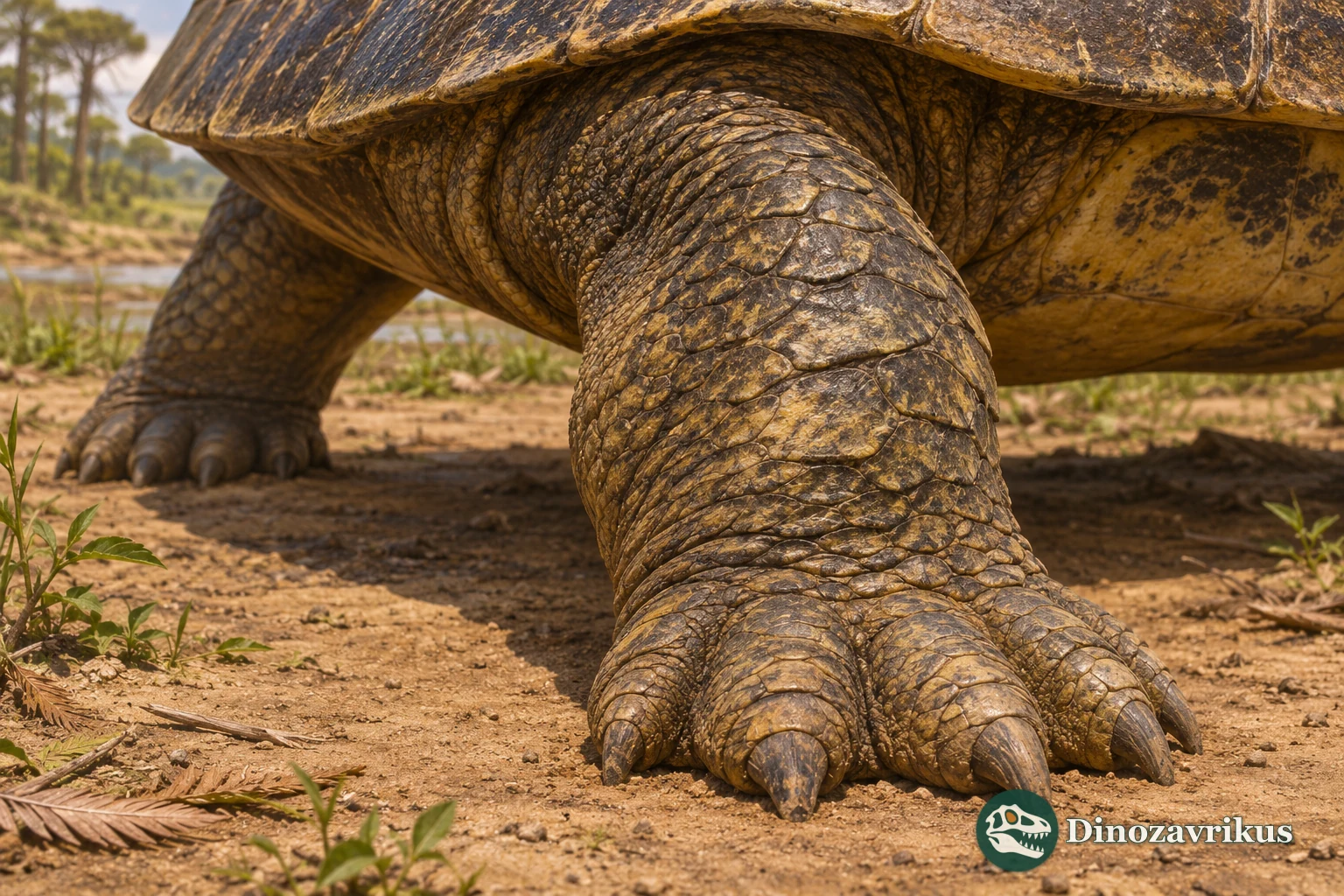
Forelimb proportions and the extent of the plastron support a mostly terrestrial habit. The amount of time the turtle spent in water is unknown.
Naming the genus
Edward Cope described the type species, B. variolosa, in 1876 from part of a shell from Campanian rocks of the Judith River Formation, Montana. Oliver Hay erected Basilemys in 1902. It belongs to Nanhsiungchelyidae, an extinct group related to the adocids. Adocus also had a hard, ornamented shell. The arrangement of the ornament and scute boundaries helps tell the genera apart.
From Montana to Baja California
Characteristic shell fragments in the Frontier Formation near Lima, Montana, are older than the type species. Zircon dating yielded a maximum depositional age of 89.89 ± 1.9 million years, close to the Turonian–Coniacian boundary. That result constrains when the sediment could have formed. There are Campanian specimens from Mexico's El Gallo Formation, and B. praeclara is known from upper Maastrichtian rocks in Saskatchewan.
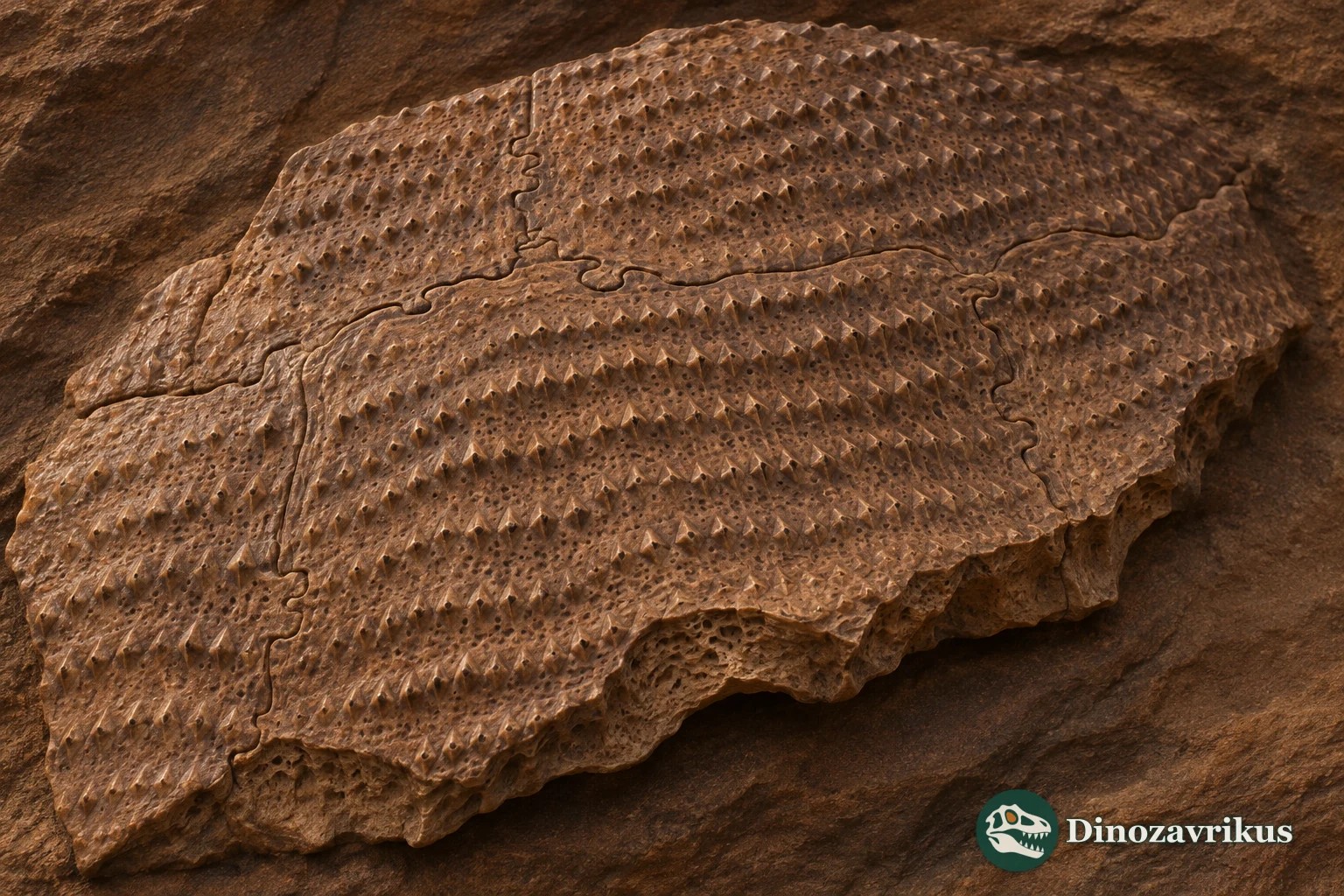
A low carapace with thick plates
The upper shell was shallow in proportion to its width. The outer surfaces of the bones carry small projections alternating with pits. Sutures between bones and grooves left by the overlying scutes provide further points of comparison. The Alberta species B. morrinensis was named from a nearly complete shell. The carapace of CMN 57059 measures 79.8 cm along the midline.
What the forelimbs can tell us
Researchers compared forelimb bones across living turtles with different locomotor habits and used the resulting model on fossils. It classified B. variolosa as primarily terrestrial. Other anatomists had proposed more aquatic habits, citing the shallow shell and inferred mobility of the shoulder. The limb proportions add an independent line of evidence.
Jaws and feeding
Its jaws had complex crushing surfaces. Their form is consistent with working tough food and has been used to argue for herbivory. Direct evidence of the contents of the diet is unavailable.
Frequently asked questions
When did Basilemys live?
It lived during the Late Cretaceous. The oldest dated occurrence comes from the Frontier Formation of Montana, and later species persisted into the Maastrichtian.
How can a piece of shell be identified?
Rows of little projections separated by pits mark the outer bone. Larger fragments may also preserve sutures and scute grooves.
Did it live on land?
A comparative limb study favours a primarily terrestrial life. An aquatic interpretation has also been proposed on other anatomical grounds.
How large was it?
The carapace of CMN 57059, the type of B. morrinensis, measures 79.8 cm along the midline.