

Bathignathus was a brachyopid temnospondyl from the Triassic of South Africa. One skull first described under Batrachosuchus became the type of a separate genus after palaeontologists compared the palate and the back of the skull. Another species was named for material from Driefontein.
Quick facts
| Group | Temnospondyls, brachyopids (Brachyopidae) |
|---|---|
| Age | Triassic, with Early Triassic fossils at Driefontein |
| Region | Africa (Karoo Basin, South Africa) |
| Type species | Bathignathus watsoni |
| Scientific name | Bathignathus |
| Diet | Exact prey is unknown |
What can the fossils tell us?
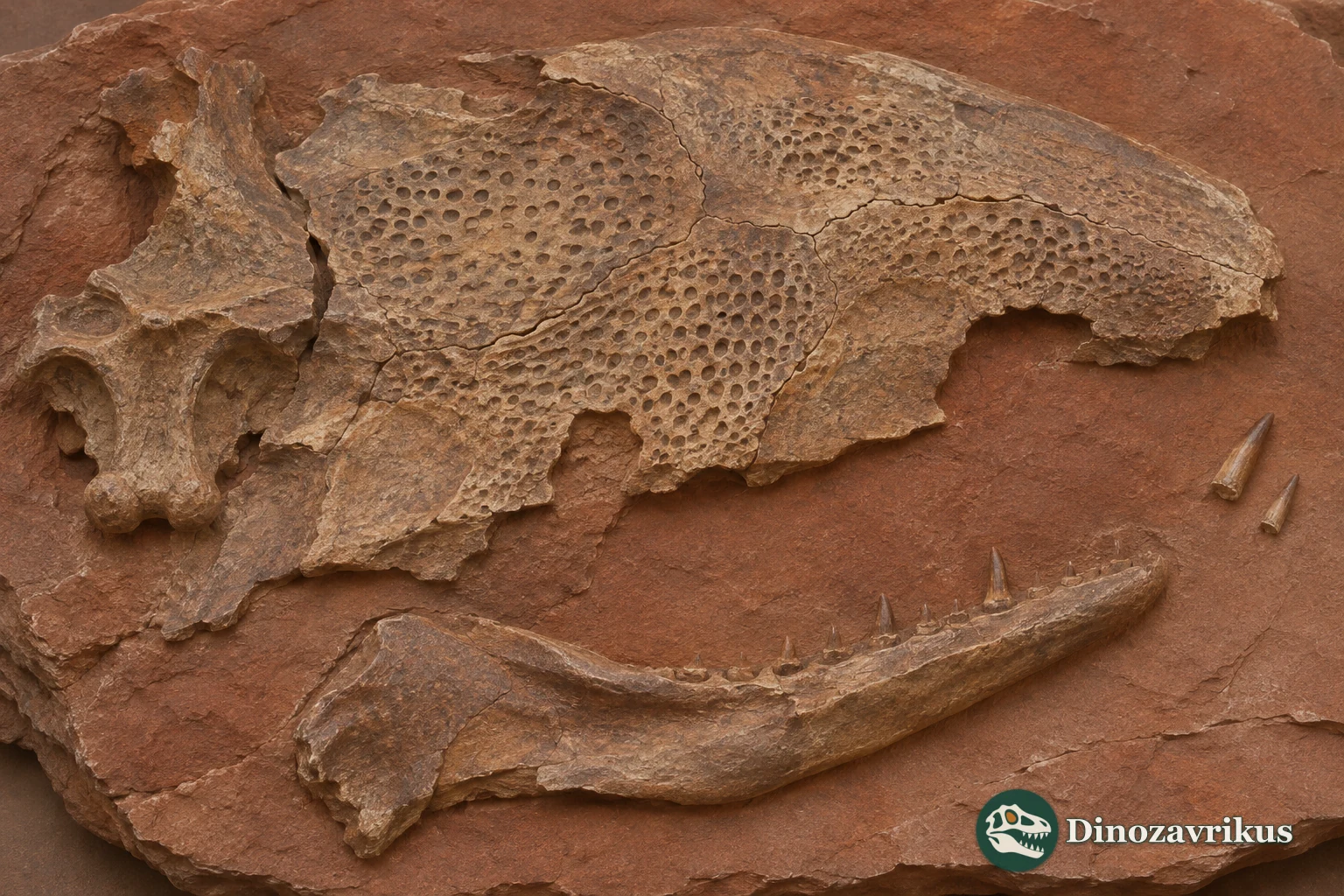
The type species is based on skull R 3589. At Driefontein, fossil BP/1/5790 preserves parts of the skull roof and occiput. BP/1/5883 is a separate right half of a lower jaw.
Distinct features of the palate and back of the head support a genus of its own. The isolated jaw was assigned to the Driefontein species based on proximity and compatible size.
The exact source of the type skull is uncertain. The available bones leave body length and specific prey unresolved.
How the genus was named
Sidney Haughton named skull R 3589 Batrachosuchus watsoni in 1925. Ross Damiani and A.-M. Jeannot established Bathignathus with it as the type species in 2002. Compared with the type skull of Batrachosuchus, R 3589 lacks a foramen ahead of the parasphenoid process. Its occipital condyles also project less far behind the skull roof. The original collecting spot is unknown, although the specimen has been linked to the Burgersdorp district.
The Driefontein fossils
The holotype of B. poikilops, BP/1/5790, comes from Driefontein farm in the Free State. It preserves parts of the back and top of the skull, with round pits ornamenting the upper surface. Its bed lies in the lower Cynognathus Assemblage Zone, which dates to the late Olenekian. The researchers assigned a separate right lower jaw, BP/1/5883, to the species because it was found close by and was compatible in size.
Teeth and replacement
The isolated lower jaw bears 27 preserved teeth in a row with 41 tooth positions. Some of the gaps are replacement pits. Larger teeth curve backwards and have cutting edges. Those features are consistent with taking animal prey. The bones leave the actual menu and the animal’s overall proportions uncertain.
Frequently asked questions
Is Bathignathus the same as Bathygnathus?
Bathignathus was a South African amphibian. Bathygnathus was a historical name applied to a Canadian Permian synapsid now placed in Dimetrodon.
Which species belong to the genus?
Bathignathus watsoni is the type species. The authors who established the genus also described B. poikilops from Driefontein.
Did the Driefontein skull and jaw belong to one animal?
They are separate specimens. Their sizes and closely spaced find spots supported assignment to a single species, with individual association unresolved.
When did the Driefontein species live?
The fossil bed belongs to the lower Cynognathus Assemblage Zone, dated to the late Olenekian of the Early Triassic.