

Bathyurellus was an Early Ordovician trilobite with a tail shield elongated behind the thorax and usually crossed by weak pleural furrows. New collections have helped refine the limits of the genus and identify features it shares with other bathyurids.
Quick facts
| Group | Trilobita, Bathyuridae |
|---|---|
| Age of the type species | Floian, Early Ordovician |
| Genus named | Elkanah Billings, 1865 |
| Type species | Bathyurellus abruptus |
| Key rock unit | Catoche Formation, western Newfoundland |
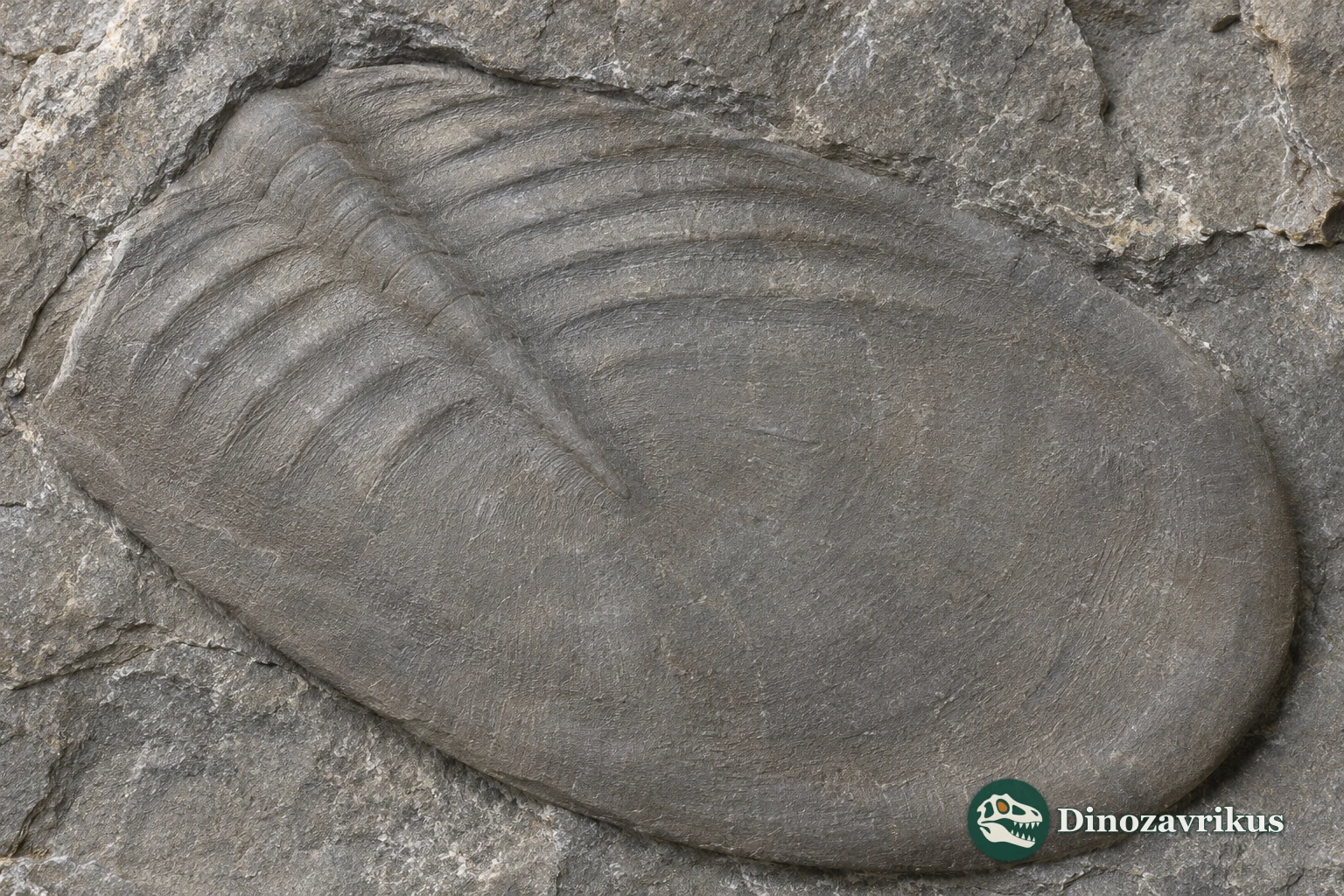
| Tail shield | Elongated, with weak pleural furrows |
What can the fossils tell us?
Shallow furrows cross the lateral fields. Outline alone can be insufficient to separate related species.
A posterior border furrow is distinct on the fixed cheek in specimens from Svalbard, where it is easier to see than in some Newfoundland fossils.
Comparable shields and other shared trilobites help correlate beds in Newfoundland and the Fort Cassin Formation.
Two species from the Catoche Formation
Elkanah Billings established Bathyurellus in 1865. Its type species, B. abruptus, comes from the Lower Ordovician Catoche Formation of western Newfoundland. Richard Fortey revised the genus in 1979 and described B. platypus from the same formation, with a cranidium as its holotype.
The revision transferred several broad, fan-tailed species to Punka. Bathyurellus in a narrower sense has a relatively elongate pygidium with weakly furrowed sides and an extended field in front of the glabella, the central raised part of the head.
The cheek furrow and the tail outline
The anterior branch of the facial suture crosses the front border in a nearly forward direction. A border furrow is visible near the back of the fixed cheek. Matrix can obscure it in Catoche specimens, but it is clearly visible in B. diclementsae from Svalbard.
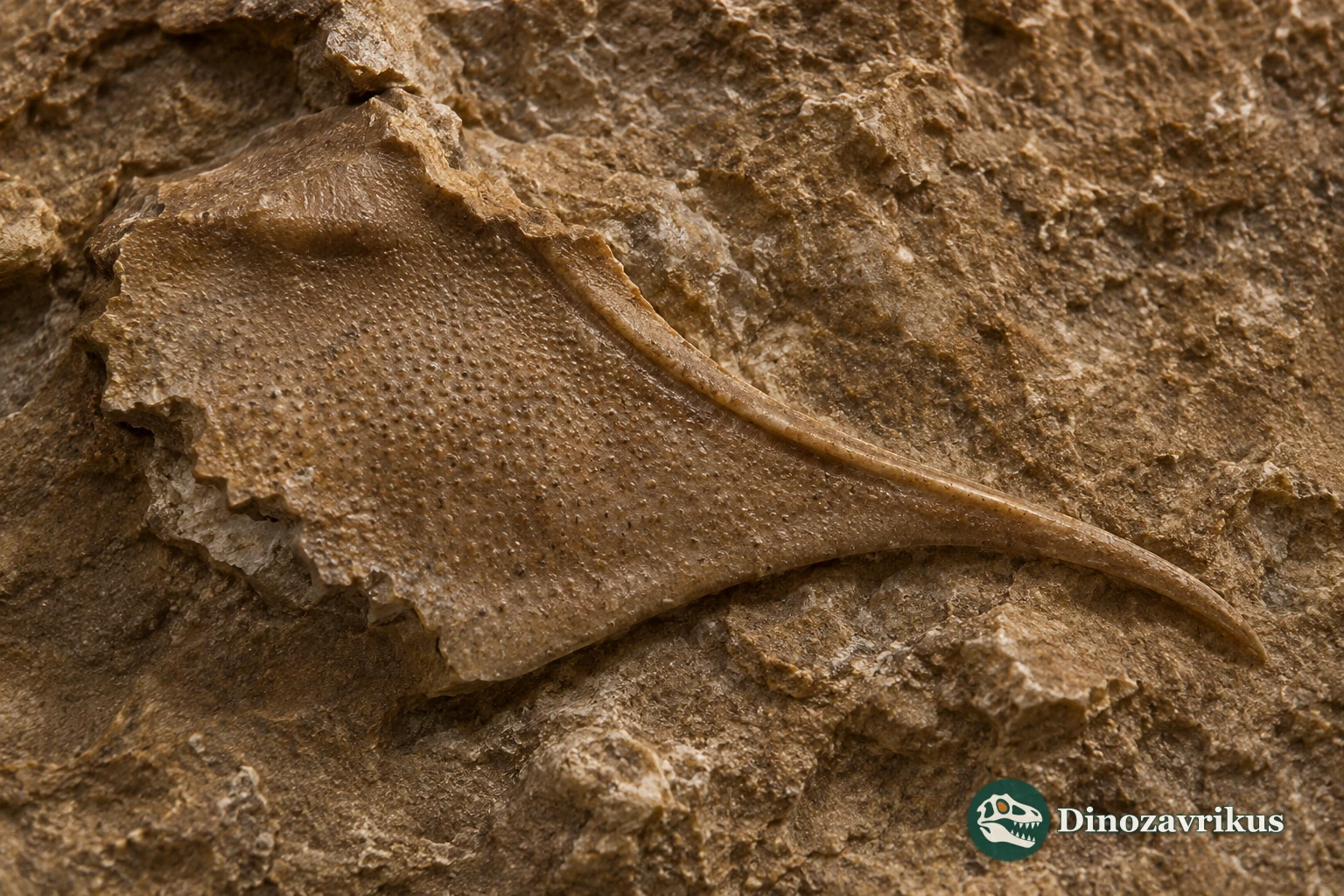
The shields place Bathyurellus close to Gladiatoria, whose tail axis extends into a large posterior spine. Authors disagree on whether these were sister genera or whether Gladiatoria falls within the broader Bathyurellus lineage. Several North American species historically assigned to Bathyurellus still require comparison.
Using shields to correlate rock beds
One cranidium and two pygidia from the Fort Cassin Formation in New York were assigned to B. platypus. The surface ornament on the head matches Catoche material. Along with Isoteloides, these fossils help link the Champlain Valley beds with the Newfoundland succession.
Isolated shields preserve the outlines and ornament of individual parts of the shell. Total length and trunk proportions remain approximate where there is no articulated specimen. The fossils do not document the original colour or soft appendages.
Frequently asked questions
Where was the type species found?
In the Lower Ordovician Catoche Formation of western Newfoundland.
What shape is the tail shield?
It is comparatively narrow and elongate, with shallow grooves on either side of the axis.
How does Gladiatoria differ?
Gladiatoria has a long posterior spine on the tail shield. Its exact relationship to Bathyurellus remains under discussion.
Why is Bathyurellus useful for dating rocks?
Occurrences of the same species together with other trilobites help correlate Lower Ordovician beds in separate regions.