

Baurubatrachus was a genus of Late Cretaceous frogs from Brazil. The type species had a robust skull roof with pits and bumps in the bone. Further preparation of its skeleton exposed parts of the shoulder and pelvis that helped palaeontologists reassess the frog’s relationships.
Quick facts
| Group | Frogs (Anura), neobatrachians |
|---|---|
| Age | Late Cretaceous, Maastrichtian for the type species |
| Region | South America (Minas Gerais and São Paulo, Brazil) |
| Type species | Baurubatrachus pricei |
| Scientific name | Baurubatrachus |
| Diet | Exact prey is unknown |
What can the fossils tell us?
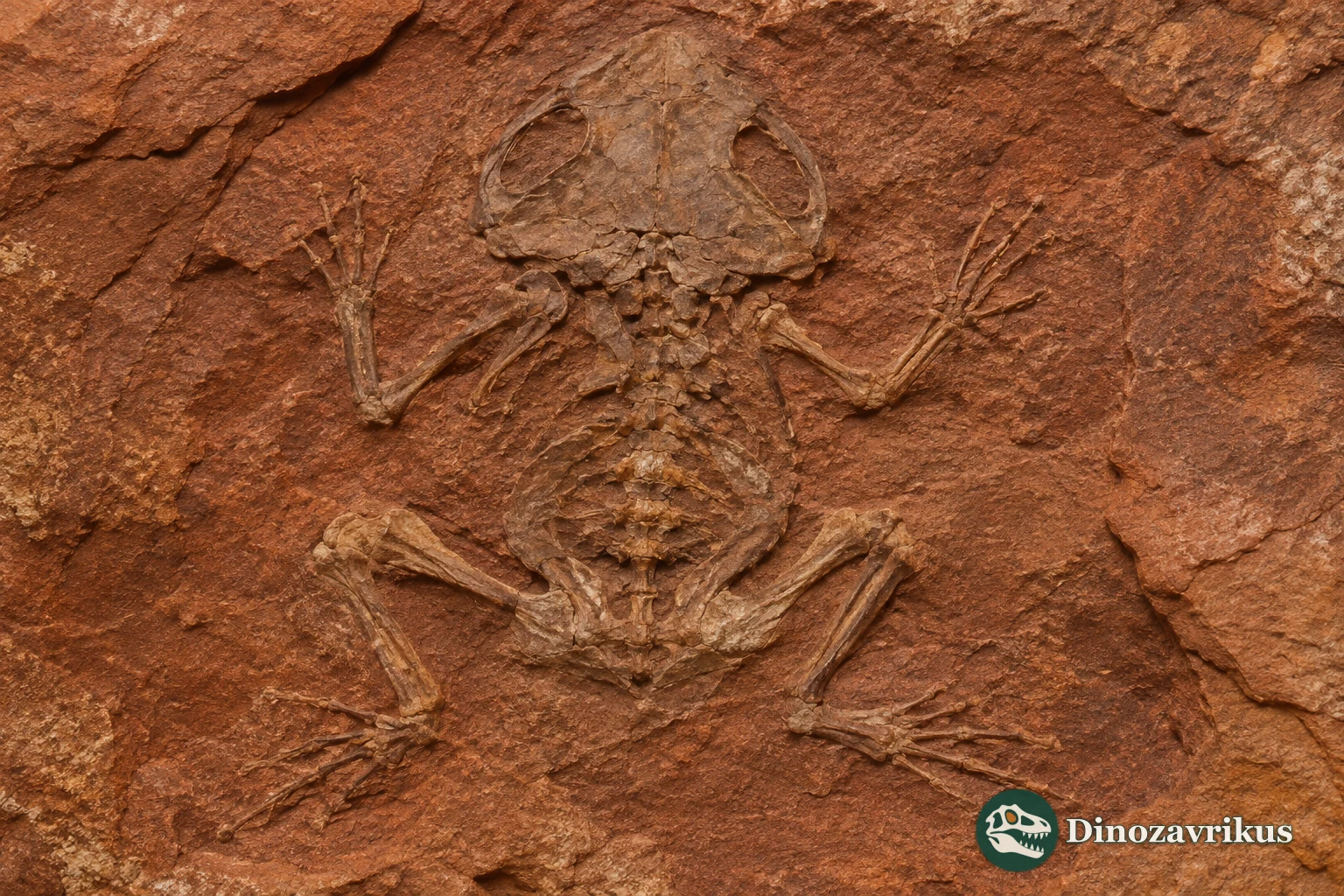
The B. pricei holotype DNPM Pal. 1412-R A and B includes skull, vertebrae and limb bones. The second species also preserves cranial and postcranial elements.
The state of ossification indicates that the type specimen was an adult. Comparisons of the preserved skeletons support recognition of two species.
Different analyses have placed the genus differently among neobatrachians. Colour and diet are unresolved.
A skeleton near Peirópolis
Llewellyn Ivor Price and Diogenes de Almeida Campos collected the specimen near Peirópolis in the Uberaba district in 1969. Ana María Báez and Silvia Perí named it Baurubatrachus pricei in 1989. Part of the skull and the extremities of the limbs are missing. Much of the skeleton retained its three-dimensional form in two blocks of Maastrichtian sandstone.
What further preparation revealed
The skull is moderately flattened. Rounded pits and small bumps mark the surface, and extensive ossification and fusion make some of the sutures difficult to follow. In a later redescription, Báez and Raúl Orencio Gómez examined newly exposed parts of the scapula, humerus and pelvis. These bones supplied evidence independent of skull shape for comparisons with other frogs.
A second species and the family tree
B. santosdoroi was described in 2022 from the Adamantina Formation near Catanduva, in the state of São Paulo. It shows less extensive ossification, a more slender scapula and a more slender ilium. The original description of B. pricei suggested a relationship to South American horned frogs. Later analyses questioned that placement and investigated affinities with the lineage that includes Calyptocephalella.
The landscape around Uberaba
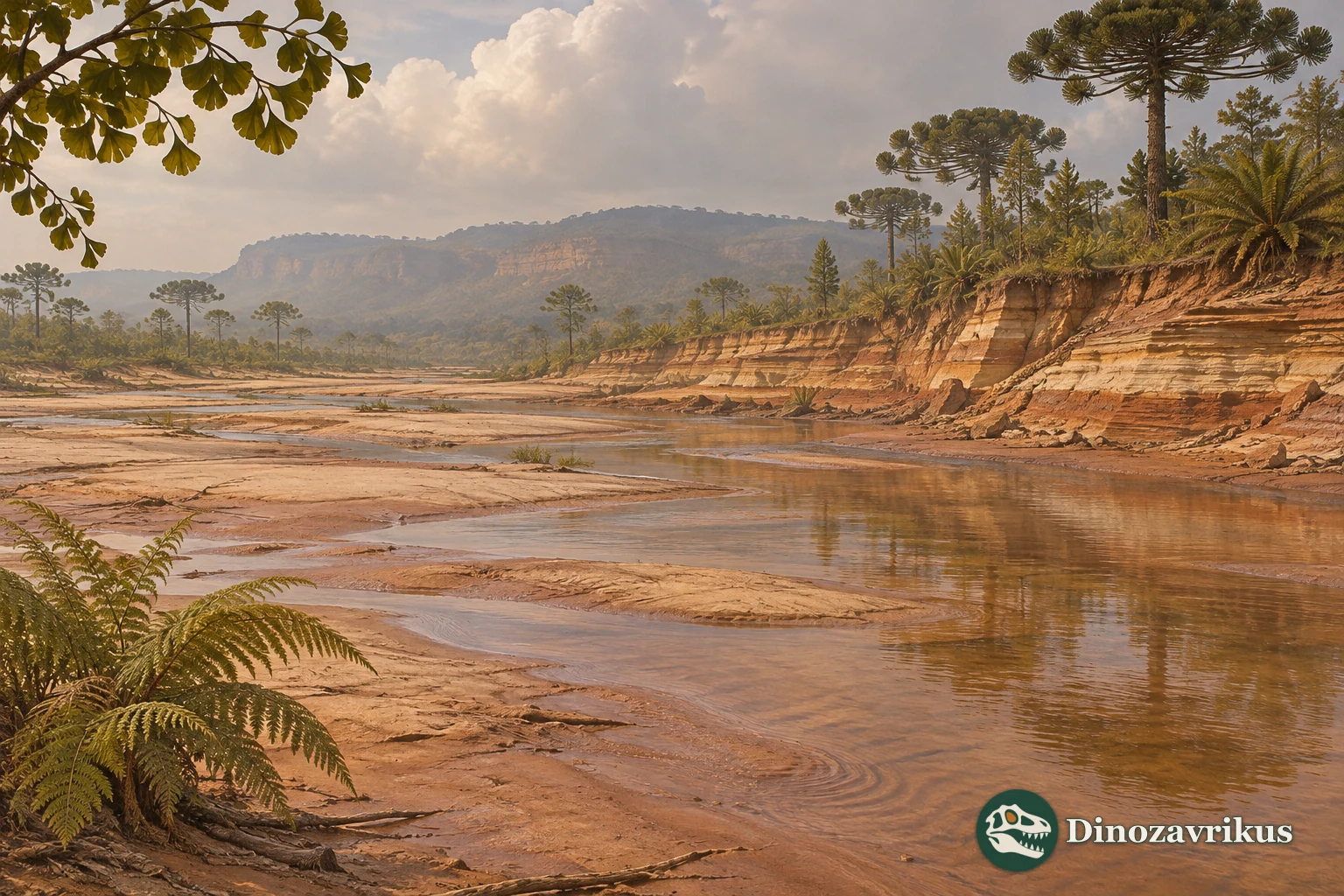
Sediment around the type locality records seasonally active streams and alluvial fans. These deposits tell us about the setting in which the bones were buried. The individual frog’s usual habitat cannot be determined from sediment alone.
Frequently asked questions
What is the type specimen?
DNPM Pal. 1412-R A and B is the incomplete skeleton of an adult frog preserved in two sandstone blocks.
Why did researchers prepare the specimen again?
Removing more of the rock exposed parts of the shoulder and pelvis. These features could then be compared with those of other frogs.
How does the second species differ?
B. santosdoroi has less extensive ossification and more slender shoulder and pelvic bones, including the scapula and ilium.
Where were the two species found?
B. pricei comes from near Uberaba in Minas Gerais. B. santosdoroi was named for material found near Catanduva in São Paulo.