

Baurutitan was a plant-eating sauropod from the Late Cretaceous of Brazil. Its scientific description started with a sequence of bones from the base of the tail. Fossils from a nearby locality later gave palaeontologists a way to compare bones from different parts of the spine.
Quick facts
| Group | Sauropods, titanosaurs (Titanosauria) |
|---|---|
| Age | Late Cretaceous (Maastrichtian) |
| Region | South America (Minas Gerais, Brazil) |
| Diet | Herbivorous |
| Type species | Baurutitan britoi |
| Holotype | MCT 1490-R, last sacral vertebra and 18 tail vertebrae |
| Formation | Serra da Galga Formation, Bauru Group |
What can the fossils tell us?
The last sacral vertebra was found alongside 18 caudals, still in sequence. Their positions make it possible to compare changes in shape along the tail.
Bones from the neck, trunk and tail occur with shoulder and limb elements. Shared characters link the new material with the type specimen.
The type skeleton of Trigonosaurus was reassigned to Baurutitan. A separate series of ten tail vertebrae received a different genus name.
A sequence from the sacrum into the tail
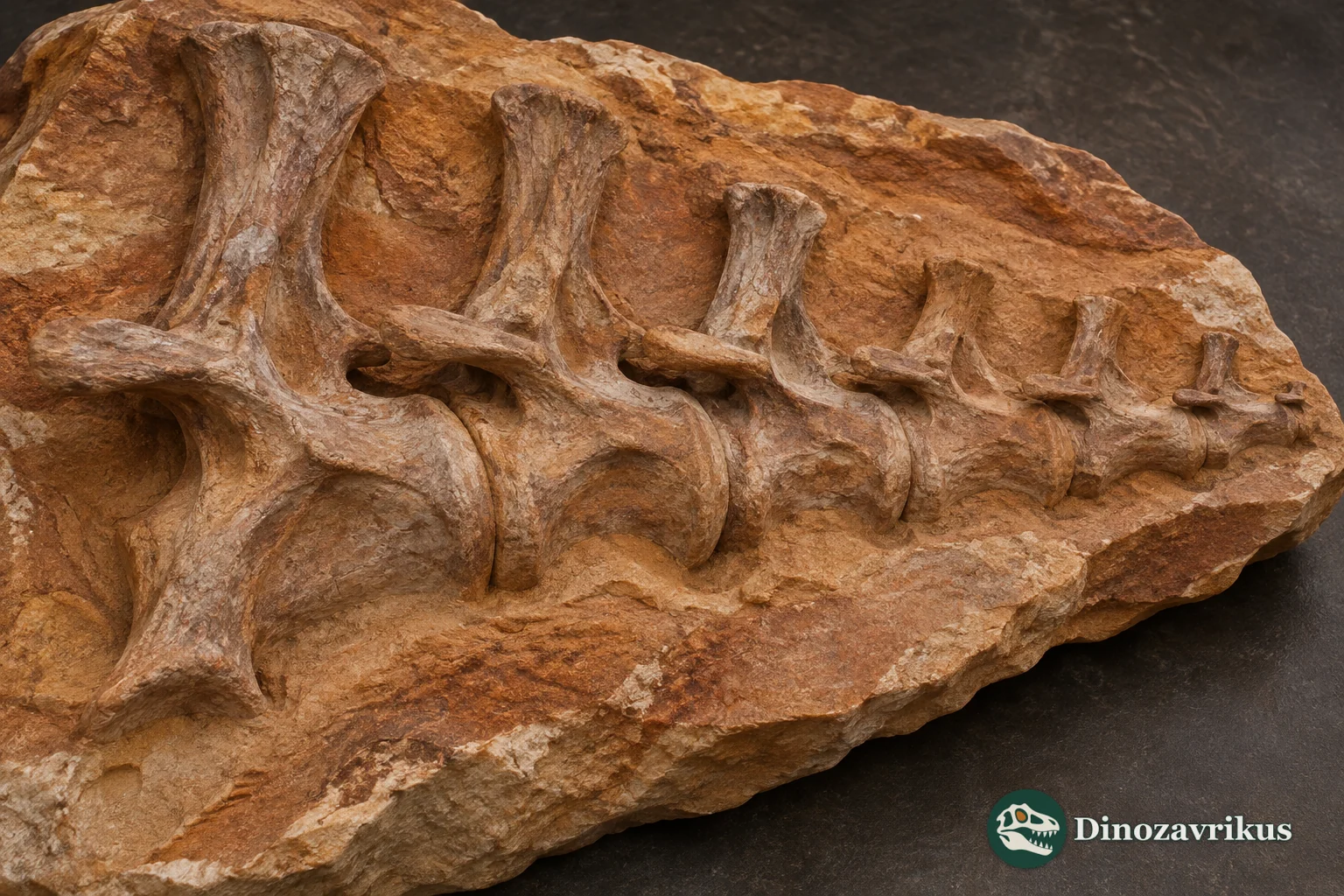
Alexander Kellner, Diogenes Campos and Marcelo Trotta named Baurutitan britoi in 2005. The holotype comes from the Caieira quarry near Peirópolis in Minas Gerais. It includes the last sacral vertebra and 18 consecutive caudals, so the position of each bone along the sequence is known.
The first tail vertebra has sharply pointed processes projecting outwards on either side. Those processes and details of the adjoining vertebrae provided diagnostic characters. Tail bones also inform comparisons in other titanosaurs such as Aeolosaurus, whose processes have a different arrangement.
What the BR-262 locality added
A group of several dozen bones from BR-262, near Peirópolis, may represent one individual. It includes vertebrae from the neck, trunk and tail, as well as shoulder, limb and pelvic bones. The caudals provided a direct comparison with the holotype of Baurutitan.
In 2022 the researchers also compared the new bones with the type of Trigonosaurus pricei. The BR-262 fossils share traits with the tail of Baurutitan and with the non-tail parts of the Trigonosaurus type skeleton. The authors treated the two types as one species under the name Baurutitan britoi.
An additional titanosaur in the same deposits
Ten tail vertebrae formerly assigned to Trigonosaurus show a different arrangement of the side processes and a different inclination of the spines. The 2022 study made them the type of Caieiria allocaudata. Separate vertebral characters point to multiple titanosaur lineages in the area.
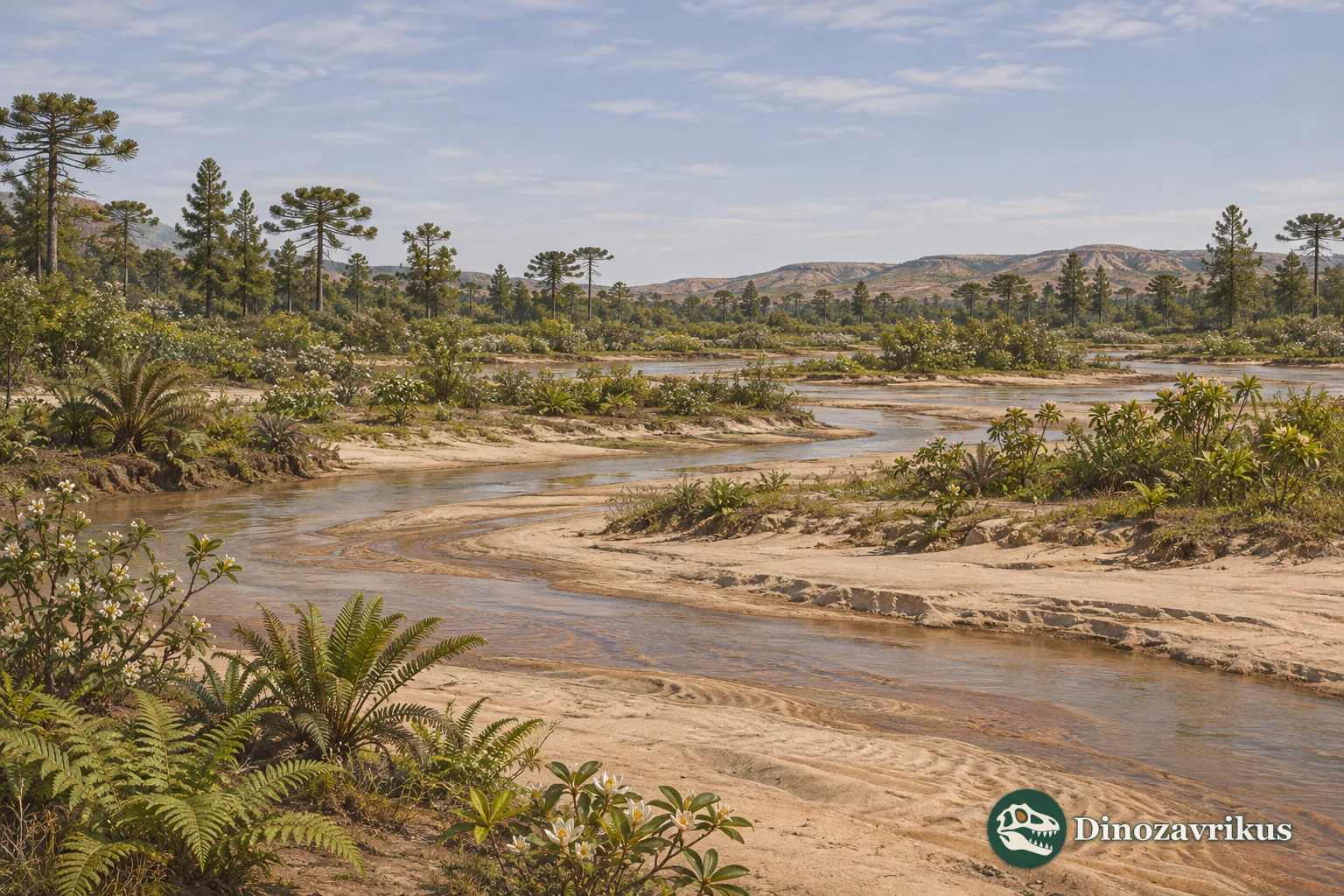
The Serra da Galga Formation records river channels and floodplains. As a sauropod, Baurutitan was a plant eater. The shape of its head and the plants it selected remain poorly constrained by the known fossils.
Frequently asked questions
How many vertebrae form the type specimen?
The holotype preserves the last sacral vertebra and 18 articulated tail vertebrae.
Where was Baurutitan found?
Near Peirópolis in Minas Gerais, Brazil, in the Late Cretaceous Serra da Galga Formation.
What happened to the name Trigonosaurus?
A 2022 revision reassigned its type skeleton to Baurutitan. A separate set of tail vertebrae became the type of Caieiria.
What did Baurutitan eat?
It belonged to the plant-eating sauropods. Its particular food plants are unknown.