

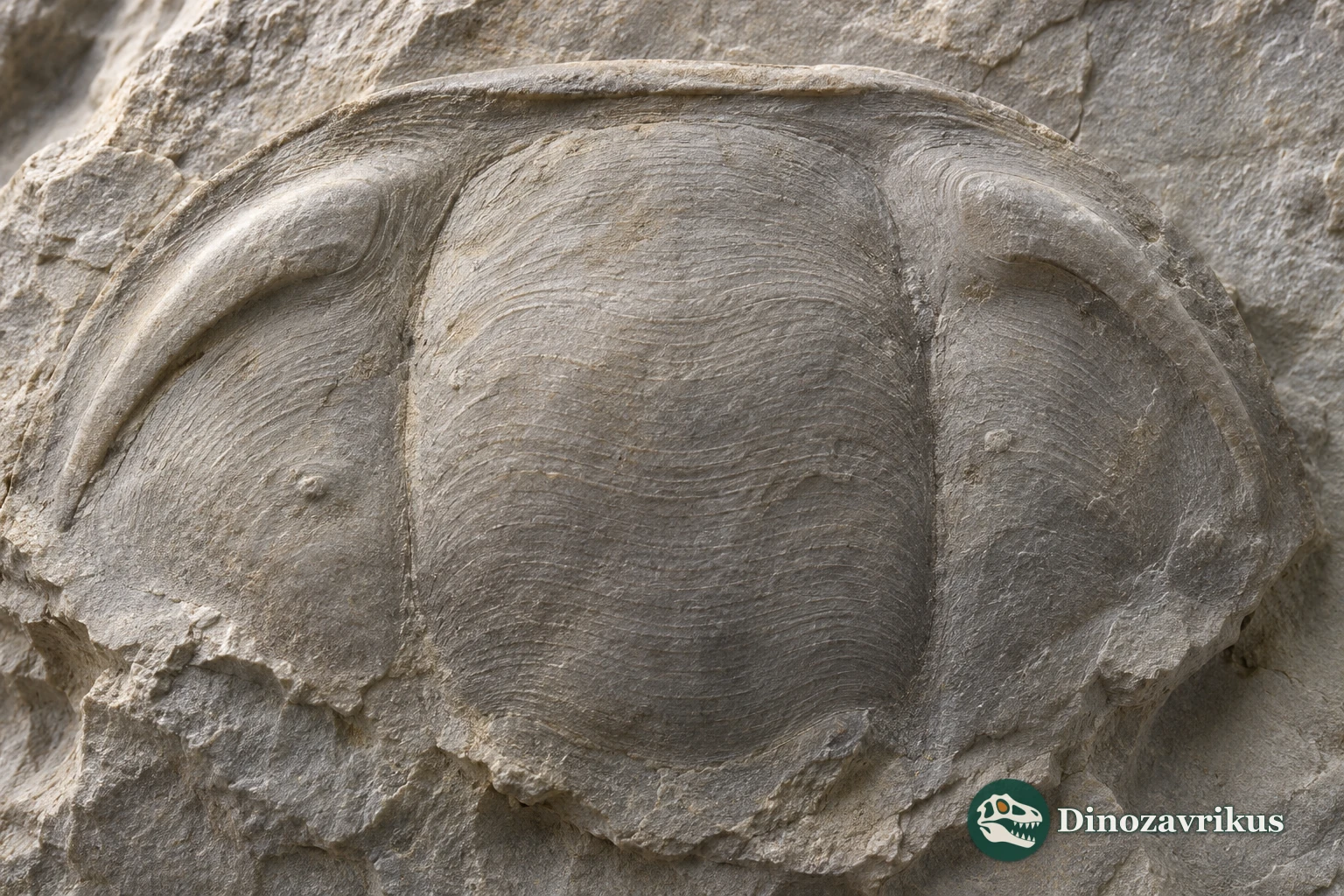
Benthamaspis was an Ordovician trilobite with long, crescent-shaped eye lobes, rounded cheeks and a broad, semicircular tail shield. Fossils from Oklahoma show that some species retained prominent grooves on the tail shield. Those grooves helped clarify the genus's family relationships.
Quick facts
| Group | Trilobita, Bathyuridae |
|---|---|
| Age | Ordovician |
| Named | Christian Poulsen, 1946 |
| Type locality | Cape Stevens, Ellesmere Island, Canada |
| Type horizon | Nunatami Formation |
| Measured tail shield | Up to 1.2 cm long in a Kindblade Formation species |
What can the fossils tell us?
In several species they extend alongside a fairly straight-sided glabella. Their shape and position help identify isolated head shields.
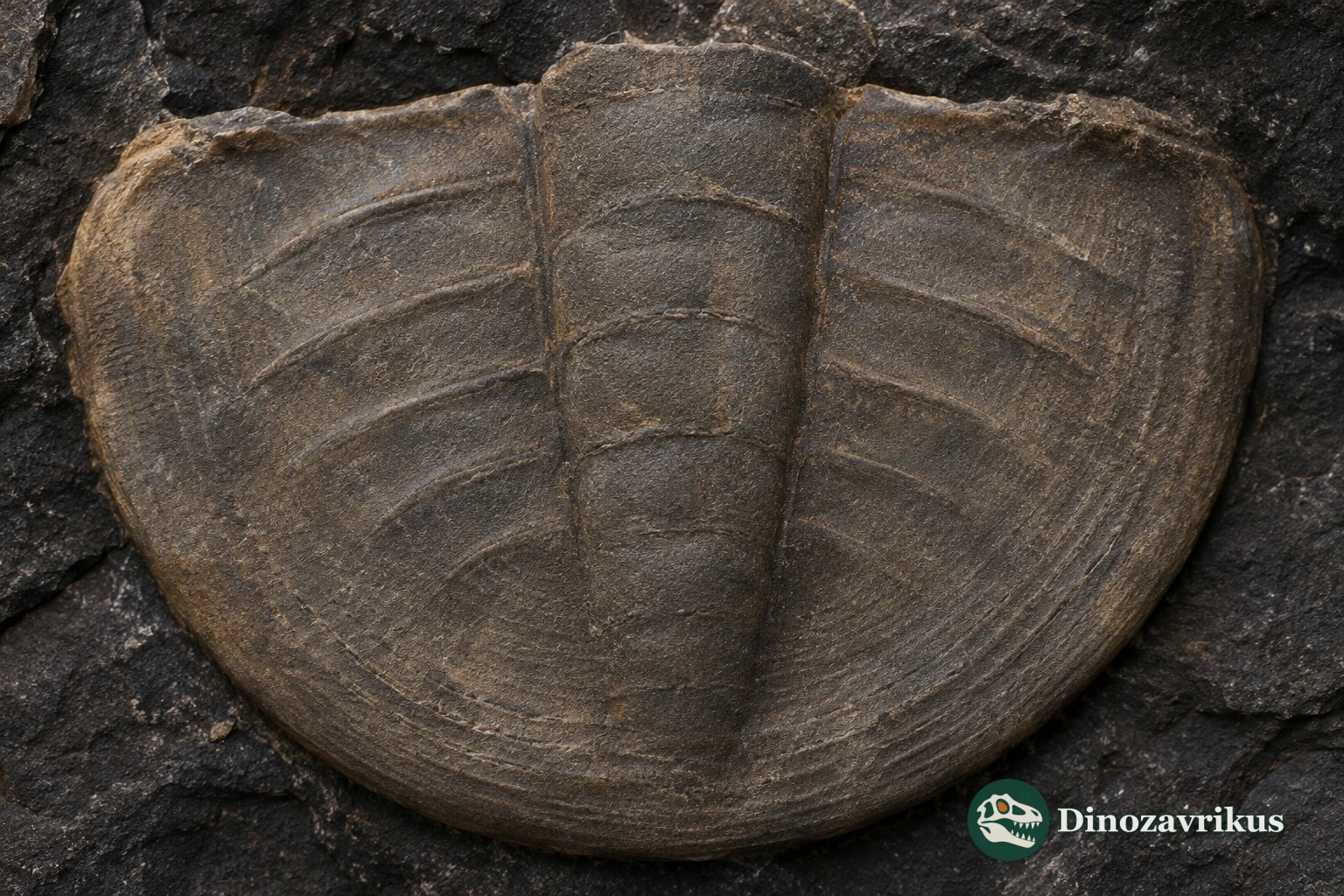
There are three pairs of pleural furrows in B. rhochmotis. A specimen with its shell and an internal mould can show the relief differently.
Benthamaspis had been placed among lecanopygid trilobites. The grooves and the shape of the head and tail support a placement among bathyurids.
An Arctic type species
Christian Poulsen named the genus in 1946 for Benthamaspis problematica from the Nunatami Formation on Ellesmere Island. Other species occur in Oklahoma and Nevada. In Nevada, head shields of B. sera were recorded in the Ninemile Formation.
Oculomagnus was later treated as a junior synonym. Material from different localities broadened the diagnosis and showed which traits the species shared.
Crescent-shaped eyes and a rounded tail
The glabella, or raised middle part of the head shield, has nearly straight sides and tapers slightly towards the front in some species. Long crescent-shaped eye lobes lie beside it. The margin runs around the head shield to its rounded cheek angles. Fine terrace lines are visible on well-preserved surfaces.
The tail shield is usually semicircular, with a tapering central axis. In B. rhochmotis from the Kindblade Formation it reaches 1.2 cm in length. Three pairs of pleural furrows cross the shell. Where the outer shell is lost, raised ribs are visible on the mould. The measurement is of the tail shield alone.
How new fossils changed the classification
A former placement among lecanopygids relied partly on the lack of obvious grooves in the tail shield. James Loch described grooved pygidia of B. rhochmotis and compared the associated heads. The glabellar outline, continuous border and raised pygidial axis support assignment to the family Bathyuridae, which also includes Bathyurus.
The furrows become less distinct in some species. Comparing shell surfaces with internal moulds shows how preservation can accentuate differences in relief. The fossils leave total body length and feeding habits uncertain.
Frequently asked questions
Where was the type species found?
It comes from the Nunatami Formation at Cape Stevens, Ellesmere Island, in the Canadian Arctic.
What shape were its eye lobes?
They were long, crescent-shaped parts of the shell alongside the glabella.
What was measured at 1.2 cm?
The tail shield of a Kindblade Formation species reached that length. Its total body length remains unknown.
Why do some sources use Oculomagnus?
Oculomagnus was applied to trilobites later included in Benthamaspis. Under that classification it is a later name for the same genus.