

Bergamodactylus wildi was named in 2015 for the small Norian pterosaur specimen MPUM 6009 from Lombardy. A 2018 revision reassigned the same fossil to Carniadactylus rosenfeldi. The change concerns the interpretation of one specimen, not the discovery of a second animal. Its skeletal evidence remains valuable whichever generic name is accepted.
Quick facts
| Name proposed in 2015 | Bergamodactylus wildi, Kellner |
|---|---|
| 2018 revision | Reassigned to Carniadactylus rosenfeldi |
| Age | Late Triassic, Norian |
| Locality | Cene near Bergamo, Lombardy, Italy |
| Type specimen | MPUM 6009, small skeleton with skull |
| Humerus | 26.3 mm in the 2015 measurement table |
| Status | Distinct genus disputed |
What can the fossils tell us?
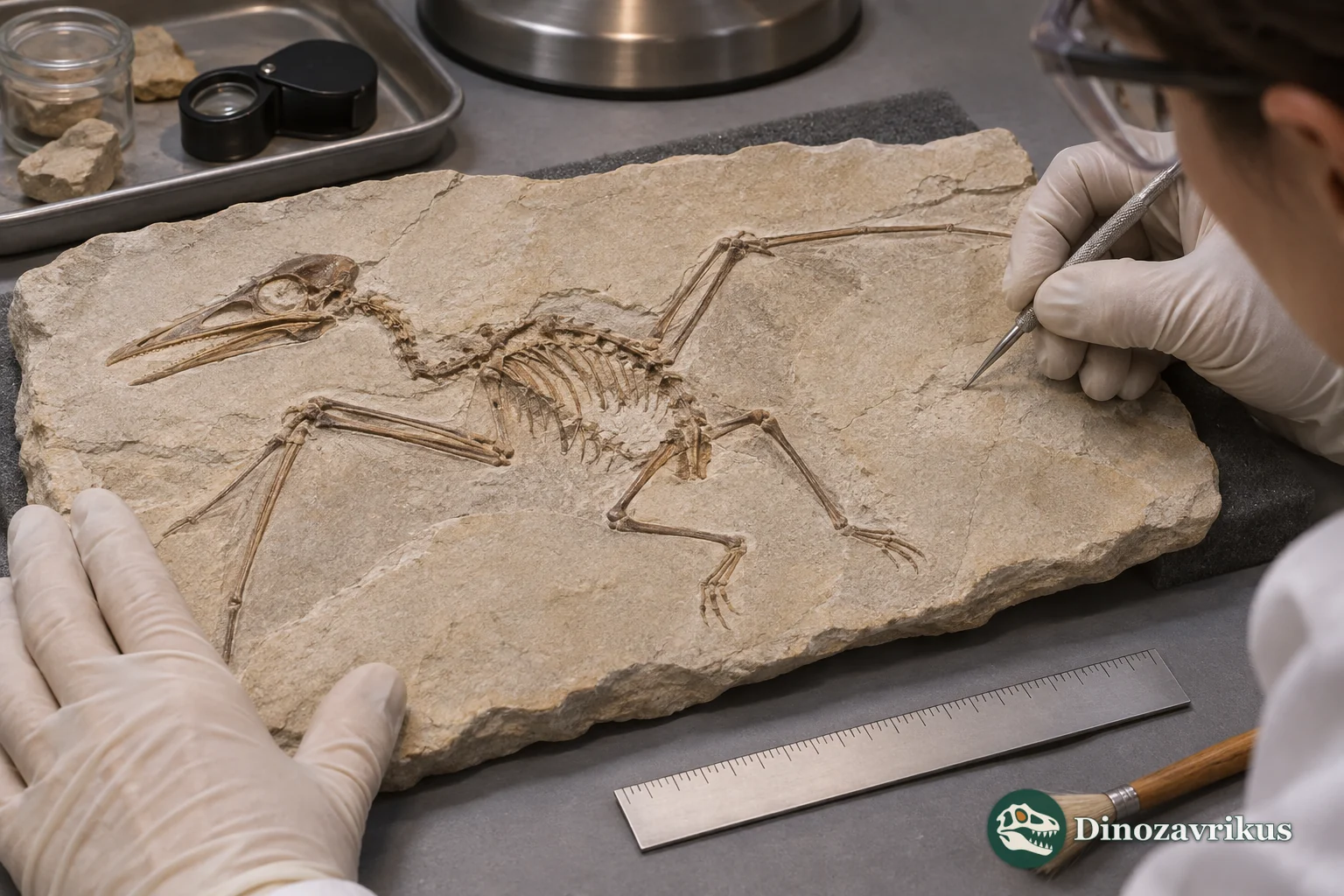
MPUM 6009 preserves a small skeleton with a skull. Changing its assignment did not create another specimen.
It was associated with Eudimorphodon and Carniadactylus before the 2015 new genus; a 2018 revision returned it to Carniadactylus.
The 2015 description interpreted bone fusion as evidence of maturity. The 2018 revision questioned that inference for this specimen.
Measured bones do not fix living body mass, colour, exact wingspan or preferred prey.
A fossil from near Bergamo
MPUM 6009 came from the Cene area of Lombardy and the Norian Zorzino Limestone. It preserves a skull and parts of a small pterosaur skeleton. Rupert Wild had assigned it to Eudimorphodon in 1978; Fabio Dalla Vecchia later compared it with Carniadactylus. Thus its history of names began well before Bergamodactylus was proposed.
The Norian age belongs to the geological unit, not to a direct measurement of the individual bone. The place of burial cannot tell us every setting the animal occupied during life.
Why a new name was proposed
In 2015 Alexander Kellner named Bergamodactylus wildi. He judged a combination of cranial and skeletal characters distinct from other early pterosaurs, including the Carniadactylus type. His assessment of skeletal fusion also treated the small specimen as relatively mature. If it was already mature, size differences from related specimens would matter more in taxonomic comparisons.
The 2015 table gives a 26.3 mm humerus, 36 mm ulna and 18.5 mm femur. These are measurements of preserved bones, not a directly measured living wingspan. Eudimorphodon provides context for the specimen's earlier assignment, but does not make it the same fossil as an Eudimorphodon type.
The 2018 reassessment
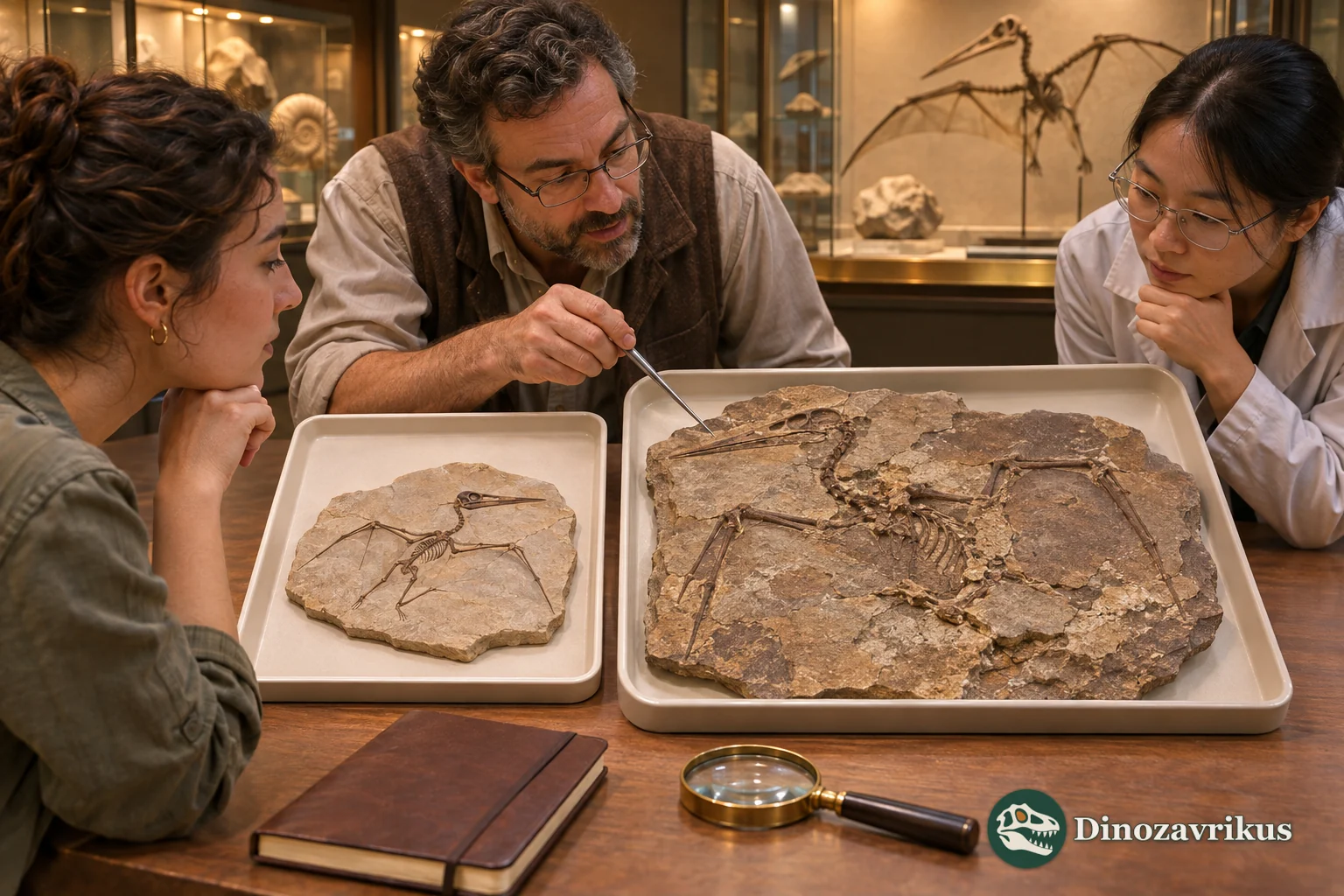
Fabio Dalla Vecchia re-examined the proposed distinguishing characters and found them insufficient to separate MPUM 6009 from Carniadactylus rosenfeldi. He also questioned whether the observed fusion could reliably identify an adult stage across different pterosaur groups. Under this interpretation Bergamodactylus is a junior subjective synonym of Carniadactylus.
The fossil itself did not disappear. The disagreement is about how much difference warrants a separate genus. Austriadraco is another Late Triassic pterosaur used for broader comparison, with a separate type specimen.
What cannot be reconstructed
Even with a skull, MPUM 6009 does not record colour, sex, prey or routine behaviour. Skeletal preservation and debated maturity limit estimates of adult dimensions. A living animal in a coastal scene is therefore an illustration. The secure finding is a Norian pterosaur specimen whose generic placement remains debated in the published literature.
Frequently asked questions
Are Bergamodactylus and Carniadactylus based on different skeletons?
Bergamodactylus was named for MPUM 6009. The 2018 revision assigned that same specimen to the already named Carniadactylus rosenfeldi.
When did the Cene pterosaur live?
Its slab comes from the Norian Zorzino Limestone of the Late Triassic.
Why do the authors disagree about a separate genus?
They differ in how they assess distinguishing anatomy and maturity. The revision found the proposed differences insufficient.
Is its colour known?
No. MPUM 6009 provides skeletal information, not the living animal's colour pattern.