

Bisonalveus browni was a small mammal in late Paleocene North America. Its name rests on part of a lower jaw with teeth rather than a complete skeleton. The details of the preserved tooth cusps are firmer evidence than any picture of the animal's entire body.
The genus is listed in the ancient mammal catalogue. Better-preserved Bemalambda shows how much more can be studied when skulls and limb bones survive, but its anatomy cannot simply be transferred to Bisonalveus.
Quick facts
| Scientific name | Bisonalveus browni Gazin, 1956 |
|---|---|
| Holotype | USNM 20928, left lower jaw with P4–M3 |
| Group | Pantolesta; pentacodontine rank varies |
| Locality | Bison Basin, Fremont County, Wyoming |
| Age | Tiffanian, late Paleocene |
| P4–M3 tooth-row length | 9.5 mm in the holotype |
| Missing evidence | Associated skull and limb skeleton |
What can the fossils tell us?
USNM 20928 is a left mandibular ramus with P4–M3. Gazin measured the row as 9.5 mm. That is a tooth-row length, not a body length.
The fourth premolar and lower molars differ from those of Aphronorus in relative size and the position of several cusps. This combination supports comparison, but not a direct dietary observation.
No associated complete skull or limb skeleton is documented for the type. Movement, coat colour, exact mass and food remain unmeasured or unknown.
Gazin's Bison Basin find
Charles Lewis Gazin named Bisonalveus browni in 1956 from Wyoming's Bison Basin. The type, USNM 20928, is a left lower-jaw ramus bearing P4 and three molars. It came from the saddle locality along the basin's south rim in Fremont County. The genus refers to Bison Basin and alveus, a basin or hollow, not to the modern bison. The species honours geologist Roland W. Brown.
Gazin also referred USNM 20929, a jaw fragment with M3, and USNM 20930, an isolated P4. A worn jaw fragment in the University of Wyoming collection, number 1067, was assigned only tentatively. The type and these additional pieces have different levels of identification certainty.
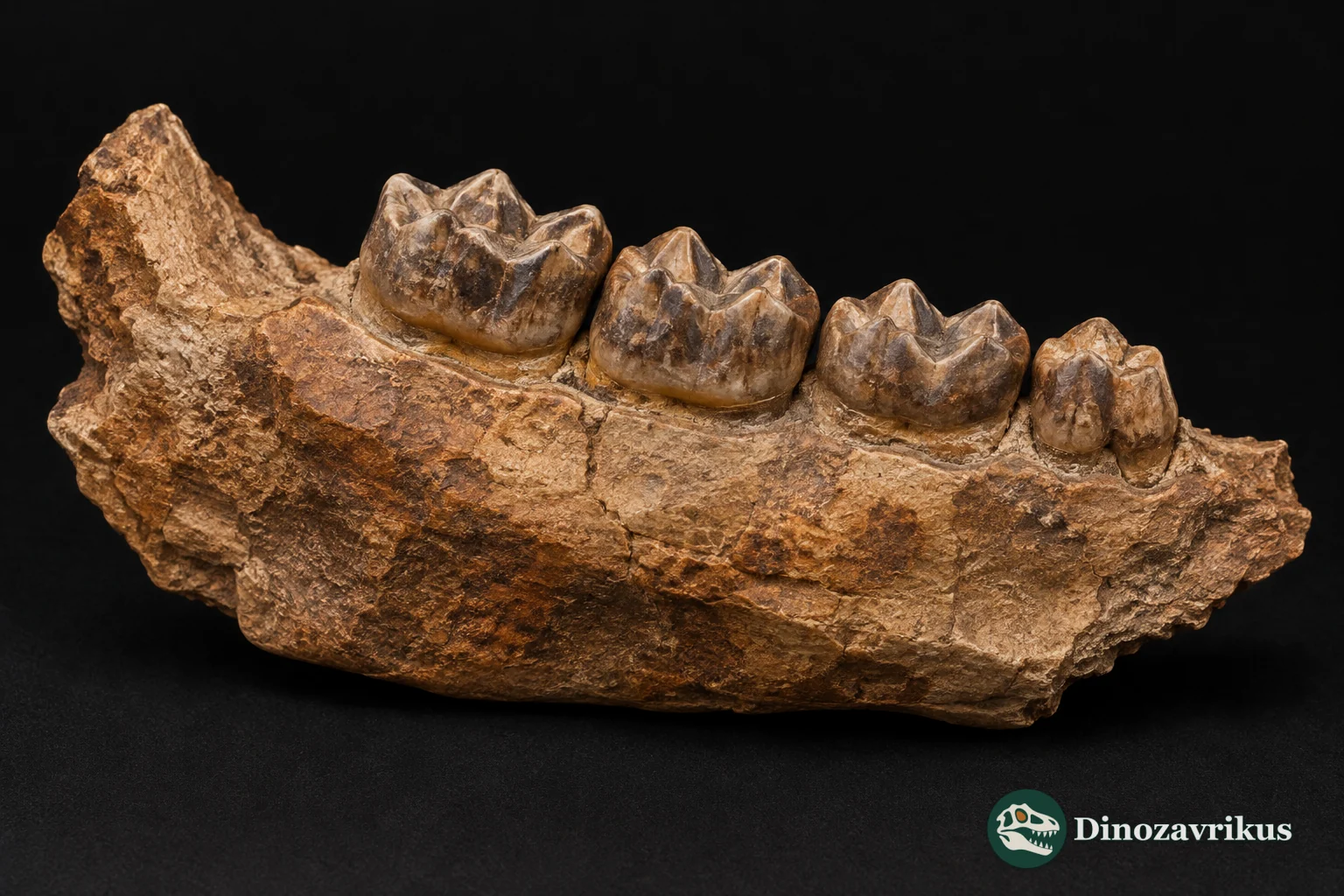
Four cheek teeth and their measurements
The P4–M3 row in the holotype is 9.5 mm long; M1–M3 alone span 7.5 mm. P4 measures 2.2 mm long and 1.5 mm across at its widest point. These are direct tooth measurements. They cannot be substituted for a whole-body length or converted to a precise body mass without a validated comparative model.
Gazin compared Bisonalveus mainly with Aphronorus. Its P4 is much smaller, while several cusps occupy different positions. On the lower molars, the paraconid lies further toward the tongue side and the hypoconulid of the first two is weak. M3 has an additional small cusp on a crest. Their combination assists diagnosis; one cusp by itself does not establish a diet.
Late Paleocene strata and classification
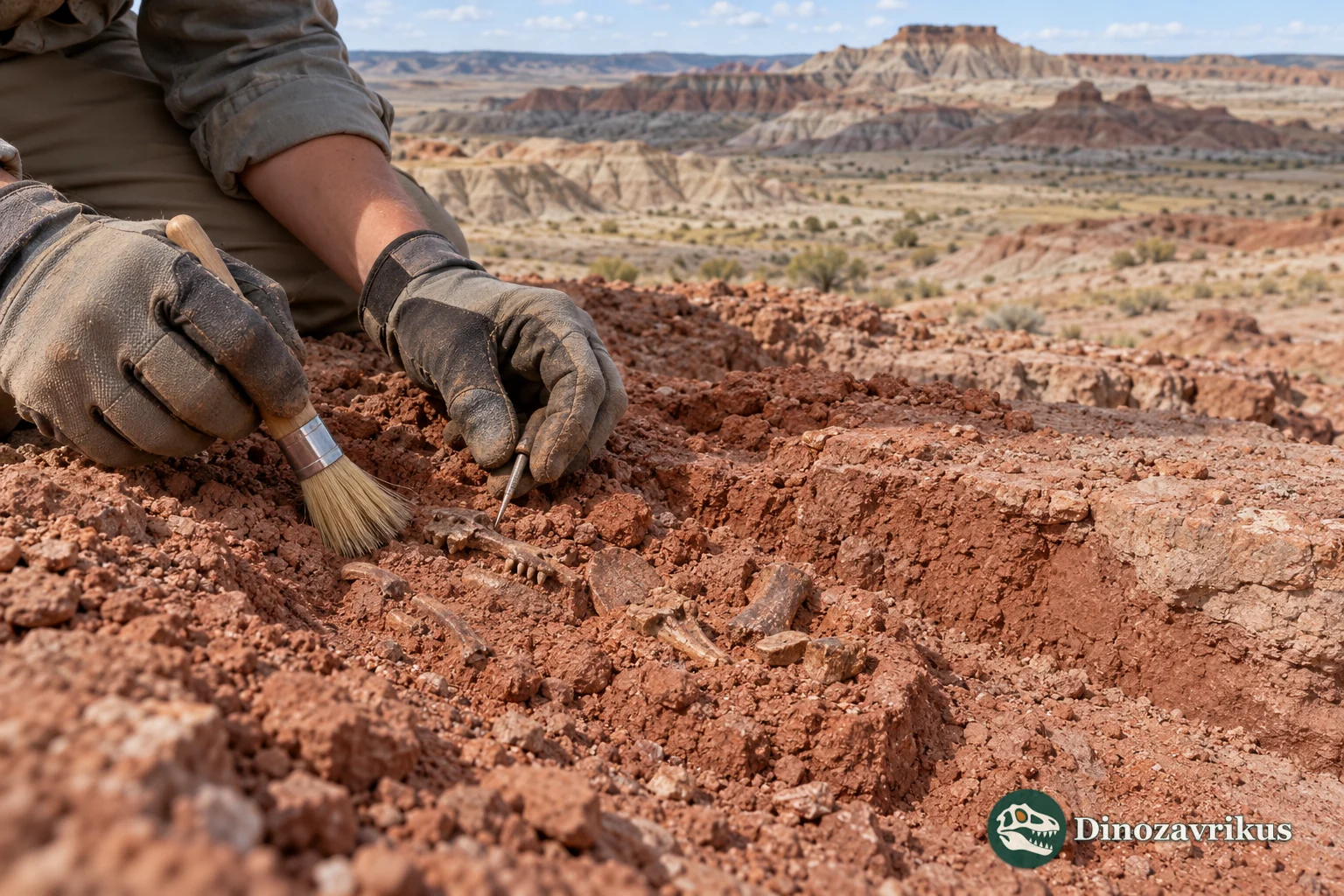
The original description calls the saddle locality Tiffanian, a late Paleocene North American land-mammal interval. Gazin's broader survey noted several fossil sites in the basin that could differ slightly in stratigraphic position. The holotype has no directly measured calendar age; the assignment is based on geology and faunal comparison.
Gazin placed the genus with pantolestids because of dental similarities to Aphronorus, while explicitly discussing characters that complicated the relationship. Later authors treated pentacodontines either as a subgroup of Pantolestidae or at family rank. Changing rank does not change the fossil. Fine relationships depend on comparing characters across taxa.
An incomplete animal and an interpretive cover
No associated complete skull, trunk or limb bones are documented for the type material. Claims of habitual swimming, burrowing or a precise food source would therefore exceed the evidence. Tooth dimensions imply a small mammal, but do not measure its full outline. The furred woodland animal on the cover is a visual interpretation, with hypothetical ears, feet and posture.
Bison Basin sediments include grey, buff and reddish silty clays and sandstones. They establish geological context, while associated fauna helps correlate the beds. The rock does not preserve the behaviour or last meal of USNM 20928.
Frequently asked questions
What is the Bisonalveus browni holotype?
USNM 20928, a left lower-jaw ramus with the fourth premolar and three molars. It is not a whole skull or skeleton.
Does the name mean it was related to bison?
No. Bisonalveus refers to Wyoming's Bison Basin, where the type was found.
How large was Bisonalveus?
The measured P4–M3 row is 9.5 mm long. The original description gives no directly measured body length or reliable body mass.
Is its way of life known?
Not in detail. Associated limbs, stomach contents and trackways are absent from the type evidence, so movement and exact food are uncertain.