

Bohaiornis guoi is an Early Cretaceous enantiornithine from Liaoning. Its fossils preserve toothed jaws, curved claws on the feet and a pair of elongated feathers behind the tail of the type specimen. Researchers have used these features, along with mineral inclusions in a second fossil, to test several hypotheses about its diet.
Quick facts
| Group | Enantiornithines (Enantiornithes), Bohaiornithidae |
|---|---|
| Age | Early Cretaceous (Aptian) |
| Region | East Asia (Lamadong area, Liaoning, China) |
| Diet | Exact diet unknown |
| Type species | Bohaiornis guoi |
| Holotype | LPM B00167, skeleton with partial skull and feather impressions |
| Referred specimen | IVPP V17963, nearly complete skeleton |
| Deposits | Jiufotang Formation in the 2014 reassessment |
What can the fossils tell us?
The impressions behind the tail bones record the shape of the two feathers. The colour of those feathers remains unknown.
The fossils preserve robust teeth and curved claws. These features help assess what the bird could do with its jaws and toes.
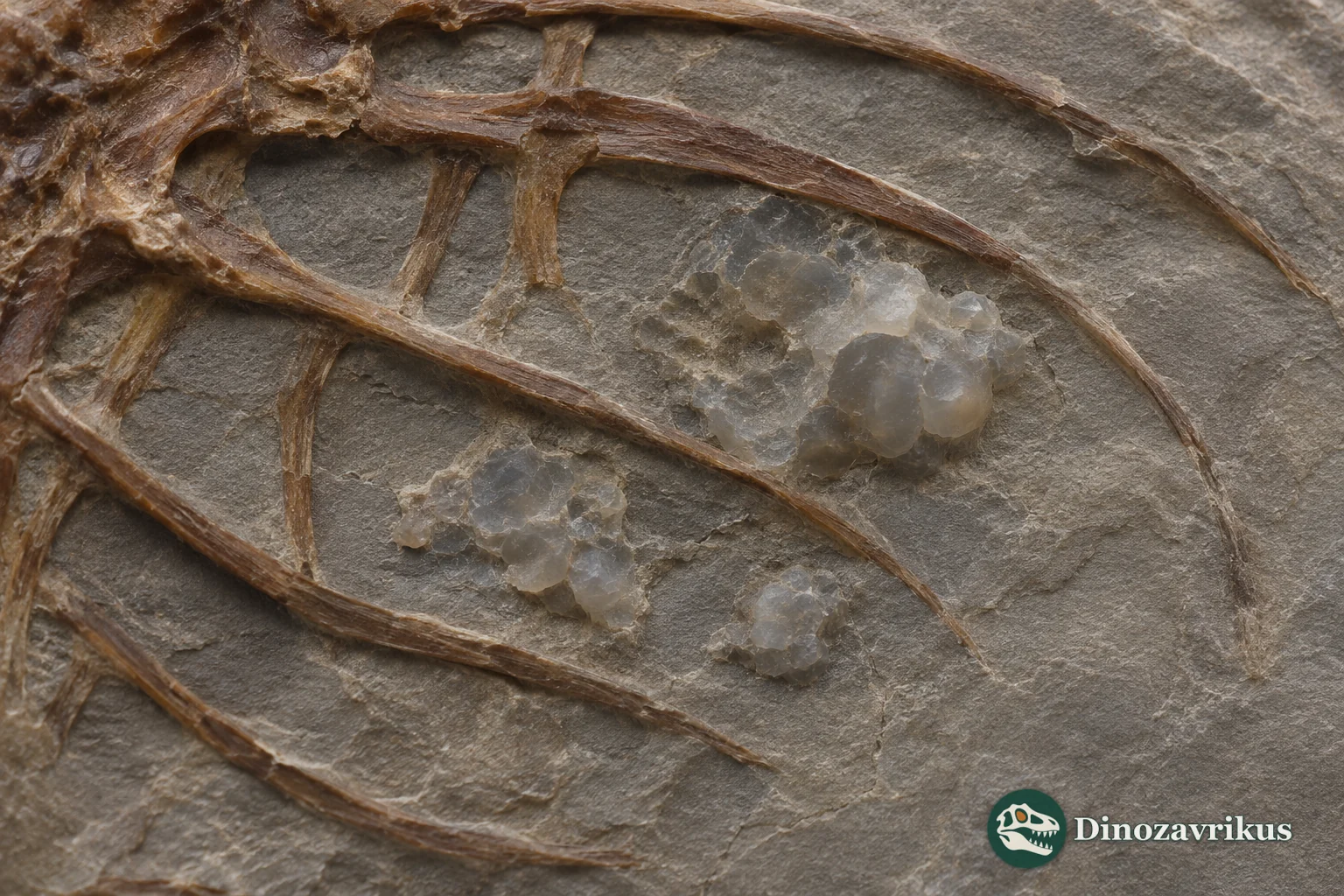
The structure of inclusions from the second specimen differs from the structure of known stomach stones used for comparison. Mineral growth during preservation fits the observations.
Two skeletons from Liaoning
Hu Dongyu, Li Li, Hou Lianhai and Xu Xing described the species in 2011 from LPM B00167, collected by Guo Chen near Lamadong. The articulated skeleton retains much of the skull and traces of feathers. The name refers to the Bohai Sea and honours the collector.
Li Zhiheng and colleagues described a second, nearly complete skeleton, IVPP V17963, in 2014. It added details of the skull and feet. The new study placed the fossil locality in the Jiufotang Formation, revising the earlier assignment of the type locality to the Yixian Formation.
Teeth, claws and tail feathers
The jaws carried stout teeth. The feet had curved claws, with an especially elongated claw on the third toe. Such features can be compared across species, although claws can serve roles in contact with branches as well as food handling.
Two long ribbon-shaped feathers lie behind the tail of the type skeleton. Archaeorhynchus, another Early Cretaceous bird from Liaoning, has a preserved tail with long central feathers and a short fan. The fossils show that the arrangement of elongated feathers varied among early birds.
Why the probable stomach stones were re-examined
In 2014 several objects near the ribs of IVPP V17963 were interpreted as stones swallowed by the bird. In 2021 researchers examined their structure and chemistry and compared them with gastroliths from another early bird. The inclusions were more consistent with silica minerals precipitated during fossilisation.
A separate analysis published in 2024 compared jaws and other measurements with data from living birds. Some of its results put Bohaiornis close to plant eaters. The shape of a jaw can constrain hypotheses about feeding. Direct evidence from the animal's meals remains scarce.
Frequently asked questions
Where did the skeletons come from?
The known specimens come from the Lamadong area of Jianchang County, Liaoning Province. The assignment to the Jiufotang Formation follows the locality reassessment.
Which feathers can be seen on the type specimen?
It preserves a pair of elongated ribbon-shaped feathers behind the tail. The colour of the ribbons is unknown.
Were the objects in its body swallowed stones?
The later microscopic comparison found that growth of silica within the fossil better fits their structure.
How certain is its diet?
Jaw shape supports hypotheses, including plant consumption. The known specimens lack securely identified gut contents.