

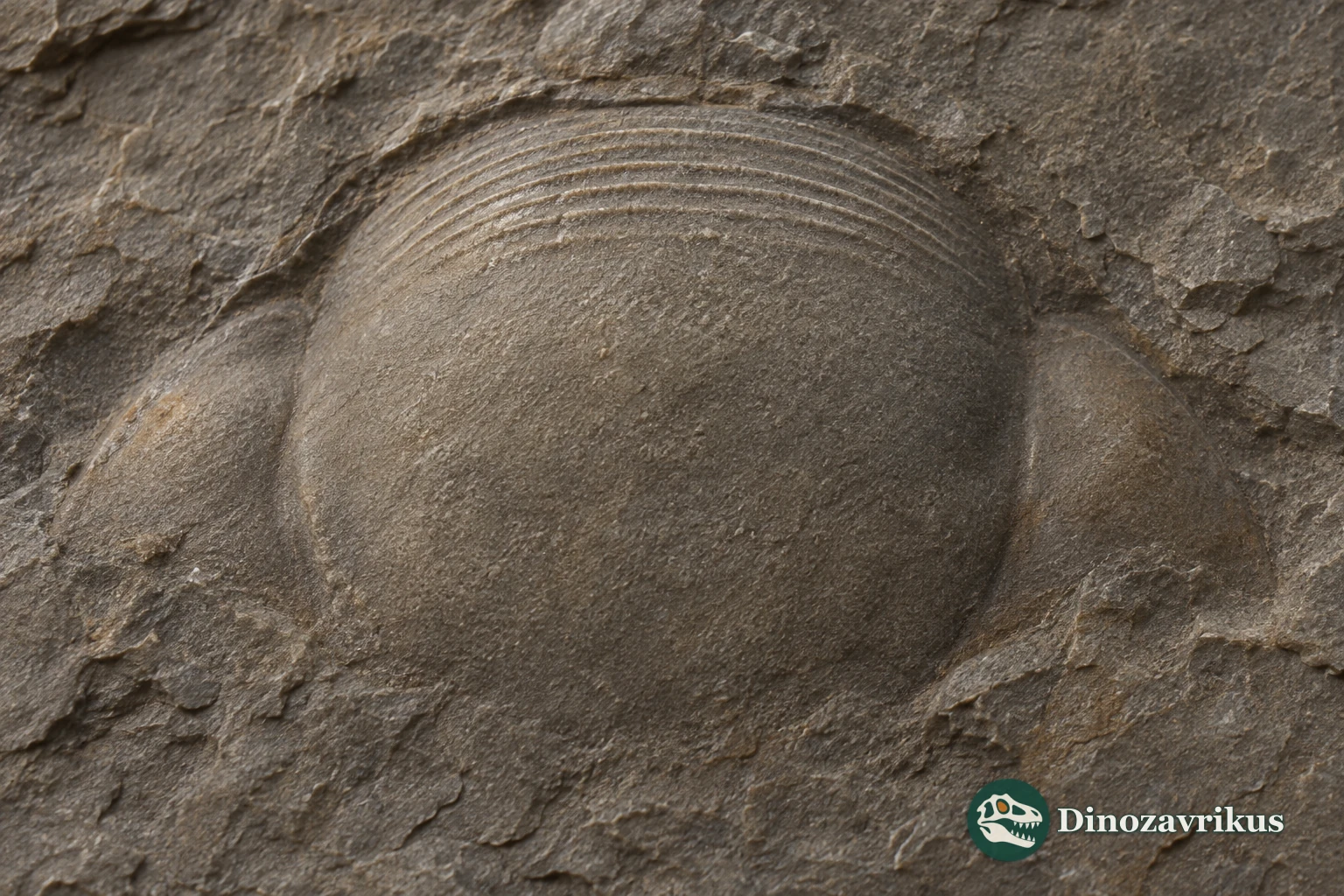
In Bollandia, the central part of the head shield rose so high that it overhung the front margin. Fossils from Moravia preserve fine ridges down the front slope of this raised area. Researchers have proposed that those ridges may have helped some Bollandia move sediment with the head.
Quick facts
| Group | Proetid trilobites |
|---|---|
| Age | Early Carboniferous, Tournaisian and Viséan |
| Genus established | Frederick Reed, 1943 |
| Type species | Bollandia globiceps |
| Lectotype locality | County Kildare, Ireland |
| Lectotype head length | 13.2 mm |
What can the fossils tell us?
It measures 13.2 mm in length. The measurement does not give the length of the complete animal.
The ridges are preserved on a cranidium from Moravia. Their possible role in digging is an inference.
A tail from Mokrá resembles a German species. Its incomplete preservation leaves the assignment tentative.
The Irish type and a history of two names
John Phillips described the type species in 1836 as Asaphus globiceps. Frederick Reed introduced the name Bollandia in 1943. The same species also appears in the older history of Griffithides. A ruling by the International Commission on Zoological Nomenclature maintained the two names with different type species.
The Oxford University Museum of Natural History holds the lectotype, OUM E.01391. Its catalogue gives Millicent near Clane, County Kildare, as the locality. Halszka Osmólska measured the head shield at 13.2 mm long. A separate Irish tail shield is about 20 mm wide. The two measurements come from different specimens.
Two forms in the Moravian Karst
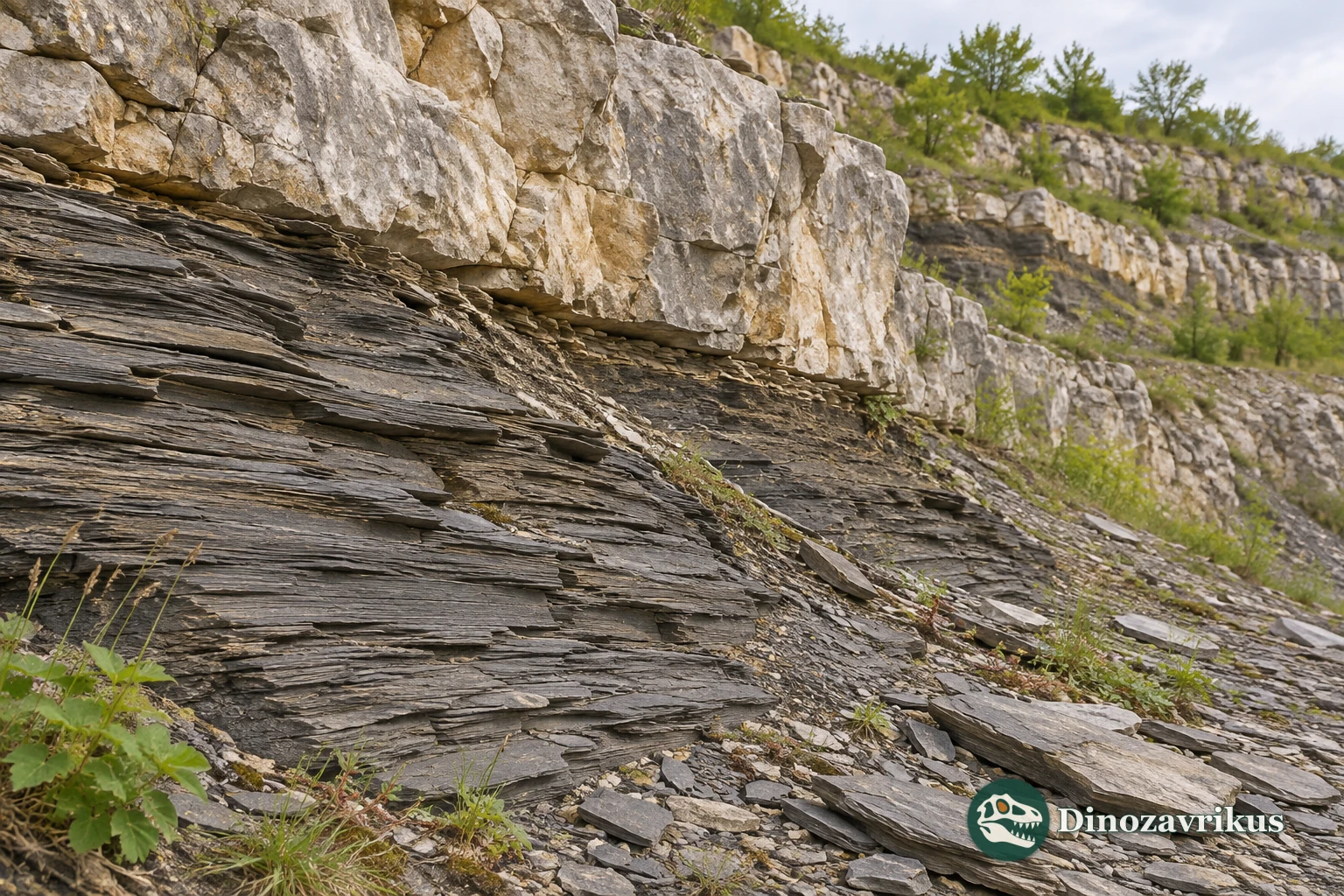
Štěpán Rak and Rudy Lerosey-Aubril described eight pieces from the Březina Formation near Brno. Seven were assigned to B. persephone, including two cranidia and five pygidia. The eighth, a weathered tail, was identified as B. cf. megaira because few features remain for a firm diagnosis.
The shales deformed the shields, but enough remains to compare them with fossils from the Erdbach Limestone of Germany. Conodonts and foraminifera helped date the beds at Mokrá. The specimens come from the latest part of the Tournaisian.
What the head may reveal about its way of life
The eyes of the type species are short and high, with visual surfaces directed mainly sideways. Researchers linked the broad lateral field of view to life on the seafloor. In B. persephone, tiny bumps merge into low ridges across the front quarter of the glabella. These may have helped the animal shift sediment.
The overhanging glabella and the shape of a possible mouth plate also suggested feeding on small prey or carrion. That plate was illustrated from a specimen now thought lost. The available fossils leave the function of the ridges and the animal’s diet unresolved.
Frequently asked questions
Where did the type species come from?
The lectotype comes from Millicent near Clane in County Kildare, Ireland.
What part of the lectotype survives?
It is a head shield 13.2 mm long. That measurement applies to the shield alone.
How many pieces were described from Mokrá?
Eight were described, including two parts of the head and six tail shields. One tail was tentatively assigned to a species.
Could Bollandia dig into sediment?
Ridges on the front of the head in one species are consistent with digging. Their exact function remains uncertain.