

Brodavis was a Late Cretaceous member of the hesperornithiforms, a lineage of foot-propelled diving birds. Most finds consist of a tarsometatarsus, the fused bone between the shin and toes. It lets researchers compare birds from sites in North America and Asia.
Quick facts
| Group | Hesperornithiforms (Hesperornithiformes), Brodavidae |
|---|---|
| Age | Late Cretaceous (Campanian to Maastrichtian) |
| Region | North America (Canada and the United States), Asia (Mongolia) |
| Diet | Exact diet unknown |
| Type species | Brodavis americanus |
| Holotype | Left tarsometatarsus from the Frenchman Formation |
What can the fossils tell us?
The left tarsometatarsus from the Frenchman Formation established the type species. The shape of the shaft and the joint surfaces can be studied in this material.
The short and broad bone has an attachment for the first metatarsal well above its lower edge.
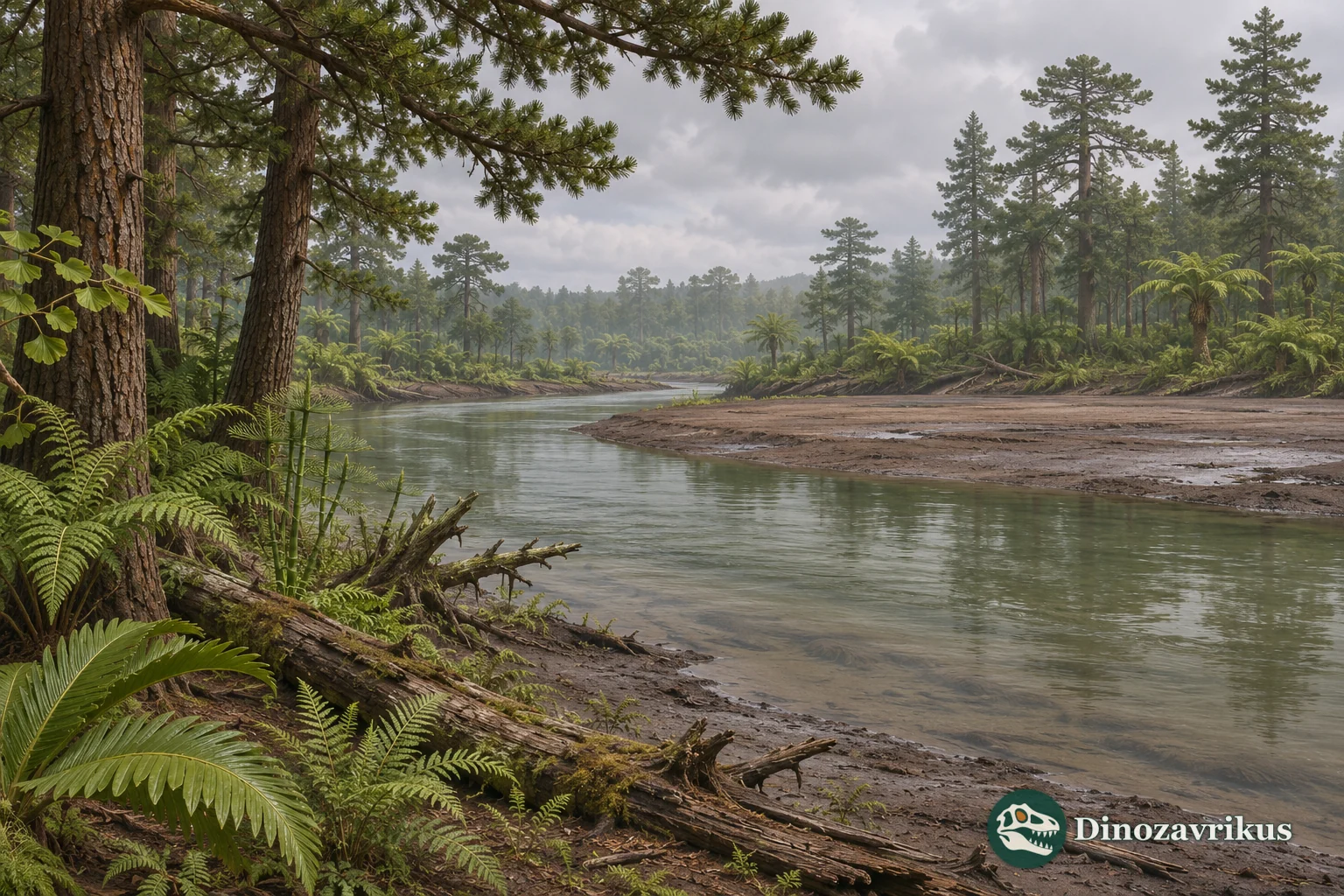
The Nemegt fossils occur in a river deposit. An older South Dakota specimen was recovered in marine sediment.
An identifiable part of the foot
Larry Martin, Evgeny Kurochkin and Tim Tokaryk named the genus in 2012. The type species, Brodavis americanus, was based on a left tarsometatarsus from the Maastrichtian Frenchman Formation of Saskatchewan. The bone forms by fusion and links the shin with the toes.
The proportions are short and broad. The facet where the first metatarsal attached is unusually high on the inner surface. Those features helped identify the Brodavidae. Better-preserved members of the larger hesperornithiform group indicate a style of swimming and diving driven by the hind limbs.
From North America to Mongolia
The Nemegt Formation in Mongolia yielded the Maastrichtian species B. mongoliensis. South Dakota yielded B. baileyi in the Hell Creek Formation. Together with the Saskatchewan specimen, these finds place brodavids in the deposits of rivers and coastal plains.
The older Campanian form B. varneri came from marine deposits in South Dakota. It was originally named as a species of Baptornis. This specimen preserves other parts of the skeleton alongside the tarsometatarsus. The sediment identifies a burial setting and leaves the bird's usual habitat open to interpretation.
What the bones tell us about behaviour
The feet provide evidence for comparison with other divers. Evidence from the wing and shoulder would be needed to assess flight ability for individual species. The type specimen provides very little evidence about the beak or what the bird caught and ate.
Frequently asked questions
What is a tarsometatarsus?
It is the fused bone from the ankle to the toes. Its shape and joint details helped identify Brodavis.
Where was the type species found?
In Maastrichtian rocks of the Frenchman Formation in southern Saskatchewan, Canada.
Did Brodavis live in freshwater?
Some finds come from river deposits, including the Frenchman and Nemegt formations. At least one assigned specimen was found in marine sediment.
What did Brodavis eat?
Its diet is unknown. The type foot bone is informative for movement, and no associated prey remains have been reported for it.