

Brodiechelys was a freshwater turtle from Early Cretaceous western Europe. For a long time the best evidence for the genus came from shells on the Isle of Wight. Fossils from eastern Spain later showed that closely related species lived in more than one part of western Europe.
Quick facts
| Group | Turtles, stem cryptodires |
|---|---|
| Age | Early Cretaceous |
| Region | Europe (United Kingdom and Spain) |
| Type species | Brodiechelys brodiei |
| Holotype | NHMUK R2643, partial shell |
| Formations | Vectis and Arcillas de Morella |
| Spanish shell length | 205 mm in CMP-3b/181 |
| Scientific name | Brodiechelys |
| Diet | Exact diet unknown |
What can the fossils tell us?
The type species comes from Brighstone Bay on the southwestern coast. More shells from the Vectis Formation helped reveal variation within the species.
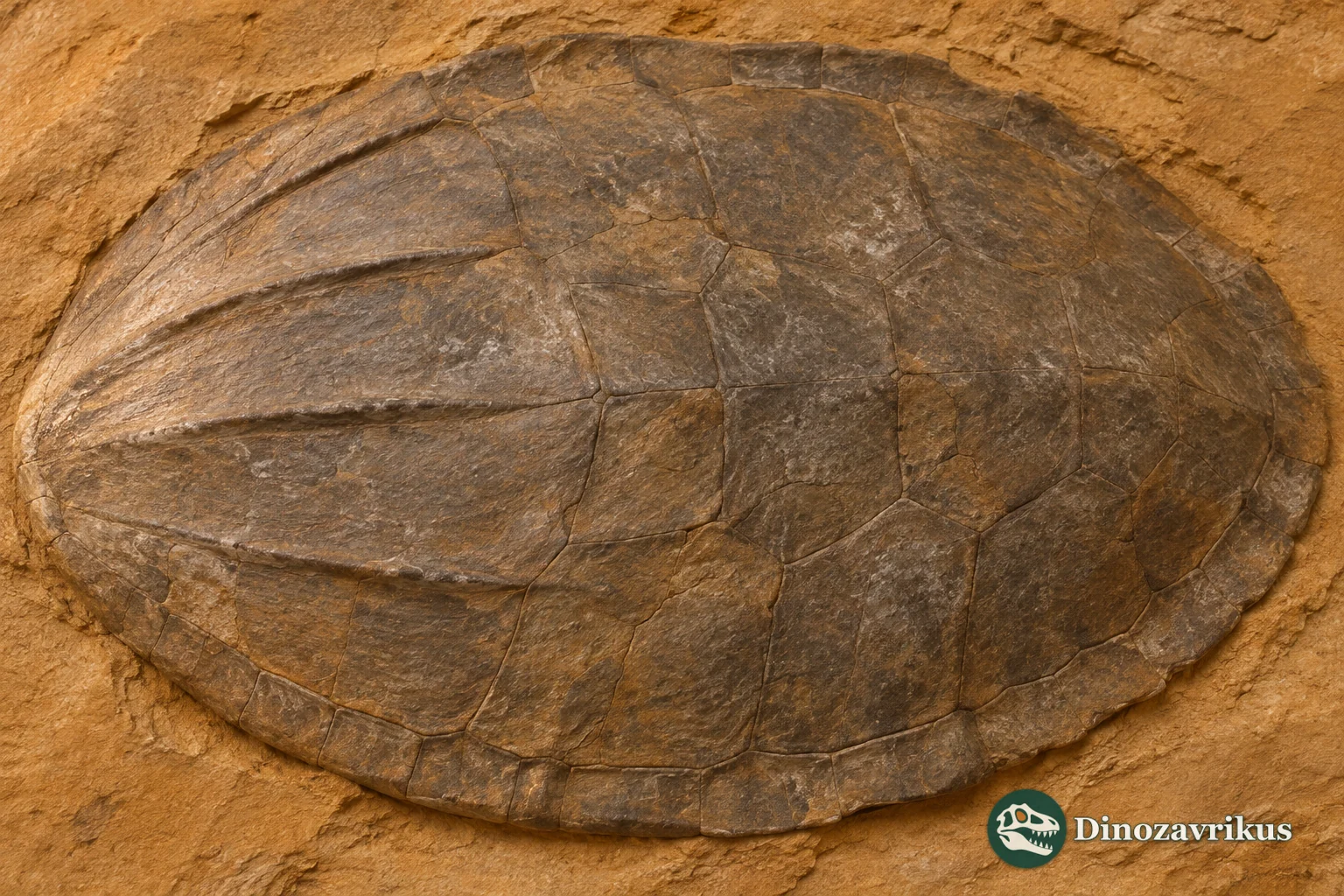
The Mas de la Parreta specimen preserves the upper and lower shell in articulation. It is 205 mm long and 160 mm wide.
The British species has many fine grooves. The grooves on the Spanish shell are wider, deeper and fewer.
The Vectis Formation shells
Richard Lydekker described the type species as Plesiochelys brodiei in 1889. Franz Nopcsa placed it in the genus Brodiechelys in 1928. The holotype is a partial shell from Brighstone Bay, NHMUK R2643. The local Vectis beds span the Barremian and early Aptian.
Adán Pérez-García compared shells from the Isle of Wight, including the types of Plesiochelys valdensis and P. vectensis. He interpreted both as junior synonyms of Brodiechelys brodiei. Fragmentary shells from around Hastings can be assigned to the genus, but their species is unresolved.
A second species from Morella
Pérez-García, José Miguel Gasulla and Francisco Ortega named Brodiechelys royoi from the early Aptian Arcillas de Morella Formation. The nearly complete shell CMP-3b/181 is held at the Valltorta Museum. Its low, oval shell is 205 mm long and 160 mm wide. Two additional type specimens are plates from the right side of the upper shell.
The front edge of the Spanish carapace is convex and lacks a notch. A groove runs along several bones at the front rim. Grooves on its vertebral and pleural scutes are broader and fewer than in the British species. The rear lobe of the plastron is trapezoidal in the Spanish shell and has more rounded sides in the British material.
What the shells show about relationships
Two comparative analyses linked Brodiechelys with xinjiangchelyids. Points of similarity include the broad bones around the rear rim and the short first dorsal rib. Ordosemys is a different Early Cretaceous freshwater turtle from East Asia and illustrates the diversity of early cryptodiran lineages.
The fossils document two species and allow detailed comparisons of their shells. They do not establish the precise diet of Brodiechelys.
Frequently asked questions
Where was the type species found?
At Brighstone Bay on the Isle of Wight. The holotype came from the Vectis Formation.
How big is the Morella shell?
The holotype shell of the Spanish species measures 205 mm long and 160 mm wide.
What distinguishes the Spanish species from the British one?
It has a convex front rim, fewer and broader scute grooves, and straighter sides to the rear lobe of the lower shell.
What was the Isle of Wight species originally called?
Lydekker named it *Plesiochelys brodiei*. Nopcsa later moved it to *Brodiechelys*.