

Cadurceryx lived in France during the middle and late Eocene. Its short tail vertebrae bear extra projections. These features help identify isolated bones and led the original authors to compare the genus with living sand boas.
Quick facts
| Group | Snakes (Serpentes) |
|---|---|
| Age | Middle and late Eocene |
| Region | Europe, France |
| Type species | Cadurceryx filholi |
| Scientific name | Cadurceryx |
| Diet | No direct evidence |
What can the fossils tell us?
The type series comes from historical collections of the French phosphorites. The exact fissure that produced these specimens is unknown.
Accessory processes occur in several parts of the backbone. Some form extra joints between neighbouring vertebrae.
Five Hordle vertebrae were once named as a second species. A later revision found that they could belong to another snake.
The type species
Robert Hoffstetter and Jean-Claude Rage named Cadurceryx filholi in 1972 from nine Quercy vertebrae. The species honours Henri Filhol, who studied fossil vertebrates from these deposits. The historical specimens lack precise locality data. Vertebrae from Lavergne in the Quercy come from the end of the middle Eocene, at reference level MP16.
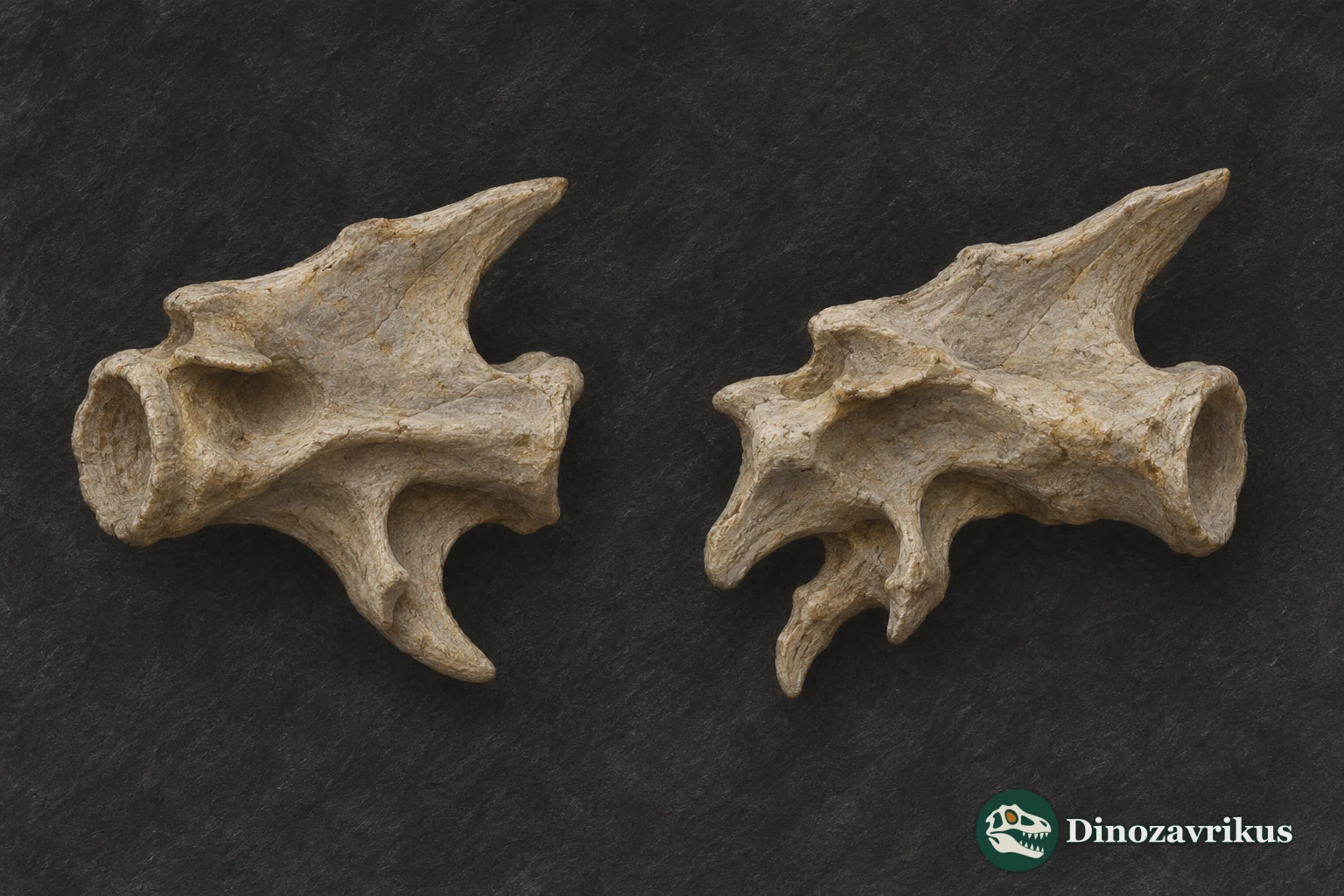
Why the tail bones stand out
The short tail vertebrae carry extra bony projections. Some processes bear joint surfaces that create additional points of contact between adjacent vertebrae. These structures occur in multiple parts of the backbone. Which part of the backbone produced a fossil matters when comparing features across genera. The tail record of Falseryx, for example, helps palaeontologists compare bones from equivalent parts of the skeleton.
Reassessing the English material
In 2006, five tail vertebrae from Hordle in England were named Cadurceryx pearchi. A 2025 revision concluded that they do not reliably diagnose a separate species and could belong to another snake. The identifiable species remains C. filholi from France.
Frequently asked questions
Which parts of the skeleton are known?
Isolated vertebrae from the trunk and tail are known. Some preserve joint surfaces on their accessory processes.
Was Cadurceryx a sand boa?
The original authors compared its tail vertebrae with those of sand boas. A later revision tentatively placed Cadurceryx among tropidophiids based on a distinctive blade-like process beneath the trunk vertebrae.
What did Cadurceryx eat?
The fossil material used to identify the genus preserves no direct evidence of diet.
Did it live in England?
Fossils in England were once attributed to this genus. A later revision regarded those identifications as doubtful.