

Cadurciguana was an iguanian lizard from middle and late Eocene France. Isolated jaw bones preserve a change in tooth shape along the jaw. The front teeth have one cusp, while the back teeth have a small cusp on either side of the main one.
Quick facts
| Group | Iguanians (Iguania), pleurodonts (Pleurodonta) |
|---|---|
| Age | Middle and late Eocene |
| Region | Europe, France |
| Type species | Cadurciguana hoffstetteri |
| Scientific name | Cadurciguana |
| Diet | No direct evidence |
What can the fossils tell us?
The type material comes from Escamps C. Other jaws have been identified in older deposits in the French Quercy region.
Small cusps flank the main cusp on the rear teeth. On the inner surface of the lower jaw, a bony wall encloses a longitudinal canal.
The jaws are useful for comparing the lizard with other iguanians. They provide no direct measure of body length or record of diet.
Three sites in the Quercy
Marc Augé described Cadurciguana hoffstetteri in 1987. The type material is from Escamps C, assigned to the European mammal reference level MP19. A lower jaw from La Bouffie is older, at level MP17A. An earlier upper jaw comes from Le Bretou, at level MP16. Together the finds span part of the middle and late Eocene.
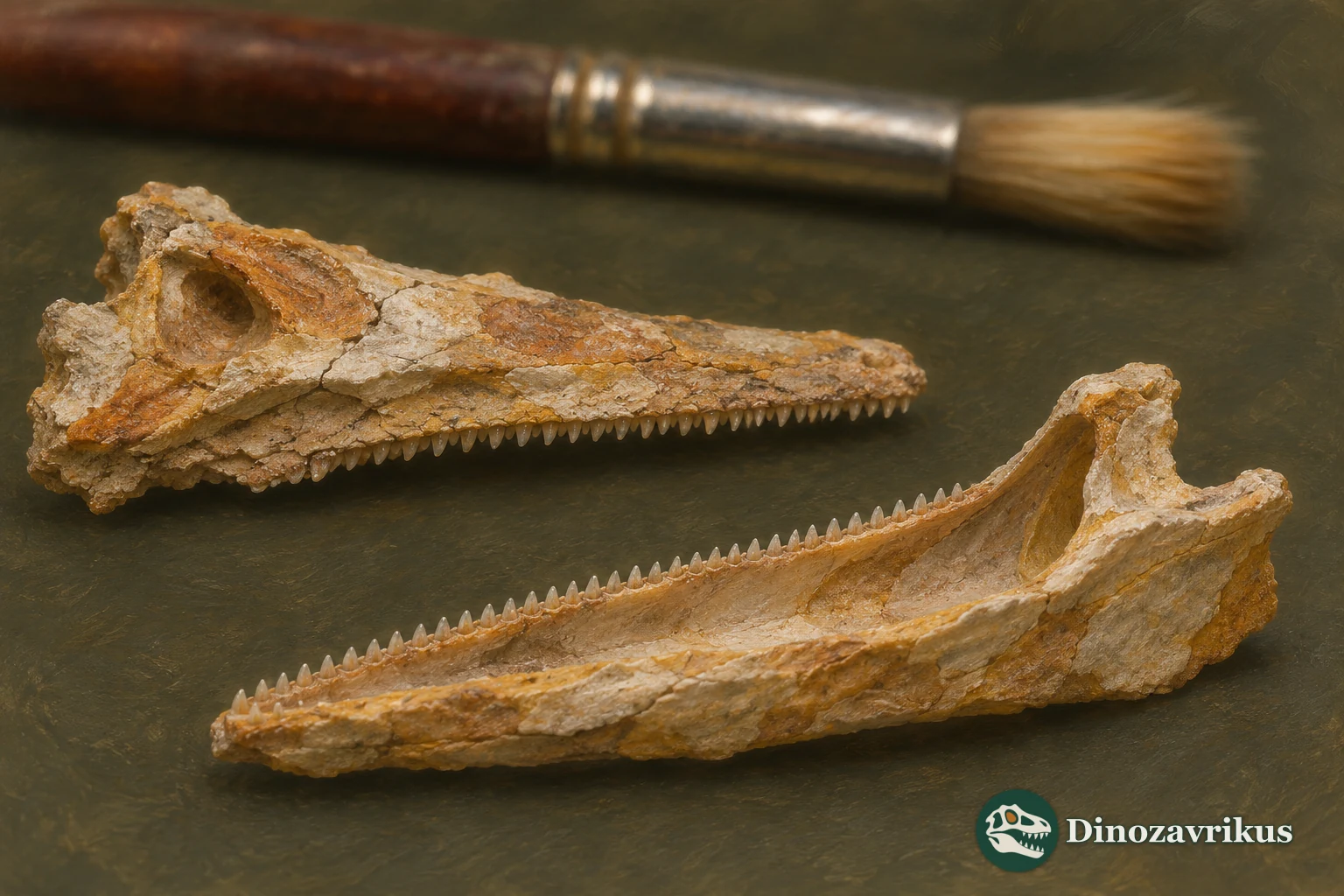
Features inside the lower jaw
The edges of the Meckelian groove fuse to form a wall over a canal in the lower jaw. A short groove remains near the rear of the wall. Several kinds of lizards have an enclosed canal, so researchers also check the shape of the teeth and the anatomy of the back of the jaw.
A jaw once assigned to a gecko
A partial left dentary was formerly assigned to Cadurcogekko. Re-examination identified it as Cadurciguana. Fossils that preserve just one bone can change the known skeletal material of two genera when an identification is revised.
Frequently asked questions
How many species of Cadurciguana are known?
One species is described, Cadurciguana hoffstetteri. Its type material comes from late Eocene deposits in the Quercy.
Did all of its teeth have three cusps?
The rear teeth have three cusps. The front teeth each have a single cusp.
Was Cadurciguana a gecko?
It belongs to the pleurodont branch of Iguania. A fossil jaw corrected during a revision was previously assigned to a gecko.
Do the teeth tell us what it ate?
The cusps are useful for identifying the fossils. The known material provides no direct evidence of a particular diet.